

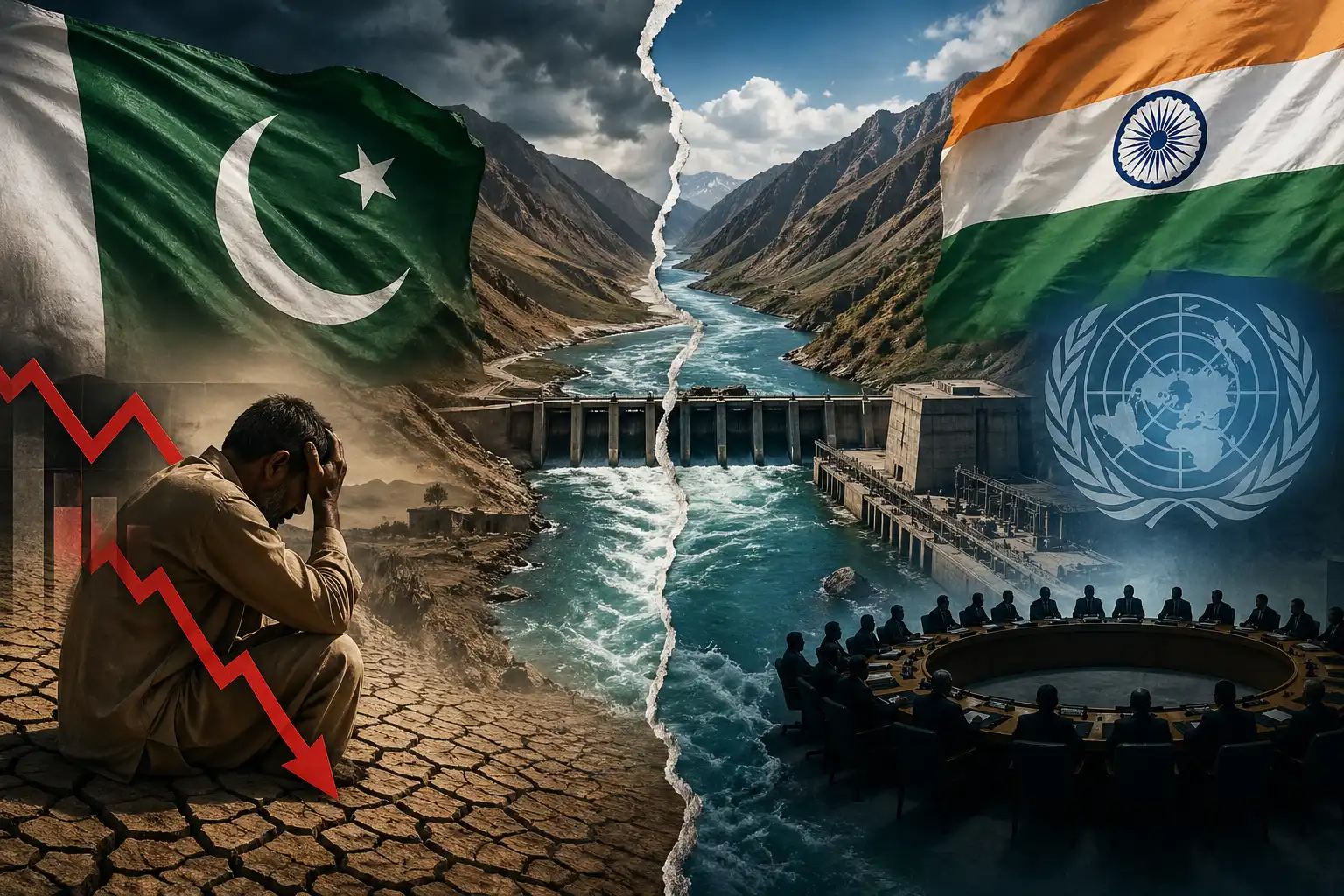
Restoration of the Indus Waters Treaty | How Much Loss Did Pakistan Face in One Year
The demand for the restoration of the Indus Waters Treaty has intensified in recent months, as Pakistan raises concerns over water security, agricultural losses, and regional stability. The treaty, signed in 1960 between Pakistan and India with the mediation of the World Bank, has long been regarded as a successful example of water-sharing cooperation. However, recent tensions and alleged violations have reignited debate over its effectiveness and enforcement mechanisms.
Restoration of the Indus Waters Treaty: Background and Current Dispute
The Indus Waters Treaty allocates three eastern rivers (Ravi, Beas, Sutlej) to India and three western rivers (Indus, Jhelum, Chenab) to Pakistan. While India is allowed limited use of the western rivers for non-consumptive purposes, Pakistan depends heavily on these waters for agriculture and energy production.
In recent years, Pakistan has accused India of constructing hydroelectric projects that could affect water flow, potentially violating treaty provisions. India, on the other hand, maintains that its projects are within legal limits. The disagreement has led to calls from Pakistan for international intervention and restoration of full treaty compliance.
Restoration of the Indus Waters Treaty: Economic Losses for Pakistan in One Year
Pakistan’s economy is closely tied to its water resources, particularly in agriculture, which contributes significantly to GDP and employment. Over the past year, reduced water availability and uncertainty have caused notable economic damage.
Estimates suggest that Pakistan may have faced losses exceeding billions of dollars due to decreased crop yields, particularly in wheat, rice, and cotton. Water shortages in key provinces disrupted irrigation cycles, forcing farmers to either reduce cultivation or rely on costly alternatives such as groundwater extraction.
Additionally, the energy sector has been affected. Hydropower generation depends on consistent river flows, and any fluctuation can lead to power shortages, increased reliance on expensive fuel imports, and higher electricity costs for consumers. These combined effects have placed further strain on an already fragile economy.
Restoration of the Indus Waters Treaty: Impact on Agriculture and Food Security
Agriculture remains the backbone of Pakistan’s economy, and any disruption in water supply directly impacts food security. In the past year, farmers reported delayed sowing seasons and reduced harvests due to insufficient irrigation.
The shortage of water has also increased competition among provinces, leading to internal disputes over water distribution. Rising food prices and reduced agricultural output have affected both rural livelihoods and urban consumers. The long-term implications could include increased poverty levels and greater dependence on food imports.
Restoration of the Indus Waters Treaty: Can the UN Security Council Pressure India?
The role of the United Nations Security Council in resolving the dispute is a complex issue. While the council has the authority to address matters related to international peace and security, water disputes are typically handled through bilateral agreements or international arbitration mechanisms.
Pakistan has raised the issue at international forums, arguing that water security is linked to regional stability. However, the Security Council’s ability to pressure India is limited by geopolitical considerations, including the interests of permanent members and the principle of state sovereignty.
In practice, the council is unlikely to impose direct measures unless the situation escalates into a broader conflict. Instead, it may encourage dialogue, mediation, or the use of existing treaty mechanisms such as neutral experts or arbitration courts.
Restoration of the Indus Waters Treaty: Legal and Diplomatic Options for Pakistan
Pakistan has several avenues to address its concerns. The treaty itself provides mechanisms for dispute resolution, including the appointment of neutral experts and recourse to international arbitration.
Diplomatically, Pakistan can continue to engage with international organizations, highlight the issue in global forums, and seek support from allies. Strengthening internal water management policies and investing in infrastructure can also help mitigate the impact of external challenges.
At the same time, maintaining open communication channels with India remains essential, as long-term solutions are more likely to emerge through dialogue rather than confrontation.
Future Outlook and Strategic Considerations
Looking ahead, the restoration of the Indus Waters Treaty will depend on both political will and mutual trust between the two countries. Climate change, population growth, and increasing water demand are adding new pressures to an already sensitive issue.
For Pakistan, balancing international advocacy with domestic reforms will be crucial. Enhancing water storage capacity, improving irrigation efficiency, and adopting modern agricultural practices can reduce vulnerability. Meanwhile, sustained diplomatic efforts can keep the issue on the global agenda and push for fair implementation of treaty obligations.

