

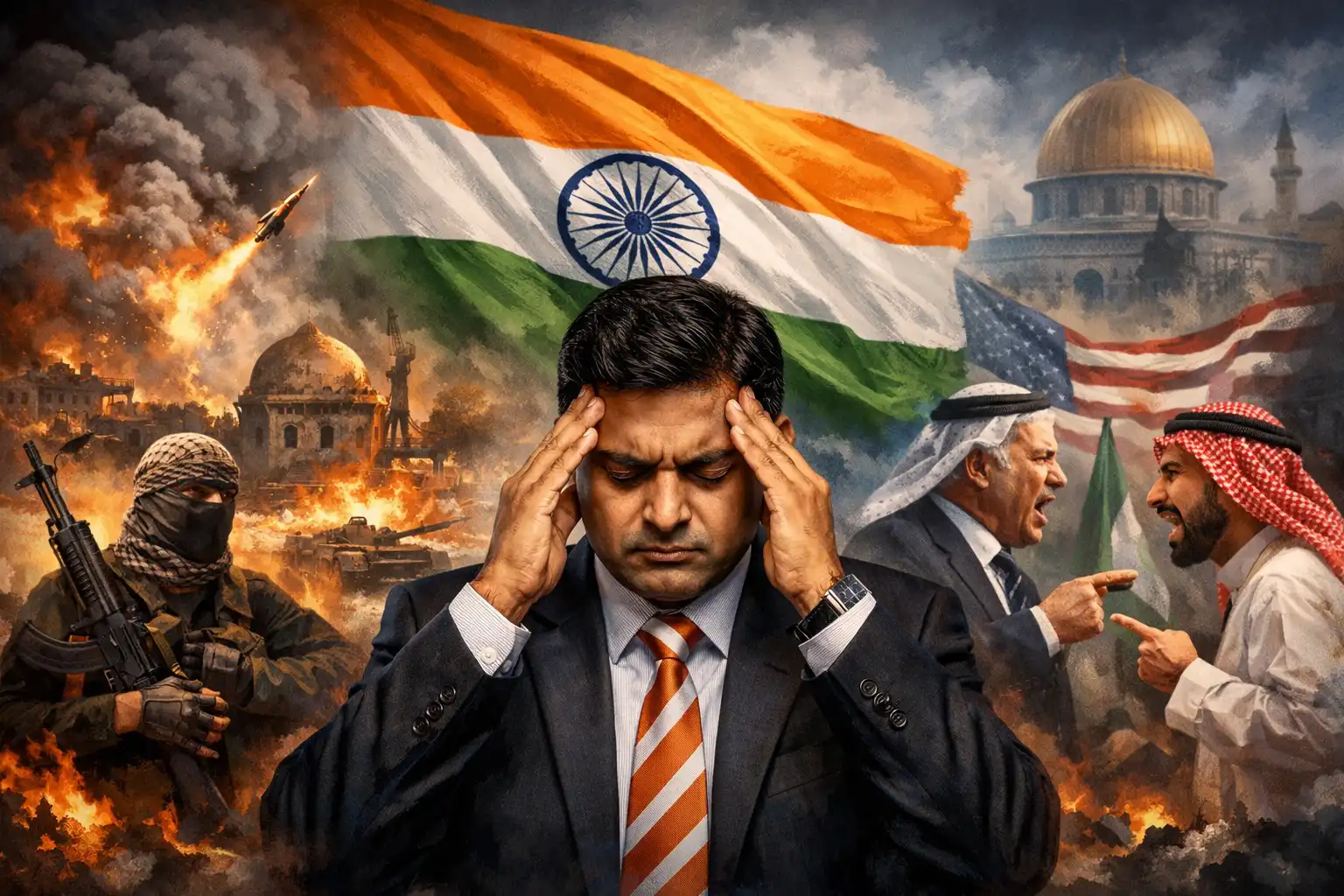
Middle East Conflict and India | Why the Situation Is a Diplomatic Nightmare
The ongoing conflict in the Middle East has created serious diplomatic challenges for many countries, and India is no exception. As tensions continue to rise in the region, India finds itself walking a delicate diplomatic tightrope. The Middle East conflict and India’s response have become increasingly complicated because of India’s strong relationships with multiple countries involved in the crisis.
India has historically maintained friendly relations with several Middle Eastern nations, including Israel, Iran, and the Gulf states. These partnerships are important for security cooperation, trade, and energy supplies. However, when fighting intensifies in the region, balancing these relationships becomes extremely difficult. Supporting one side too strongly could damage relations with another, making diplomacy in this situation extremely sensitive.
Impact on Energy Security
One of the biggest concerns linked to the Middle East conflict and India is energy security. India is one of the world’s largest importers of crude oil, and a significant portion of its oil supply comes from Middle Eastern countries. Any disruption in this region directly threatens India’s energy stability.
When conflicts escalate, oil prices often surge due to uncertainty in global markets. Even the fear of supply disruptions can cause dramatic price fluctuations. For India, rising oil prices mean higher import bills and increased pressure on the national economy.
Economic Consequences
Beyond energy, the Middle East conflict and India have broader economic implications. Higher oil prices often lead to inflation, affecting transportation costs, manufacturing, and everyday consumer goods. This can reduce purchasing power and slow economic growth.
India also maintains strong trade ties with many Middle Eastern countries. The Gulf region is a major destination for Indian exports and an important source of imports. When conflicts disrupt economic activity in these markets, trade volumes can decline, negatively affecting Indian businesses.
Security and Strategic Risks
Security concerns are another critical dimension of the Middle East conflict and India. Escalating violence in the region can increase global instability and create new security threats. For India, this could include the risk of extremist groups gaining strength in unstable environments.
The safety of Indian citizens living in conflict-affected areas is also a serious concern. During periods of escalation, India may need to organize emergency evacuations or provide assistance to its nationals abroad. Such operations require significant resources and careful coordination.
Navigating a Complex Future
Looking ahead, the Middle East conflict and India will remain closely connected. India must continue balancing its diplomatic relations while protecting its economic and strategic interests. Strengthening energy diversification, expanding trade partnerships, and maintaining neutral diplomacy will be crucial steps in managing the risks.
At the same time, India will likely continue advocating for peace and stability in the region. A stable Middle East benefits not only the countries directly involved but also global economies that depend on the region for trade and energy.
Economic and Energy Risks
Beyond diplomacy, the Middle East conflict poses serious economic risks for India, particularly in terms of energy security and trade stability. India imports a large share of its crude oil from Middle Eastern countries, and any escalation in the conflict can push global oil prices higher. Rising fuel costs increase India’s import bill, contribute to inflation, and place pressure on the national economy. Additionally, the Gulf region is an important market for Indian exports and a major source of remittances from Indian workers living there. If instability spreads or economic activity slows in these countries, it could reduce employment opportunities for Indian workers and lower remittance flows back to India. As a result, the Middle East conflict not only creates diplomatic complications but also threatens economic growth, energy stability, and financial security for India.

