

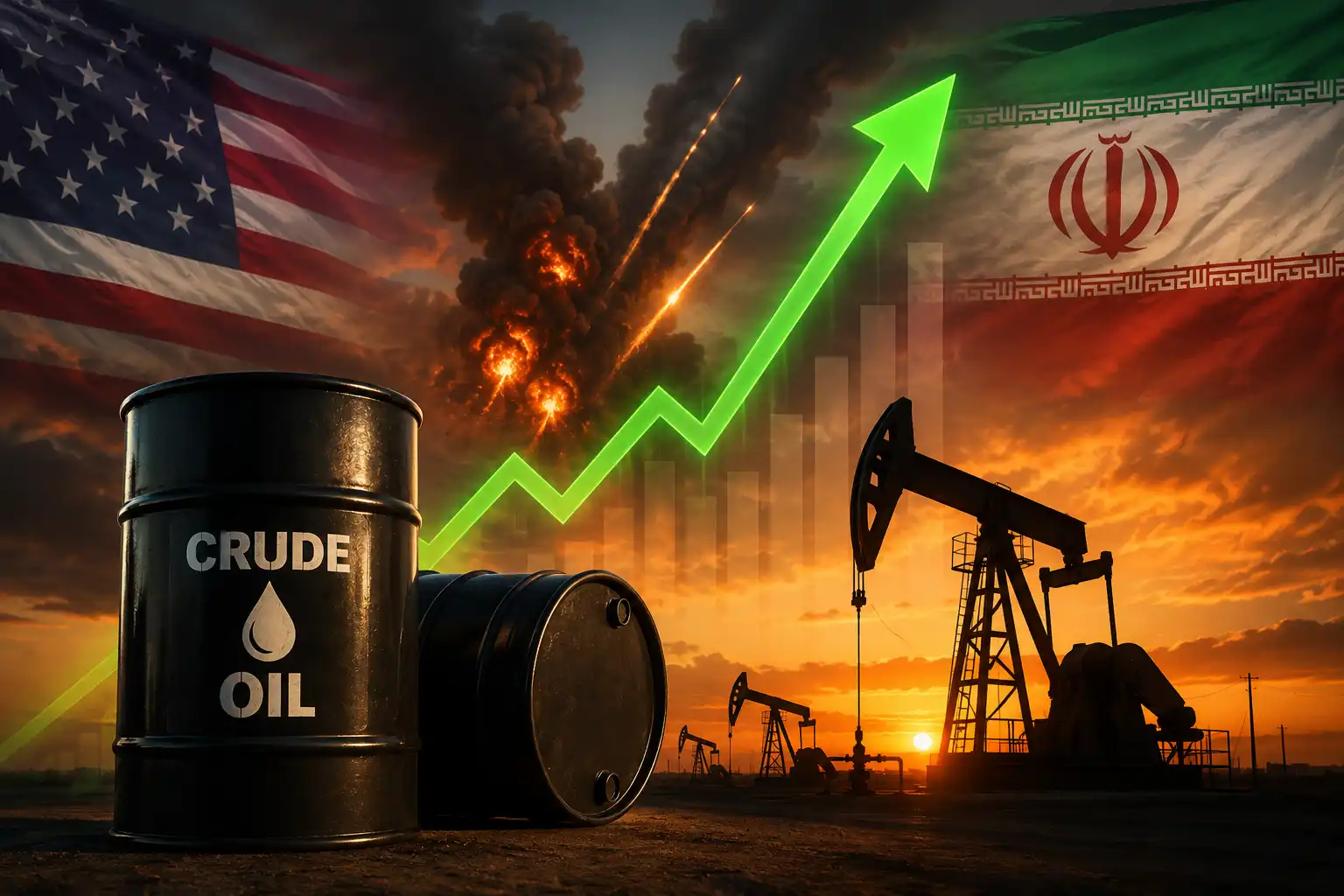
Crude Oil Prices Rise Again After Latest US Iran Clashes
Crude oil prices climbed once again after fresh military and political tensions between the United States and Iran increased fears of instability in the Middle East. Investors and energy traders are closely watching the situation as concerns grow over possible disruptions in global oil supply routes. The latest developments have already affected international energy markets, pushing benchmark oil prices upward during recent trading sessions.
The Middle East remains one of the most important regions for global energy production. Any conflict involving major countries in the region often creates uncertainty in financial markets, especially in the oil sector. Analysts believe that the recent escalation between Washington and Tehran could continue to influence crude oil prices in the coming weeks.
Why Crude Oil Prices Rise During US-Iran Conflicts
Crude oil prices usually rise whenever geopolitical tensions threaten oil-producing regions. Iran is one of the important oil-producing countries in the Middle East, while the United States maintains a strong military presence in the Gulf region. Any military confrontation or political dispute between the two countries raises concerns about supply interruptions.
One of the key reasons behind the latest increase is the fear of disruption near the Strait of Hormuz. This narrow waterway is responsible for transporting a large percentage of the world’s crude oil exports. If tensions increase further, shipping routes could face delays or restrictions, leading to reduced supply in global markets.
Energy experts say traders often react quickly to political uncertainty. Even the possibility of conflict can trigger price jumps because buyers attempt to secure oil supplies before prices move even higher.
Impact of Crude Oil Prices on the Global Economy
The rise in crude oil prices affects economies around the world. Higher oil prices usually lead to increased transportation and manufacturing costs. Airlines, shipping companies, and industrial sectors often experience financial pressure when fuel becomes more expensive.
Consumers may also notice higher petrol and diesel prices. In many countries, rising fuel costs can increase inflation because transportation expenses affect food prices and other daily necessities. Economists warn that prolonged increases in oil prices could slow economic growth in both developed and developing nations.
Asian and European markets have already shown signs of concern after the recent increase in oil prices. Several stock markets reacted cautiously as investors assessed the possible economic consequences of prolonged tensions in the Middle East.
Crude Oil Prices and Energy Market Uncertainty
Energy markets remain highly sensitive to political developments involving Iran and the United States. Oil traders are currently monitoring military activities, diplomatic statements, and international responses very closely. Any sudden escalation could create further volatility in oil prices.
Recent reports indicate that international oil benchmarks such as Brent crude and West Texas Intermediate recorded noticeable gains after the latest incidents. Financial analysts believe uncertainty itself is enough to keep prices elevated even if actual supply disruptions do not occur immediately.
Oil-importing countries are particularly concerned about long-term instability because higher energy costs place pressure on national budgets and trade balances. Governments may also face challenges controlling inflation if fuel prices continue to rise over an extended period.
How Middle East Tensions Influence Crude Oil Prices
Middle East conflicts have historically played a major role in shaping crude oil prices. The region contains some of the world’s largest oil reserves, making it central to global energy security. Whenever instability affects major producers or transportation routes, oil markets react almost instantly.
Past conflicts involving Gulf nations have resulted in sudden price spikes due to fears of limited supply. Investors remember earlier periods when tensions in the region caused severe disruptions to international oil trade. Because of this history, even smaller confrontations can influence market sentiment very quickly.
The latest clashes between the United States and Iran have revived concerns that regional instability could spread further. Energy companies and governments are now preparing for different scenarios while closely monitoring developments.
International Response to Rising Crude Oil Prices
Several countries have called for diplomatic efforts to reduce tensions between Washington and Tehran. International organizations and global leaders are encouraging dialogue to prevent the situation from escalating into a larger regional conflict.
Meanwhile, central banks and financial institutions are studying how rising crude oil prices could affect inflation and economic recovery. Higher energy costs may force policymakers to reconsider financial strategies if prices continue climbing.
Oil-producing nations outside the Middle East may also benefit from higher prices in the short term, as increased revenues can strengthen their economies. However, experts warn that excessive price increases could eventually reduce global demand if consumers and industries struggle with higher fuel costs.
What Investors Are Watching Next
Financial markets are expected to remain volatile as investors wait for further updates regarding US-Iran relations. Traders are especially focused on shipping activity in the Gulf region, military announcements, and diplomatic negotiations.
If tensions ease, crude oil prices could stabilize in the coming days. However, any new confrontation or disruption to supply routes may push prices even higher. Energy analysts believe uncertainty will continue to dominate global oil markets until clearer political developments emerge.
The recent increase in crude oil prices highlights how closely global energy markets are connected to geopolitical events. As the situation unfolds, governments, businesses, and consumers around the world will continue watching developments with great attention.

