

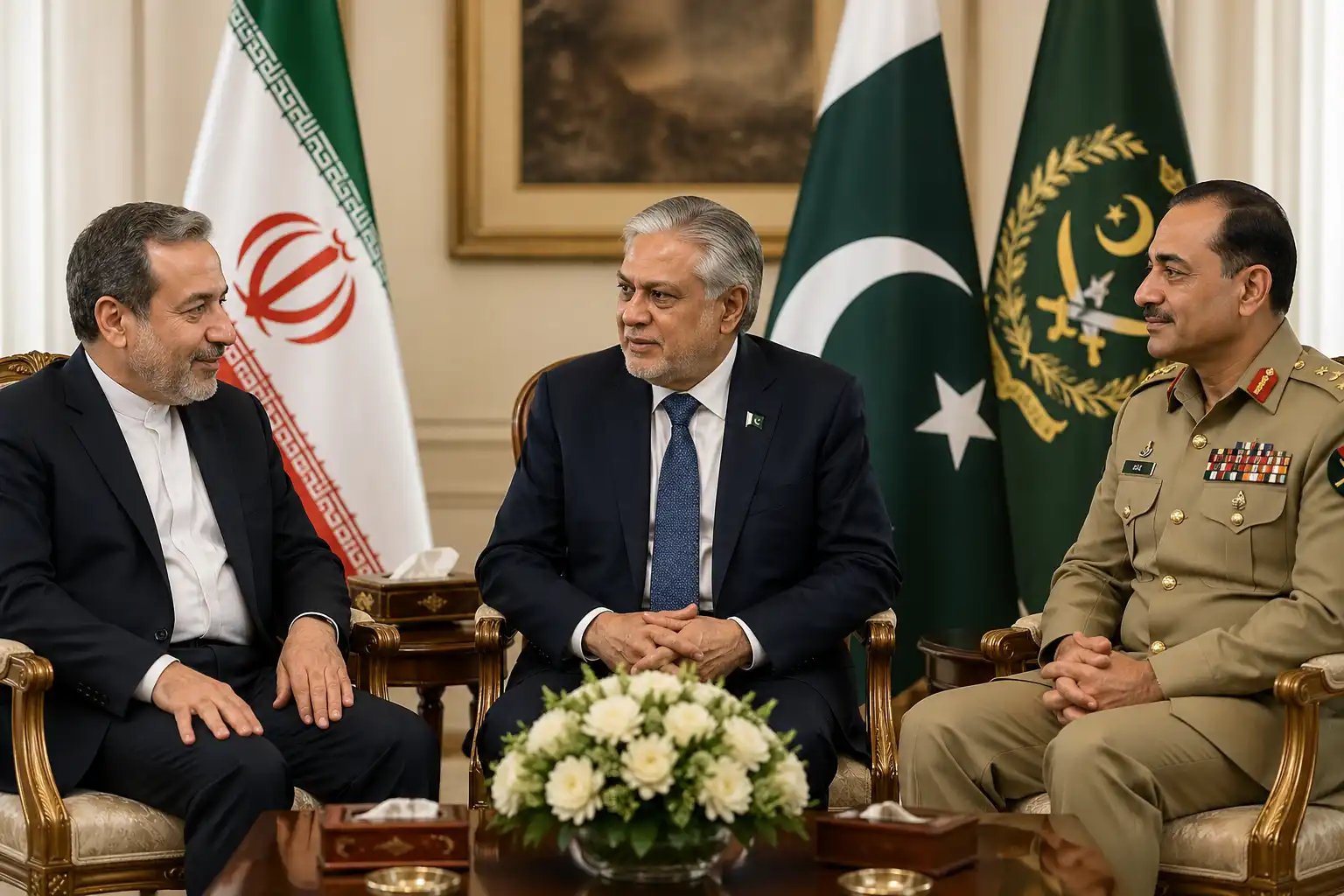
Abbas Araghchi Meets Ishaq Dar and Asim Munir
Iran’s senior diplomat Abbas Araghchi recently held significant meetings in Islamabad with Pakistan’s top leadership, including Foreign Minister Ishaq Dar and Chief of Army Staff General Asim Munir. The visit comes at a time of evolving regional dynamics, where diplomatic engagements between neighboring countries are becoming increasingly crucial. Abbas Araghchi’s discussions focused on strengthening bilateral relations between Iran and Pakistan, as well as addressing broader regional security concerns.
The Iranian Foreign Ministry clarified that despite speculation, Abbas Araghchi’s visit is not linked to any potential negotiations between Iran and the United States in Islamabad. This statement was issued to counter circulating reports suggesting that Pakistan might serve as a venue for indirect talks between the two long-standing adversaries.
Abbas Araghchi Meets Ishaq Dar and Asim Munir: Key Discussion Points
During his meetings, Abbas Araghchi engaged in detailed discussions with Ishaq Dar and General Asim Munir on multiple fronts. The agenda included economic cooperation, border security, and regional stability. Both sides emphasized the importance of maintaining peace along the shared border and enhancing trade ties.
Pakistan and Iran share deep cultural and historical connections, and these meetings reaffirmed the commitment of both nations to expand cooperation. Energy collaboration, particularly in the context of gas pipelines and electricity trade, was also reportedly discussed. Additionally, both parties exchanged views on the evolving situation in the Middle East and South Asia, highlighting the need for coordinated diplomatic efforts.
No Iran-US Talks Expected in Islamabad, Says Iranian Foreign Ministry
Addressing rumors circulating in international media, the Iranian Foreign Ministry firmly stated that no meeting between Iran and the United States is expected to take place in Islamabad. The spokesperson emphasized that Abbas Araghchi’s visit is strictly bilateral and focused on Iran-Pakistan relations.
This clarification is significant, as speculation had been growing about possible backchannel diplomacy involving Washington and Tehran. Pakistan has historically played a role in facilitating dialogue between countries, but in this case, Iranian officials have categorically denied any such plans.
The statement reflects Iran’s current diplomatic stance, which prioritizes direct and transparent negotiations rather than indirect talks through third-party venues. It also underscores Pakistan’s position as a regional partner rather than a mediator in this particular context.
Regional Implications of Abbas Araghchi’s Islamabad Visit
The visit carries broader implications for regional geopolitics. Strengthening ties between Iran and Pakistan can contribute to stability in a region often affected by security challenges and economic uncertainties. Cooperation on border management is particularly important, given past incidents that have strained relations between the two countries.
Moreover, enhanced diplomatic engagement can open avenues for economic growth, especially in energy and trade sectors. Both countries have the potential to benefit from increased connectivity and collaboration, which could also positively impact neighboring regions.
The absence of Iran-US talks in Islamabad also signals that current diplomatic channels between Tehran and Washington remain unchanged. It indicates that any future negotiations, if they occur, are likely to take place through established frameworks rather than new or unexpected venues.
Diplomatic Signals and Future Engagements
Abbas Araghchi’s meetings with Ishaq Dar and Asim Munir highlight the importance of sustained diplomatic dialogue in addressing regional challenges. The visit demonstrates Iran’s intention to strengthen ties with Pakistan while maintaining clarity on its international diplomatic engagements.
For Pakistan, hosting such high-level visits reinforces its role as a key player in regional diplomacy. The country continues to engage with multiple stakeholders to promote peace and cooperation, even as it navigates complex geopolitical realities.
Strategic Outlook Following Abbas Araghchi Meets Ishaq Dar and Asim Munir
Looking ahead, the outcomes of these meetings are expected to translate into more structured cooperation between Iran and Pakistan. Continued dialogue at diplomatic and military levels will likely shape future policies related to trade, security, and regional coordination.
The clear denial of Iran-US talks in Islamabad also helps set realistic expectations regarding Pakistan’s role in global diplomacy. While the country remains an important regional actor, this development indicates that its current focus is on strengthening bilateral partnerships rather than facilitating high-stakes international negotiations.

