

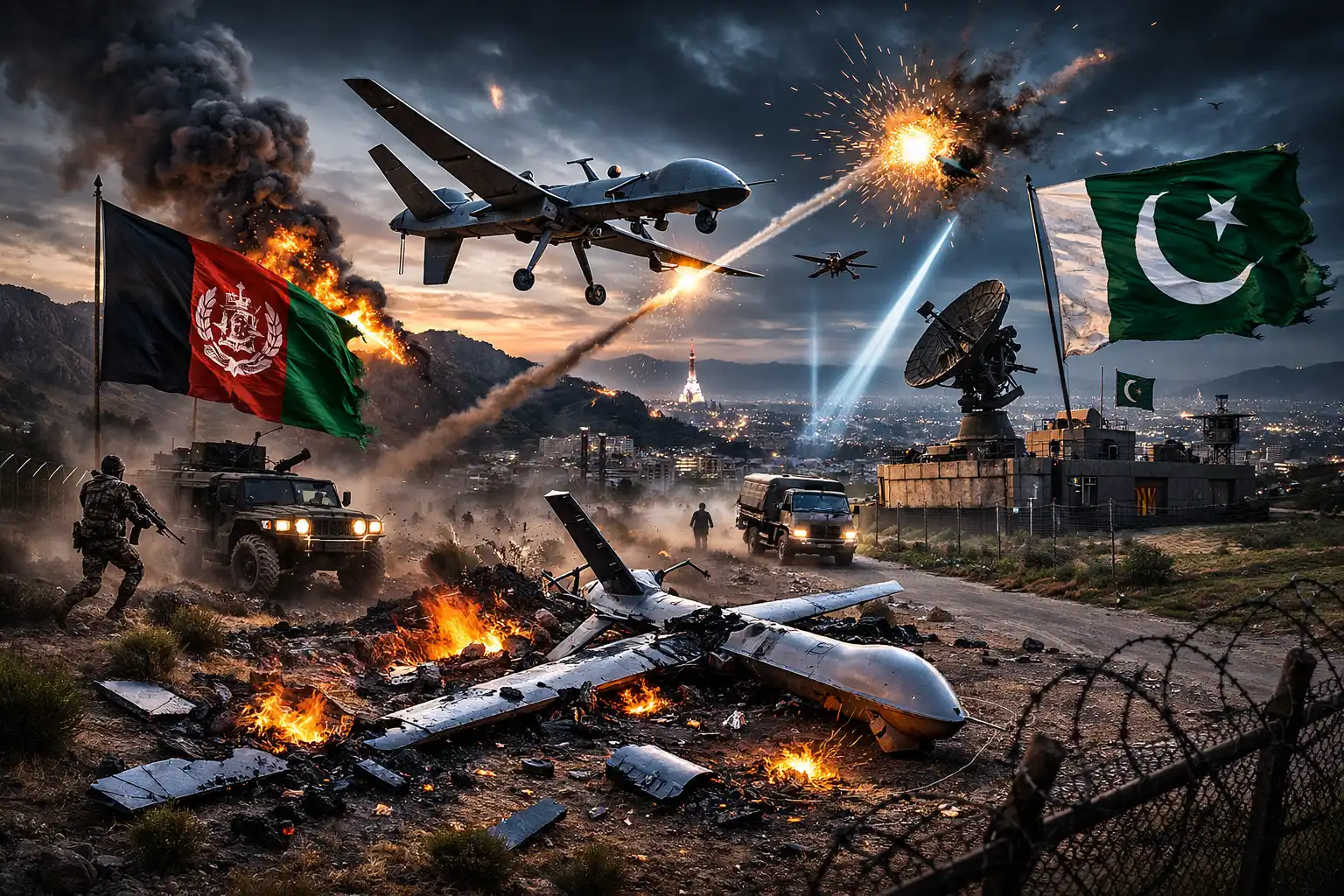
Afghan Ministry of Defense Claims Targeting of Hamza Camp | Pakistan Says Two Drones Shot Down in Rawalpindi
The Afghan Ministry of Defense recently claimed that it had targeted Hamza Camp, a location it alleged was linked to militant activity. According to statements released by Afghan officials, the operation was conducted using drones aimed at what they described as a strategic site. The announcement quickly attracted attention in the region because of the sensitive nature of cross-border security issues between Afghanistan and Pakistan.
Afghan authorities stated that the strike was intended to disrupt militant networks they believe operate across borders. Officials did not provide detailed evidence regarding the exact damage or results of the operation. However, the claim itself triggered widespread discussion in regional media and security circles due to the potential implications for relations between the two neighboring countries.
Pakistan’s Response to the Hamza Camp Drone Claim
Pakistan’s military spokesperson, the Inter-Services Public Relations (ISPR), responded soon after the claim surfaced. According to ISPR, two drones were detected in the airspace near Rawalpindi and were successfully shot down by Pakistan’s air defense systems.
The military clarified that both drones were intercepted before they could reach any sensitive installations. ISPR emphasized that no damage was reported and that the drones did not cause casualties or destruction. Officials stated that security forces acted swiftly and effectively to neutralize the potential threat.
Hamza Camp and Its Strategic Significance
The mention of Hamza Camp in the Afghan Ministry of Defense statement raised questions about the site’s significance. Analysts believe that such locations often become part of broader narratives related to counterterrorism operations in the region. However, details regarding the specific facility mentioned in the claim remain limited and unverified.
Security experts note that accusations about militant bases across borders have historically contributed to tensions between countries in the region. Because of this, claims regarding strikes or operations are usually scrutinized carefully before being accepted as factual.
Regional Security Concerns After the Hamza Camp Incident
The incident involving the alleged targeting of Hamza Camp highlights ongoing security concerns in South Asia. Cross-border tensions, militant activity, and drone technology have become important elements of modern security challenges in the region.
Drone usage in particular has grown significantly in recent years. Many governments now rely on unmanned aerial vehicles for surveillance and military operations. However, the use of drones near international borders can easily lead to misunderstandings or escalation if not managed carefully.
Pakistan’s Position on Airspace Violations and Hamza Camp Allegations
Pakistan’s military reiterated that it maintains strict monitoring of its airspace. According to ISPR, the country’s defense systems are capable of detecting and intercepting any unauthorized aerial objects. The successful downing of two drones near Rawalpindi was presented as evidence of that capability.
Officials also stressed that Pakistan remains committed to protecting its sovereignty and territorial integrity. At the same time, the government has frequently called for dialogue and cooperation with neighboring countries to address shared security threats.
Regarding the Hamza Camp allegation, Pakistani authorities have not confirmed the existence of any such targeted site. Instead, they maintain that the drones were neutralized before any damage could occur and that the incident did not affect civilian life or infrastructure.
Conclusion
The Afghan Ministry of Defense’s claim about targeting Hamza Camp and Pakistan’s response about shooting down two drones in Rawalpindi illustrate the complex security environment in the region. While Afghanistan suggested it carried out a strike against a specific location, Pakistan firmly stated that the drones were intercepted and that no harm was done.
As drone technology continues to play a larger role in modern conflicts, incidents like this may become more common. For regional stability, experts emphasize the importance of accurate information, diplomatic engagement, and responsible handling of cross-border security concerns.

