

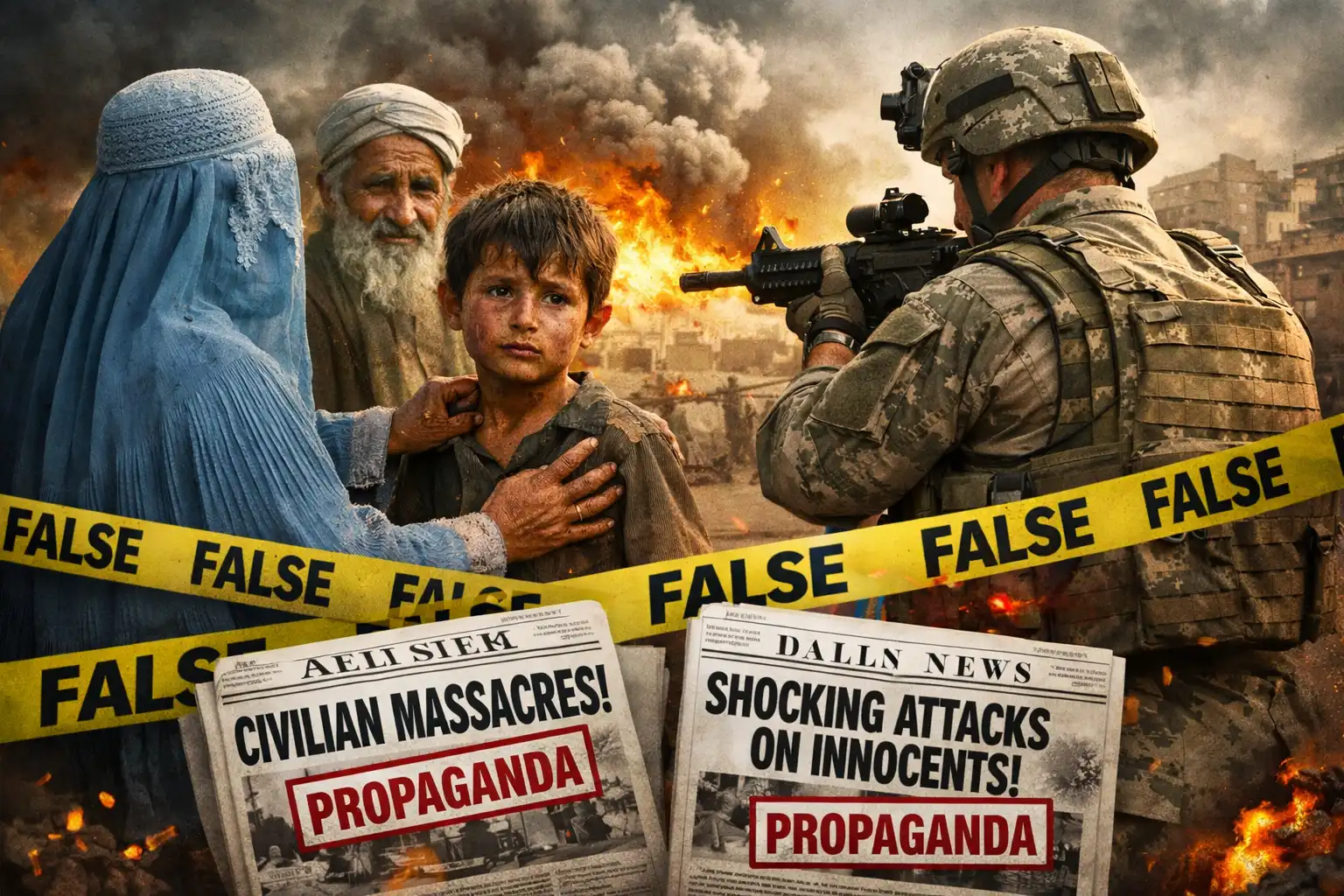
Misleading Narratives About Targeting Civilians in Afghanistan Exposed
The issue of civilian harm in conflict zones is deeply sensitive, and Afghanistan has endured decades of violence that have left lasting scars on its people. In such a fragile environment, information spreads rapidly—often without verification. The phrase Afghanistan civilian targeting propaganda refers to coordinated efforts to spread misleading or exaggerated claims that specific groups, forces, or authorities are deliberately targeting civilians without credible evidence. While civilian casualties have tragically occurred throughout Afghanistan’s conflicts, it is essential to separate verified facts from politically motivated narratives designed to inflame tensions or manipulate public opinion.
Historical Context Behind Afghanistan Civilian Targeting Propaganda
Afghanistan’s modern history has been shaped by successive conflicts, including the Soviet invasion, civil war, the rise of the Taliban, and the post-2001 international military presence. Throughout these periods, various actors have been accused of harming civilians. International organizations such as the United Nations have documented civilian casualties, emphasizing the need for accountability. However, alongside legitimate reporting, disinformation campaigns have often emerged.
These campaigns sometimes rely on selectively presented footage, unverified social media posts, or emotionally charged language intended to provoke outrage. In many cases, incidents are portrayed as deliberate targeting before investigations are complete. This pattern contributes to the growth of Afghanistan civilian targeting propaganda, where narratives outpace verified evidence.
How Afghanistan Civilian Targeting Propaganda Spreads
The digital age has transformed how information circulates. Social media platforms allow images and claims to reach millions within minutes. In Afghanistan, where internet access has expanded significantly in recent years, online spaces have become central to political discourse.
Propaganda campaigns often follow a predictable pattern. First, a dramatic claim is posted, usually accompanied by graphic images or short video clips without context. Second, influential accounts amplify the message, framing it as proof of intentional harm to civilians. Finally, repeated sharing cements the narrative before independent verification occurs.
In conflict settings, it is often difficult to immediately determine what happened. Fog of war, limited access to remote areas, and competing political interests create an environment ripe for misinformation. Afghanistan civilian targeting propaganda thrives in these gaps, exploiting uncertainty to shape perceptions.
The Consequences of Afghanistan Civilian Targeting Propaganda
Misleading claims about civilian targeting can have serious consequences. They may incite retaliatory violence, deepen mistrust among communities, or undermine humanitarian operations. When people believe that a particular group is deliberately targeting civilians, reconciliation becomes far more difficult.
Moreover, false or exaggerated claims can overshadow genuine cases of harm that require investigation and justice. When everything is labeled as deliberate targeting, it becomes harder for credible organizations to distinguish between intentional attacks and tragic mistakes. As a result, accountability mechanisms may be weakened rather than strengthened.
International actors, local authorities, and armed groups have all faced accusations at different times. Without rigorous investigation, such accusations can quickly turn into entrenched narratives. Afghanistan civilian targeting propaganda thus risks distorting public understanding of complex security incidents.
Distinguishing Facts from Afghanistan Civilian Targeting Propaganda
Countering misinformation requires careful analysis and responsible reporting. Independent monitoring organizations, investigative journalists, and humanitarian agencies play a vital role in verifying claims. They examine witness testimonies, satellite imagery, medical reports, and on-the-ground evidence before drawing conclusions.
Readers and social media users also have a responsibility. Before sharing alarming claims, it is important to consider the source. Is the information coming from a reputable organization? Has it been corroborated by multiple independent outlets? Does the report distinguish between confirmed facts and allegations?
Critical thinking is essential in identifying Afghanistan civilian targeting propaganda. Emotional language, lack of evidence, and calls for immediate retaliation are often warning signs. By contrast, credible reports typically acknowledge uncertainty and avoid sweeping generalizations.
Promoting Accountability Without Amplifying Propaganda
Addressing civilian harm in Afghanistan remains a moral and legal imperative. International humanitarian law prohibits the intentional targeting of civilians, and any credible allegation deserves investigation. However, advocacy for accountability must be grounded in evidence rather than rumor.
Governments, civil society groups, and media outlets should prioritize transparency. Timely investigations and clear communication can reduce the space in which propaganda flourishes. When authorities openly share findings—whether they confirm or refute allegations—public trust can gradually improve.
At the same time, international observers should avoid politicizing tragedies. Civilian suffering should never become a tool in information warfare. The focus must remain on protecting lives, supporting victims, and preventing future harm.
FOLLOW LIVE UPDATES
Conclusion | Moving Beyond Afghanistan Civilian Targeting Propaganda
Afghanistan’s people have endured immense hardship. In such a context, truthful reporting is not merely a professional standard; it is a necessity for peace and stability. Afghanistan civilian targeting propaganda distorts reality, fuels division, and undermines genuine efforts to protect civilians.
By promoting responsible journalism, demanding credible investigations, and practicing critical media consumption, societies can challenge misleading narratives. Only through evidence-based dialogue can the cycle of rumor and retaliation be broken, paving the way for accountability and reconciliation in Afghanistan.

