

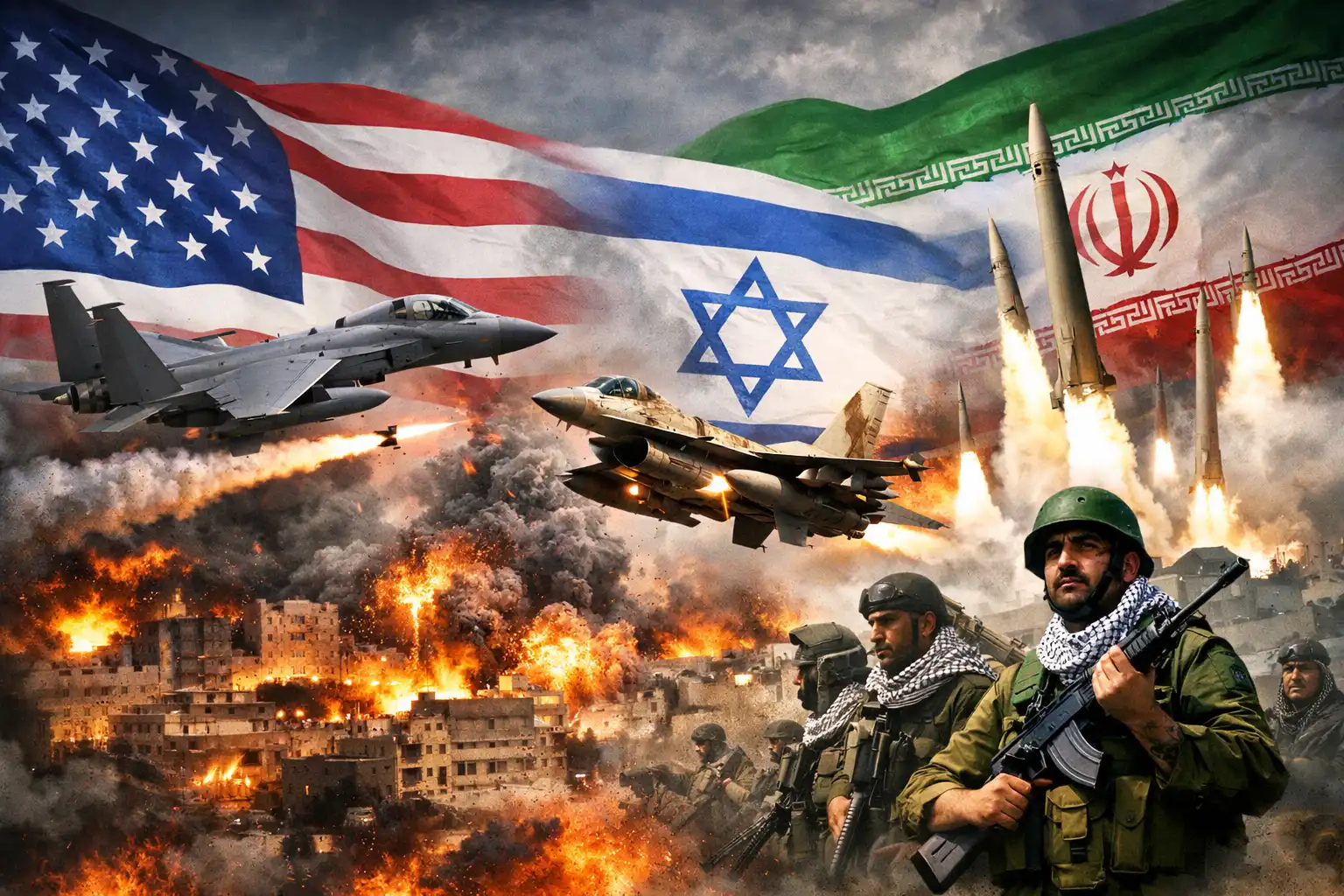
US and Israel Step Up Attacks as War With Iran Engulfs Region
The conflict between the United States, Israel, and Iran has rapidly escalated into one of the most serious confrontations in the modern Middle East. What began as targeted military strikes has expanded into a broader regional war involving missile exchanges, air raids, and growing instability across neighboring countries. The scale and intensity of the fighting have raised fears of a prolonged conflict that could reshape regional security dynamics and disrupt global economic stability.
US and Israel Step Up Attacks as War With Iran Engulfs Region Across Multiple Fronts
The United States and Israel have intensified coordinated military operations against Iranian military infrastructure. Airstrikes have targeted missile facilities, command centers, radar systems, and naval assets believed to be linked to Iran’s strategic operations. Defense officials have stated that the objective of these strikes is to weaken Iran’s ability to project military power and reduce what they describe as direct threats to allied forces in the region. Israeli air operations have reportedly focused on strategic sites in and around major Iranian cities, while U.S. forces have carried out precision strikes aimed at long-range missile platforms and defensive installations. The campaign reflects a high level of coordination between Washington and Tel Aviv, signaling a unified military approach.
Iran’s Retaliation Intensifies as US and Israel Step Up Attacks as War With Iran Engulfs Region
Iran has responded with significant force, launching ballistic missiles and drone attacks toward Israeli territory and U.S. military positions in the Gulf. Several Gulf states have reported intercepting incoming projectiles, while air defense systems across the region remain on high alert. Iranian officials have described the retaliation as a defensive response to what they consider acts of aggression. The missile exchanges have caused casualties and damage in multiple areas, with civilian populations facing heightened risk. The situation has created widespread disruption, including temporary airspace closures and interruptions to regional trade routes. The strategic Strait of Hormuz, a vital passage for global oil shipments, has become a focal point of international concern amid fears that shipping lanes could be further threatened.
Expanding Conflict Beyond Iran’s Borders
The conflict has not remained confined to Iran and Israel. Armed groups aligned with Iran have increased their involvement, launching rockets and conducting operations against Israeli targets. In response, Israel has carried out strikes beyond Iranian territory, widening the geographic scope of the war. This expansion raises the possibility of a multi-front confrontation that could draw in additional actors. Military analysts warn that the participation of non-state armed groups complicates efforts to contain the violence. Each new front increases the risk of miscalculation and unintended escalation, particularly as regional alliances and rivalries intersect.
Humanitarian and Economic Consequences
The human cost of the war continues to rise. Reports indicate growing civilian casualties and damage to infrastructure in affected areas. Hospitals and emergency services face mounting pressure, and displacement is becoming an increasing concern in some regions. Beyond the immediate battlefield, the economic consequences are already visible. Oil markets have experienced volatility, reflecting fears of supply disruptions. Investors and policymakers worldwide are monitoring developments closely, aware that prolonged instability in the Middle East could have far-reaching economic implications. Rising energy prices and uncertainty in global markets are adding to the broader impact of the conflict.
Diplomatic Efforts and Uncertain Outlook
International leaders have called for restraint and renewed diplomatic engagement to prevent further escalation. However, with both sides asserting their right to defend national security interests, the path toward de-escalation remains uncertain. Diplomatic channels are reportedly active behind the scenes, but public statements from involved governments suggest that military operations may continue in the near term. As US and Israel step up attacks as war with Iran engulfs region, the risk of deeper regional involvement grows. The coming weeks will likely determine whether negotiations can gain traction or whether the conflict will intensify further, potentially altering the balance of power in the Middle East for years to come.

