

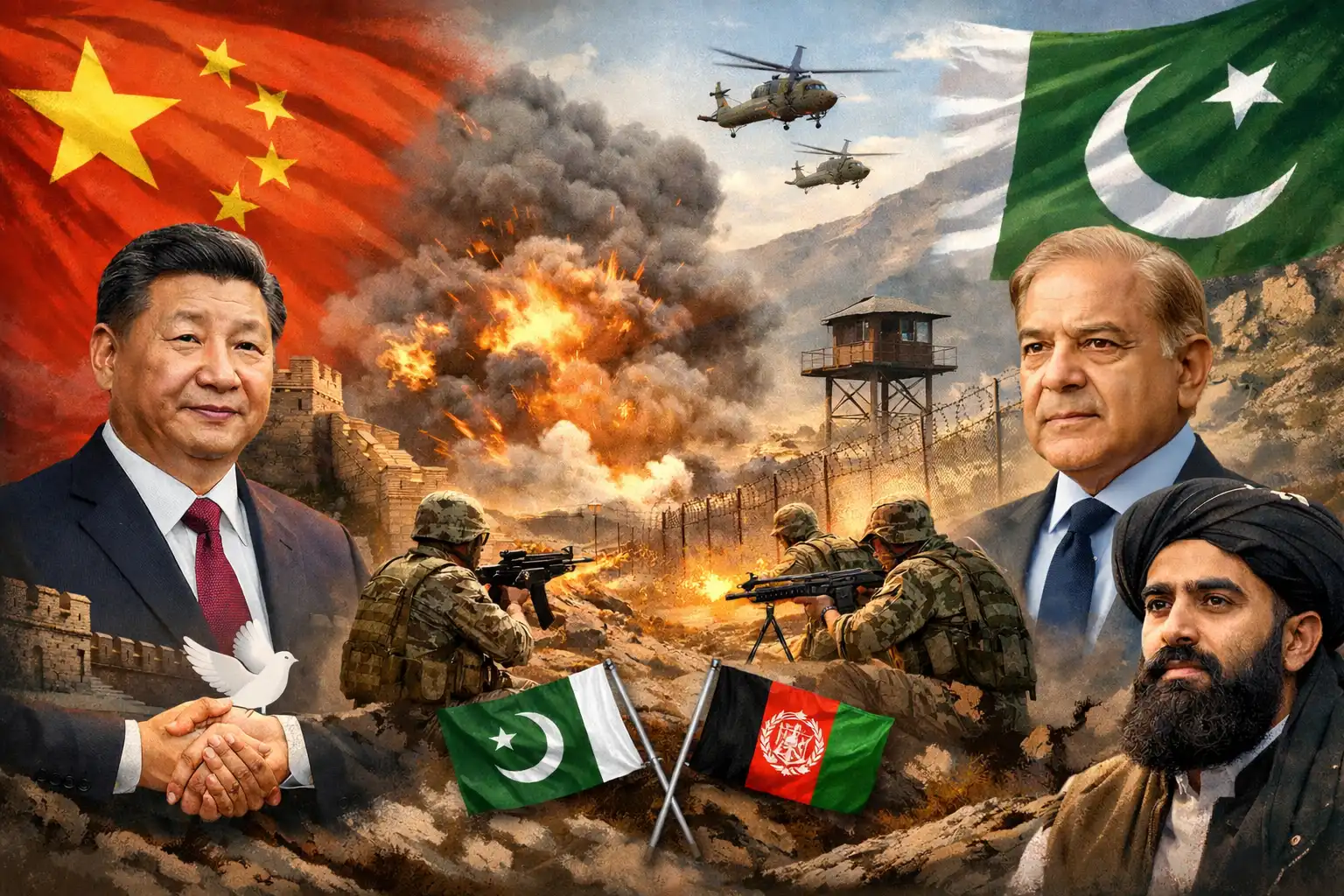
Will China Mediation Succeed Amid Pakistan Afghanistan Cross Border Attacks
Tensions between Pakistan and Afghanistan have periodically escalated in recent years, particularly due to cross-border attacks, militant activity, and security concerns along their shared border. Amid these growing tensions, China has stepped forward with diplomatic efforts to ease the situation. The key question now is whether China’s mediation will succeed in reducing hostility between the two neighboring countries.
Background of Pakistan Afghanistan Cross-Border Tensions
Relations between Pakistan and Afghanistan have long been complicated by security challenges, historical mistrust, and disagreements over border management. In recent years, cross-border attacks and militant infiltration have increased tensions. Pakistan has repeatedly accused militant groups based in Afghan territory of carrying out attacks inside Pakistan, while Afghanistan has at times responded with its own allegations regarding border violations.
These incidents have led to periodic military exchanges and heightened diplomatic friction. Both sides have attempted to secure their borders, but the mountainous terrain and porous frontier make it difficult to fully control movement. As a result, mistrust continues to grow, making the situation more volatile.
China’s Role in the Pakistan–Afghanistan Conflict
China has emerged as a potential mediator due to its close diplomatic and economic ties with Pakistan and its increasing engagement with Afghanistan. Beijing views stability in the region as critical for its broader economic and strategic initiatives, including regional connectivity and development projects.
Through diplomatic channels, China has encouraged dialogue between Islamabad and Kabul. Chinese officials have hosted meetings and urged both sides to resolve their disputes through negotiation rather than military confrontation. Beijing believes that cooperation between Pakistan and Afghanistan is essential for regional stability and economic development.
Can China’s Mediation Succeed Amid Pakistan–Afghanistan Cross-Border Attacks?
China’s mediation efforts come at a time when tensions between Pakistan and Afghanistan remain sensitive. On one hand, China’s strong relationship with Pakistan and its growing influence in Afghanistan give it a unique position to facilitate dialogue. Both countries recognize China as a major regional power with economic leverage and diplomatic influence.
However, mediation in such a complex conflict is not easy. The core issues between Pakistan and Afghanistan—such as border security, militant safe havens, and political mistrust—have existed for decades. Resolving them requires not only diplomatic discussions but also practical cooperation on security matters.
China can encourage dialogue and create platforms for negotiation, but the ultimate success of mediation depends on the willingness of both Pakistan and Afghanistan to compromise. If both sides prioritize long-term stability over short-term political interests, China’s efforts could produce meaningful results.
Challenges Facing China’s Mediation Efforts
Despite its influence, China faces several challenges in mediating the Pakistan–Afghanistan conflict. One of the biggest obstacles is the deep-rooted mistrust between the two countries. Years of accusations and security incidents have made cooperation difficult.
Another challenge is the presence of militant groups operating near the border. These groups often act independently of state control and can derail diplomatic efforts by carrying out attacks that escalate tensions.
Furthermore, internal political dynamics within both Pakistan and Afghanistan can complicate negotiations. Domestic pressure and national security concerns may limit how far each government is willing to compromise.
The Potential Impact of Successful Mediation
If China’s mediation succeeds, it could significantly improve regional stability. Reduced tensions between Pakistan and Afghanistan would help enhance border security, encourage economic cooperation, and create opportunities for regional development.
Improved relations could also facilitate trade, infrastructure development, and connectivity projects across Central and South Asia. Such progress would benefit not only Pakistan and Afghanistan but also the broader region.
Conclusion
China’s attempt to mediate between Pakistan and Afghanistan reflects its growing role in regional diplomacy. While the path to peace is complicated by longstanding disputes and security challenges, dialogue facilitated by China could open new opportunities for cooperation.
Whether China’s mediation succeeds will ultimately depend on the willingness of Pakistan and Afghanistan to engage constructively and address the underlying causes of their tensions. If both sides commit to diplomatic solutions, China’s efforts could play an important role in reducing conflict and promoting stability in the region.

