

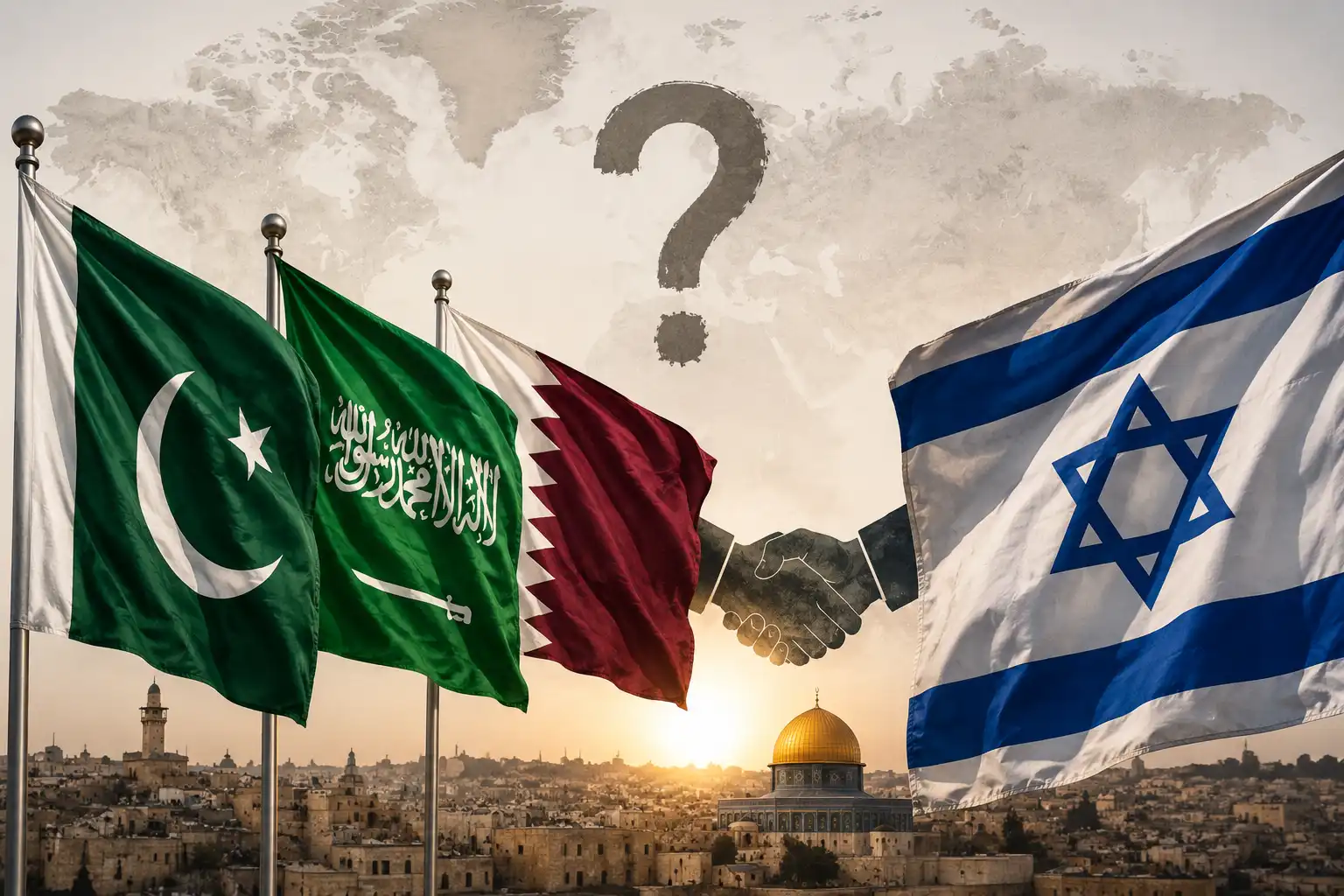
Growing Debate Over Pakistan Saudi Arabia and Qatar Expected to Recognize Israel
The political landscape of the Middle East is once again under global attention as discussions continue about whether Pakistan, Saudi Arabia, and Qatar could eventually move toward recognizing Israel. Diplomatic conversations, changing regional alliances, and increasing pressure from Western powers have fueled speculation across international media and political circles.
At the center of the debate is American Senator Lindsey Graham, who recently issued strong warnings regarding instability in the Middle East. His remarks about “serious consequences” highlighted the growing tensions connected to Iran, regional security, and future diplomatic relations between Muslim-majority nations and Israel.
While no official announcements have been made by Pakistan, Saudi Arabia, or Qatar regarding formal recognition of Israel, the topic remains highly sensitive due to public opinion, religious considerations, and the long-standing Palestinian issue.
Why Recognition of Israel Remains a Sensitive Issue
For decades, many Muslim countries avoided diplomatic relations with Israel because of the Palestinian conflict. The issue carries deep political and emotional significance across the Islamic world. Pakistan has repeatedly stated that it cannot recognize Israel until a fair solution for Palestinians is achieved.
Pakistan has consistently supported the establishment of an independent Palestinian state with East Jerusalem as its capital. Public opinion inside Pakistan largely opposes normalization with Israel unless meaningful progress is made for Palestinian rights.
Similarly, Saudi Arabia has maintained a cautious approach despite growing cooperation with Western allies and regional security partnerships. Saudi officials have indicated that recognition of Israel would depend on progress toward peace with Palestinians.
Qatar also continues to play a balancing role in Middle Eastern diplomacy. Qatar maintains communication channels with multiple regional actors while supporting humanitarian efforts in Gaza.
Pakistan, Saudi Arabia and Qatar Expected to Recognize Israel Amid Regional Shifts
The Abraham Accords changed the political environment in the Middle East after countries like the United Arab Emirates and Bahrain established diplomatic ties with Israel. Those agreements were supported by the United States and were presented as steps toward regional stability and economic cooperation.
Since then, analysts have frequently discussed whether other Muslim-majority nations could eventually follow a similar path. Supporters of normalization argue that economic cooperation, technology partnerships, and regional security coordination could benefit all sides.
However, opponents believe recognition without resolving the Palestinian conflict would damage public trust and weaken support for Palestinian rights across the Muslim world.
Pakistan’s leadership has repeatedly denied reports suggesting immediate recognition plans. Political leaders inside the country understand that the issue carries major domestic sensitivity and could trigger strong public reaction.
Saudi Arabia has also avoided making a final decision despite reports of behind-the-scenes diplomatic contacts. The kingdom remains one of the most influential countries in the Muslim world, making any potential move highly significant globally.
Lindsey Graham Warns of “Serious Consequences”
American Senator Lindsey Graham recently made headlines after warning about “serious consequences” related to rising Middle Eastern tensions. His comments were largely connected to Iran’s regional activities and security concerns involving Israel and U.S. allies.
Graham has long supported stronger ties between Arab nations and Israel. He believes broader normalization agreements could create a united front against regional threats and increase economic cooperation in the Middle East.
According to political analysts, Washington continues encouraging stronger diplomatic engagement between Israel and Arab states. The United States sees normalization as part of a broader strategy aimed at reshaping regional alliances.
At the same time, critics argue that pressure campaigns or political warnings may increase tensions instead of helping peaceful dialogue. Many experts believe sustainable peace can only emerge through meaningful negotiations involving Palestinian leadership.
Impact on Middle Eastern Politics
The possibility of Pakistan, Saudi Arabia, and Qatar recognizing Israel could reshape Middle Eastern geopolitics in several ways. Diplomatic recognition could strengthen economic partnerships, improve trade opportunities, and increase cooperation in technology, defense, and energy sectors.
For Israel, normalization with major Muslim countries would represent a major diplomatic achievement and could reduce regional isolation.
For Gulf countries, stronger ties with Israel may provide access to advanced technology, cybersecurity cooperation, and strategic partnerships against common threats.
However, such developments could also create political challenges. Public demonstrations, opposition criticism, and religious concerns may increase inside countries where support for Palestine remains strong.
The future of Gaza and the broader Palestinian issue will likely remain central to any discussions regarding recognition of Israel by Muslim-majority nations.
FOLLOW LIVE UPDATES
International Reactions and Future Possibilities
Global powers continue closely monitoring developments in the Middle East. The United States supports expanding diplomatic ties between Israel and Arab countries, while other nations emphasize the importance of resolving the Palestinian issue first.
Political experts believe any major diplomatic breakthrough would require careful negotiations and gradual confidence-building measures. Regional stability, security concerns, economic interests, and domestic public opinion will all influence future decisions.
For now, Pakistan, Saudi Arabia, and Qatar continue maintaining their official positions while diplomatic speculation grows internationally. Whether normalization eventually happens or not, the debate has already become one of the most discussed political topics in the Muslim world and beyond.

