

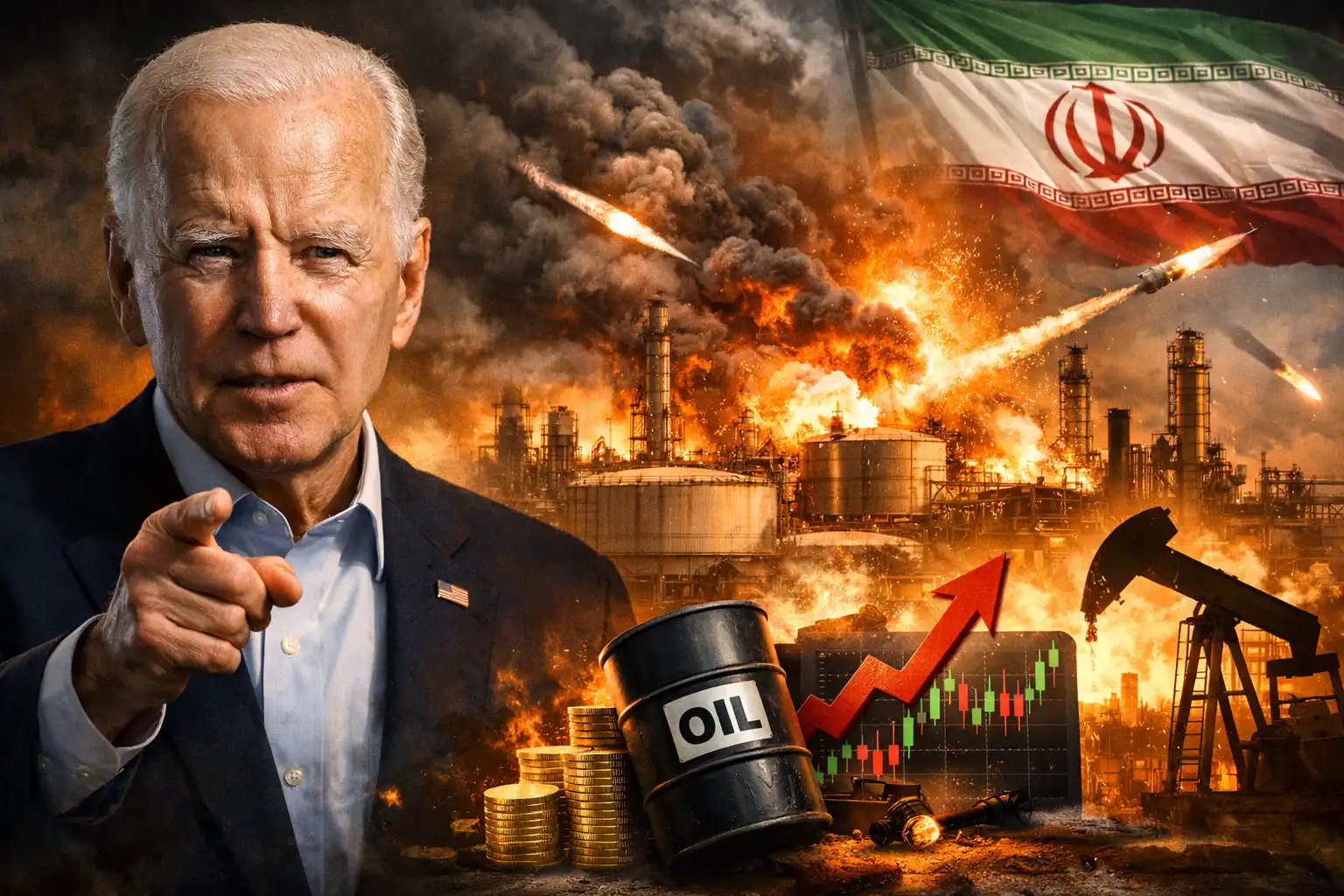
US President Threatens New Strikes on Iranian Oil Facilities Crude Oil Prices Surge
The US President’s threat of new strikes on Iranian oil facilities has intensified tensions in the Middle East and triggered sharp reactions in global energy markets. The warning comes amid growing geopolitical uncertainty in the region, which plays a critical role in the world’s oil supply. Analysts say that any direct action targeting Iranian oil infrastructure could disrupt supply routes and significantly influence global crude oil prices.
The Middle East remains one of the most important oil-producing regions in the world. Even the possibility of military escalation involving major energy producers tends to shake investor confidence and increase volatility in oil markets. Following the recent statement, crude oil prices experienced another surge as traders reacted to fears of potential supply disruptions.
Impact of US President’s Threat of New Strikes on Iranian Oil Facilities on Oil Prices
The US President threat of new strikes on Iranian oil facilities has already begun affecting global energy markets. International crude benchmarks recorded noticeable gains shortly after the warning, reflecting market concerns about future supply stability.
Energy analysts explain that Iran plays a significant role in global oil supply despite ongoing sanctions. Its oil facilities, refineries, and export terminals are vital for maintaining the flow of crude to international markets. Any military strike targeting these installations could reduce production capacity and create shortages in global supply chains.
As a result, traders and investors often react quickly to political developments in the region. The latest warning has led to speculative buying in oil futures, pushing prices higher as markets attempt to price in potential risks.
Global Economic Concerns Amid Rising Oil Prices
The US President’s threat of new strikes on Iranian oil facilities is not only affecting energy markets but is also raising concerns about the global economy. Rising crude oil prices can lead to higher transportation and production costs, which eventually translate into increased prices for consumers.
Economists warn that if oil prices continue to climb, inflation could rise in many countries. Nations that rely heavily on imported energy may face additional economic pressure, especially developing economies that already struggle with currency volatility and trade imbalances.
Industries such as aviation, shipping, manufacturing, and logistics are particularly sensitive to fuel price fluctuations. Even small increases in crude oil prices can significantly impact operational costs, forcing companies to adjust prices or reduce spending.
Strategic Importance of Iranian Oil Infrastructure
The US President’s threat of new strikes on Iranian oil facilities highlights the strategic importance of Iran’s energy infrastructure. Iran possesses one of the largest proven oil reserves in the world and operates numerous facilities responsible for extraction, refining, and export.
These installations include offshore fields, pipelines, storage terminals, and refineries that support both domestic consumption and international trade. Because of this extensive network, any disruption could have ripple effects across the global energy market.
Experts also point out that Iran’s geographical location near the Strait of Hormuz adds to the strategic complexity. A large portion of the world’s oil shipments passes through this narrow waterway, making it a critical chokepoint for global energy transportation.
Diplomatic Reactions and Regional Stability
The US President’s threat of new strikes on Iranian oil facilities has sparked reactions from various international actors. Some governments have called for restraint and diplomatic engagement to prevent further escalation in the region.
Regional stability remains a key concern for policymakers and global markets alike. Any direct confrontation could escalate tensions beyond the immediate parties involved, potentially drawing in other regional or global powers.
Diplomatic efforts are often seen as the most effective way to manage such crises. International organizations and political leaders frequently emphasize dialogue and negotiation to avoid military escalation that could destabilize global markets and security.
Future Outlook for Oil Markets
Looking ahead, the US President’s threat of new strikes on Iranian oil facilities is expected to keep oil markets on edge. Traders will closely monitor political developments, military movements, and diplomatic responses over the coming weeks.
If tensions continue to rise, crude oil prices could remain elevated or even increase further. On the other hand, any signs of diplomatic progress may help stabilize markets and ease fears of supply disruptions.
Energy experts believe that geopolitical developments in the Middle East will remain one of the most important factors influencing oil prices in the near future. As long as uncertainty persists, global markets are likely to remain sensitive to any new statements or developments related to the situation.

