

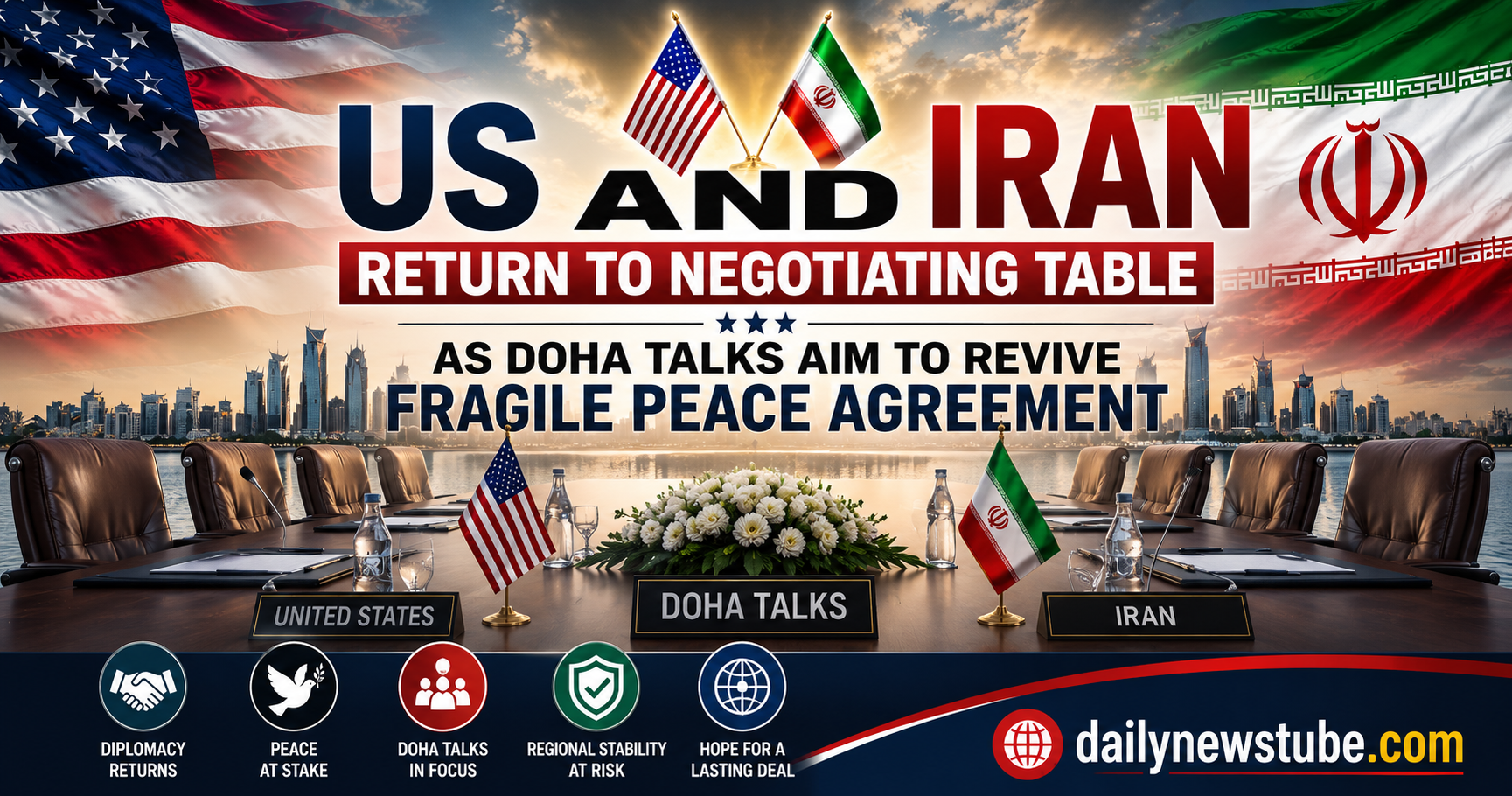
US and Iran Return to Negotiating Table as Doha Talks Aim to Revive Fragile Peace Agreement
High Level Meeting Planned After Weekend Military Clashes
The United States and Iran are set to resume high-level negotiations in Doha following a weekend of military exchanges that threatened to derail the fragile interim peace agreement reached earlier this month. The talks are expected to focus on reducing tensions in the Gulf, safeguarding the Strait of Hormuz, and advancing broader diplomatic efforts between the two longtime rivals.
According to officials, senior American representatives will travel to Qatar for meetings with Iranian counterparts as both sides attempt to restore momentum after recent strikes raised fears of another regional crisis.
Although the latest confrontation briefly cast doubt over the future of diplomacy, both governments have indicated that negotiations remain the preferred path forward.
Doha Meeting Focuses on De-escalation and Maritime Security
The upcoming discussions are expected to concentrate on practical measures to prevent further military incidents, particularly around the Strait of Hormuz, one of the world’s busiest energy corridors.
Officials familiar with the negotiations say the talks will explore new communication channels designed to quickly resolve future incidents before they escalate into direct military confrontation. Managing commercial shipping, protecting international navigation, and preventing misunderstandings at sea are expected to dominate the agenda.
Diplomats believe that improving crisis communication is essential if both countries hope to preserve the interim peace framework agreed upon earlier this month.
Strait of Hormuz Remains the Centre of Global Attention
The Strait of Hormuz continues to play a central role in negotiations because of its enormous importance to international energy markets.
Nearly 20 percent of the world’s oil and liquefied natural gas exports pass through the narrow waterway every day. Even temporary disruptions can trigger higher fuel prices, increased shipping insurance costs, and renewed uncertainty across global financial markets.
Recent military incidents involving commercial shipping demonstrated just how vulnerable the route remains during periods of heightened tension.
Negotiators are therefore expected to prioritize agreements that guarantee freedom of navigation while respecting regional security concerns raised by both sides.
Interim Peace Agreement Faces Its Biggest Challenge Yet
The renewed talks come just weeks after Washington and Tehran signed a 14-point memorandum of understanding designed to halt four months of confrontation.
The agreement established a temporary ceasefire while opening a 60-day diplomatic window to discuss more difficult issues, including Iran’s nuclear programme, sanctions, regional security, and long-term confidence-building measures.
However, the recent exchange of strikes highlighted how fragile the agreement remains.
Political analysts say ceasefires often face their greatest risk during the early implementation period, when trust between opposing parties remains extremely limited and both sides continue monitoring each other’s actions closely.
Frozen Iranian Assets and Economic Relief Under Discussion
Economic issues are also expected to remain an important part of ongoing negotiations.
Iranian officials have indicated that billions of dollars in previously frozen financial assets could soon be released under the broader diplomatic understanding. The reported release would provide significant economic relief while serving as one of the first tangible outcomes of the current peace process.
In addition, discussions surrounding limited sanctions relief on Iran’s oil and petrochemical sectors continue as both governments explore incentives that encourage continued compliance with the agreement.
Financial markets are closely monitoring these developments because they could influence global energy supplies and future investment in the region.
Regional Diplomacy Plays a Key Supporting Role
Several regional governments continue working behind the scenes to maintain dialogue between Washington and Tehran.
Qatar and Oman have emerged as key mediators by facilitating communication, hosting negotiations, and encouraging both sides to avoid further military escalation.
At the same time, regional leaders are urging restraint and emphasizing that diplomacy remains the only realistic solution capable of preventing another major conflict in the Gulf.
Officials also continue discussing future management of the Strait of Hormuz, reflecting the growing importance of regional cooperation in maintaining long-term maritime security.
Outlook Remains Cautiously Optimistic
Although considerable differences remain between the United States and Iran, the decision to return to the negotiating table represents an encouraging sign for international diplomacy.
The Doha meeting offers both governments another opportunity to strengthen the interim agreement, reduce military tensions, and create practical mechanisms that lower the risk of accidental conflict.
Experts caution that significant challenges still lie ahead, particularly regarding sanctions, nuclear negotiations, and regional security arrangements. Nevertheless, continued dialogue is widely viewed as preferable to renewed confrontation.
If negotiators can produce meaningful progress during the upcoming discussions, the talks could become an important step toward improving stability across the Middle East while protecting one of the world’s most strategically important energy routes.
For now, global markets, regional governments, and the international community will closely watch the outcome of the Doha meetings, hoping diplomacy can once again prevent tensions from escalating into open conflict.

