

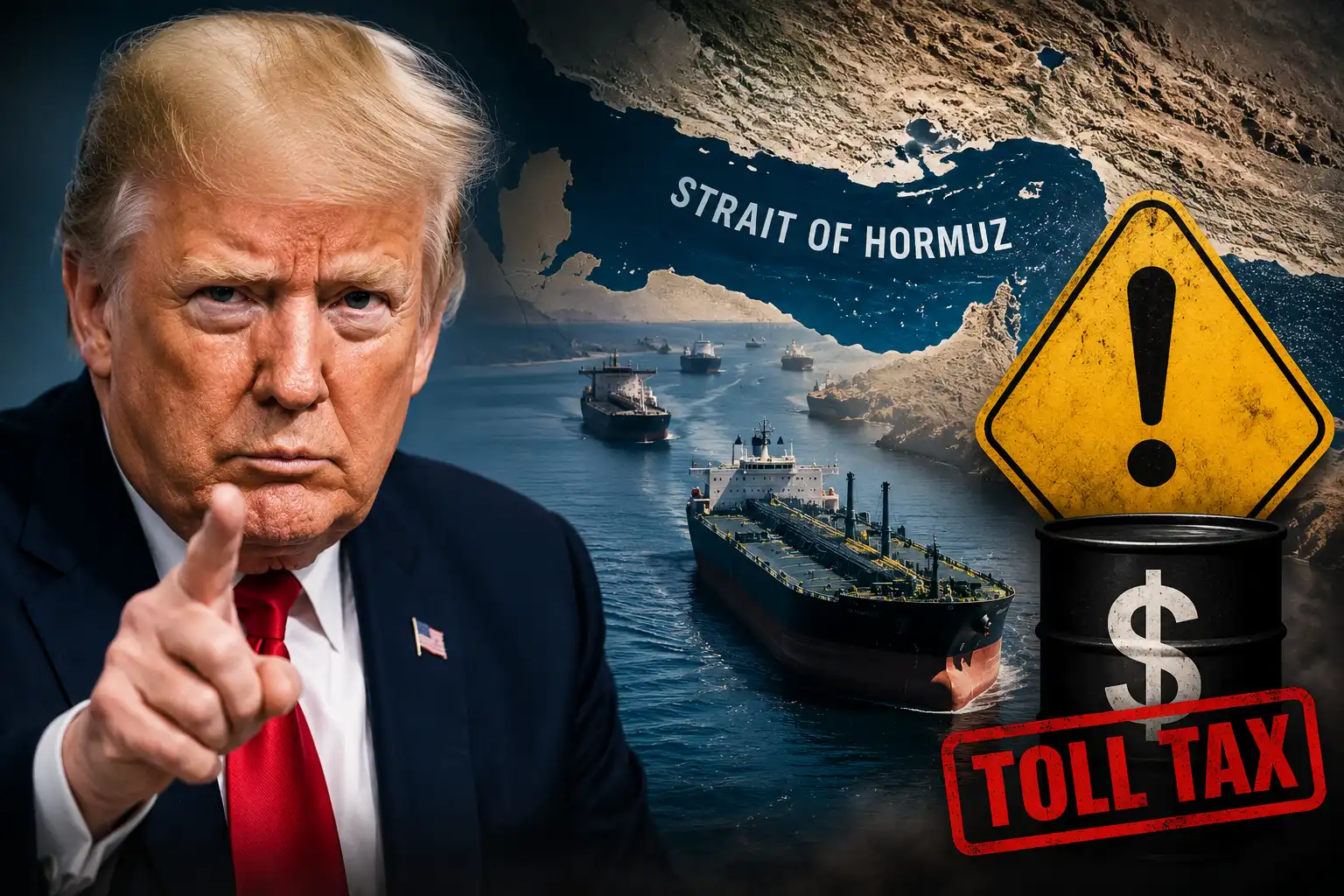
Trump Warns Talks Will End If Strait of Hormuz Toll Tax Claims Prove False
Former U.S. President Donald Trump has issued a strong warning regarding reports linked to the Strait of Hormuz, stating that negotiations could be terminated if information about the non-collection of toll taxes is proven to be false. His remarks have drawn significant international attention because of the strategic importance of the Strait of Hormuz and its impact on global trade and energy markets.
Trump on Strait of Hormuz Toll Tax Claims
Speaking about recent developments, Trump emphasized that honesty and transparency are essential for any successful negotiation process. He said that if reports claiming that no toll taxes are being collected in the Strait of Hormuz turn out to be inaccurate, the ongoing talks would face immediate consequences.
According to Trump, negotiations cannot continue when there are doubts about the credibility of information being shared between parties. He stressed that trust remains the foundation of diplomatic and economic agreements.
Why the Strait of Hormuz Matters
The Strait of Hormuz is one of the most important maritime routes in the world. Located between the Persian Gulf and the Gulf of Oman, it serves as a critical passage for oil and natural gas shipments. A substantial portion of the world’s energy supply passes through this narrow waterway every day.
Any disruption, restriction, or additional charges associated with the Strait can influence international energy prices and affect economies worldwide. As a result, statements concerning toll taxes or shipping fees in the region are closely monitored by governments, investors, and energy companies.
Strait of Hormuz Toll Tax Debate and Global Concerns
The recent discussion surrounding the Strait of Hormuz toll tax issue has sparked concerns among international observers. Shipping companies and energy market analysts are paying close attention to the situation because any additional financial burden on vessels could increase transportation costs.
Higher shipping costs often lead to increased oil prices, which can impact consumers and businesses globally. Therefore, accurate information regarding toll charges and maritime regulations is considered extremely important.
Trump’s warning reflects the broader concern that misinformation could complicate diplomatic efforts and create uncertainty in international markets.
Trump’s Position on Negotiations
Throughout his political career, Trump has repeatedly stated that negotiations must be based on clear facts and verifiable information. His latest comments follow the same approach.
He indicated that if the facts surrounding the Strait of Hormuz toll tax issue differ from what has been reported, it would undermine confidence in the negotiating process. Such a development, he suggested, could make it difficult for discussions to continue productively.
Political analysts believe Trump’s remarks were intended to send a message that accountability and transparency are non-negotiable elements in any agreement.
International Reactions to Strait of Hormuz Toll Tax Reports
Governments and international stakeholders have responded cautiously to the ongoing debate. Many officials are waiting for verified information before making formal statements about the claims.
Energy experts note that the Strait of Hormuz has long been a focal point of geopolitical tensions. Because of its strategic significance, even minor policy changes can have far-reaching consequences for global trade and energy security.
Market participants are also watching developments closely, as uncertainty surrounding shipping routes often affects investor confidence and commodity prices.
Potential Impact on Global Energy Markets
If disagreements over the Strait of Hormuz toll tax issue escalate, global energy markets could experience increased volatility. Oil traders typically react quickly to developments involving key transportation routes.
Any suggestion of additional fees, restrictions, or disruptions may lead to fluctuations in crude oil prices. These changes can affect fuel costs, transportation expenses, and broader economic activity across multiple regions.
Experts argue that maintaining clear communication and providing accurate information are essential for preventing unnecessary market instability.
Diplomatic Implications of the Dispute
Beyond economic concerns, the controversy also carries diplomatic implications. International negotiations often depend on mutual trust and confidence-building measures. Disputes over factual claims can complicate discussions and delay progress.
Trump statement highlights the importance of verification in diplomatic engagements. By warning that talks could end if the information proves false, he underscored the potential consequences of disputed claims during sensitive negotiations.
Observers believe that all parties involved will likely seek clarification and evidence before making major decisions regarding future discussions.
What Stakeholders Are Watching Next
As attention remains focused on the Strait of Hormuz toll tax controversy, stakeholders are looking for official confirmations and detailed explanations. Governments, shipping firms, energy companies, and financial markets are all seeking greater clarity on the matter.
The coming days may prove crucial in determining whether the reported information is accurate and whether negotiations can continue without further complications. Any verified developments could influence diplomatic relations, market sentiment, and future policy discussions involving one of the world’s most strategically important waterways.

