

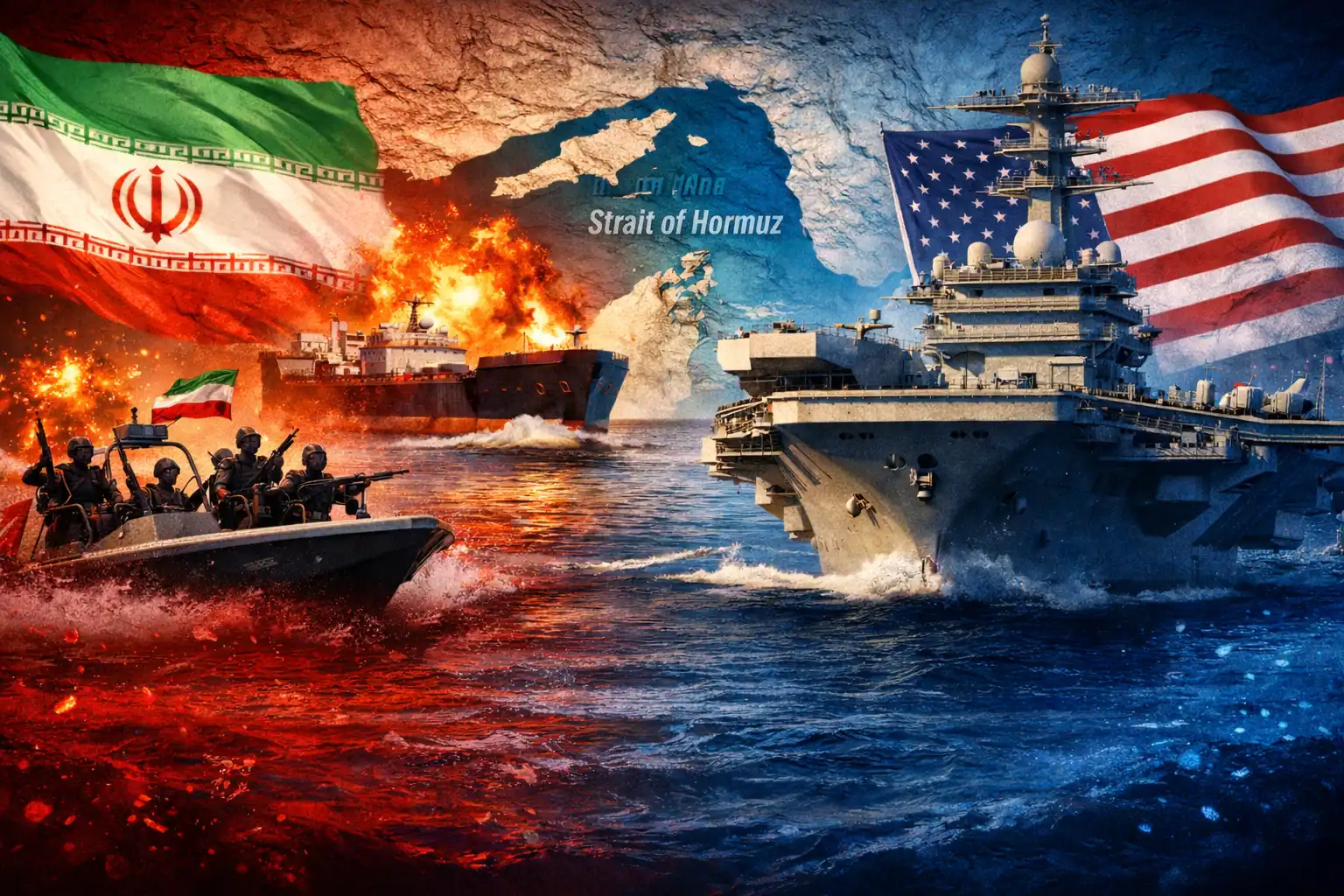
Strait of Hormuz Tensions | Iran Threat and the U.S. Response
The Strait of Hormuz tensions have once again become a major concern for the international community. The Strait of Hormuz is one of the most important waterways in the world because a significant portion of global oil trade passes through this narrow passage between Iran and Oman. Any instability in this region can have serious consequences for global energy markets and international security. Recently, Iran has issued warnings about possible actions in the strait, prompting a strong response from the United States and raising fears of further escalation.
Understanding the Strait of Hormuz Tensions
The Strait of Hormuz tensions are rooted in long-standing geopolitical rivalry between Iran and the United States, as well as broader conflicts in the Middle East. The strait is only about 21 miles wide at its narrowest point, yet it serves as a crucial route for oil exports from major producers such as Saudi Arabia, Iraq, Kuwait, and the United Arab Emirates.
Approximately one-fifth of the world’s oil supply travels through this corridor. Because of its strategic importance, even the possibility of disruption in the strait can lead to volatility in global oil prices and economic uncertainty. Iran’s geographic position along the northern side of the strait gives it significant influence over this key maritime route.
Iran Threat in the Strait of Hormuz Tensions
In the latest development related to the Strait of Hormuz tensions, Iranian officials have warned that they could restrict or block the waterway if their national interests are threatened. Iran has repeatedly used this threat as a strategic tool during periods of conflict or heightened sanctions.
Iran argues that if it cannot freely export its own oil due to international sanctions, then other countries should not be allowed to use the strait freely either. Military leaders in Iran have suggested that the country has the capability to disrupt shipping through naval forces, mines, and missile systems positioned along the coastline.
Such statements are often interpreted as a form of political pressure aimed at influencing international negotiations and gaining leverage in disputes with Western countries. However, they also increase concerns about the risk of accidental clashes or deliberate confrontations in the region.
U.S. Response to the Strait of Hormuz Tensions
The United States has responded firmly to the Strait of Hormuz tensions, emphasizing that freedom of navigation in international waters must be protected. U.S. officials have repeatedly stated that any attempt to block the strait would be considered a serious threat to global stability and would not be tolerated.
To ensure the security of maritime traffic, the United States maintains a strong naval presence in the Persian Gulf. The U.S. Navy regularly conducts patrols and joint exercises with regional allies to safeguard shipping routes. American leaders argue that keeping the Strait of Hormuz open is not only important for the United States but also for the global economy.
In addition, Washington has worked with its partners to monitor Iranian military activities in the area. Diplomatic efforts continue alongside military preparedness in order to prevent a direct confrontation while still deterring potential threats.
Global Impact of the Strait of Hormuz Tensions
The Strait of Hormuz tensions have implications far beyond the Middle East. Countries around the world depend on stable energy supplies, and any disruption in oil shipments can lead to higher fuel prices, inflation, and economic instability.
Energy-importing countries in Asia and Europe are particularly vulnerable to instability in the strait. Even rumors of possible blockades can cause oil prices to spike in international markets. Shipping companies may also face higher insurance costs or choose alternative routes, which can increase transportation expenses.
Furthermore, prolonged tensions could lead to military escalation involving regional powers and international forces. This would increase uncertainty in global trade and could affect other strategic shipping lanes as well.
FOLLOW LIVE UPDATES
Conclusion
The Strait of Hormuz tensions highlight the fragile balance of power in the Middle East and the importance of strategic maritime routes in global politics. Iran’s threats to disrupt the strait and the strong response from the United States reflect deeper political and economic disputes that have persisted for decades.
While diplomatic efforts continue, the situation remains sensitive and closely monitored by governments and international organizations. Ensuring stability in the Strait of Hormuz is crucial not only for regional security but also for the health of the global economy. The coming months will determine whether dialogue and diplomacy can ease the tensions or whether the world will face another period of heightened uncertainty in one of its most critical waterways.

