

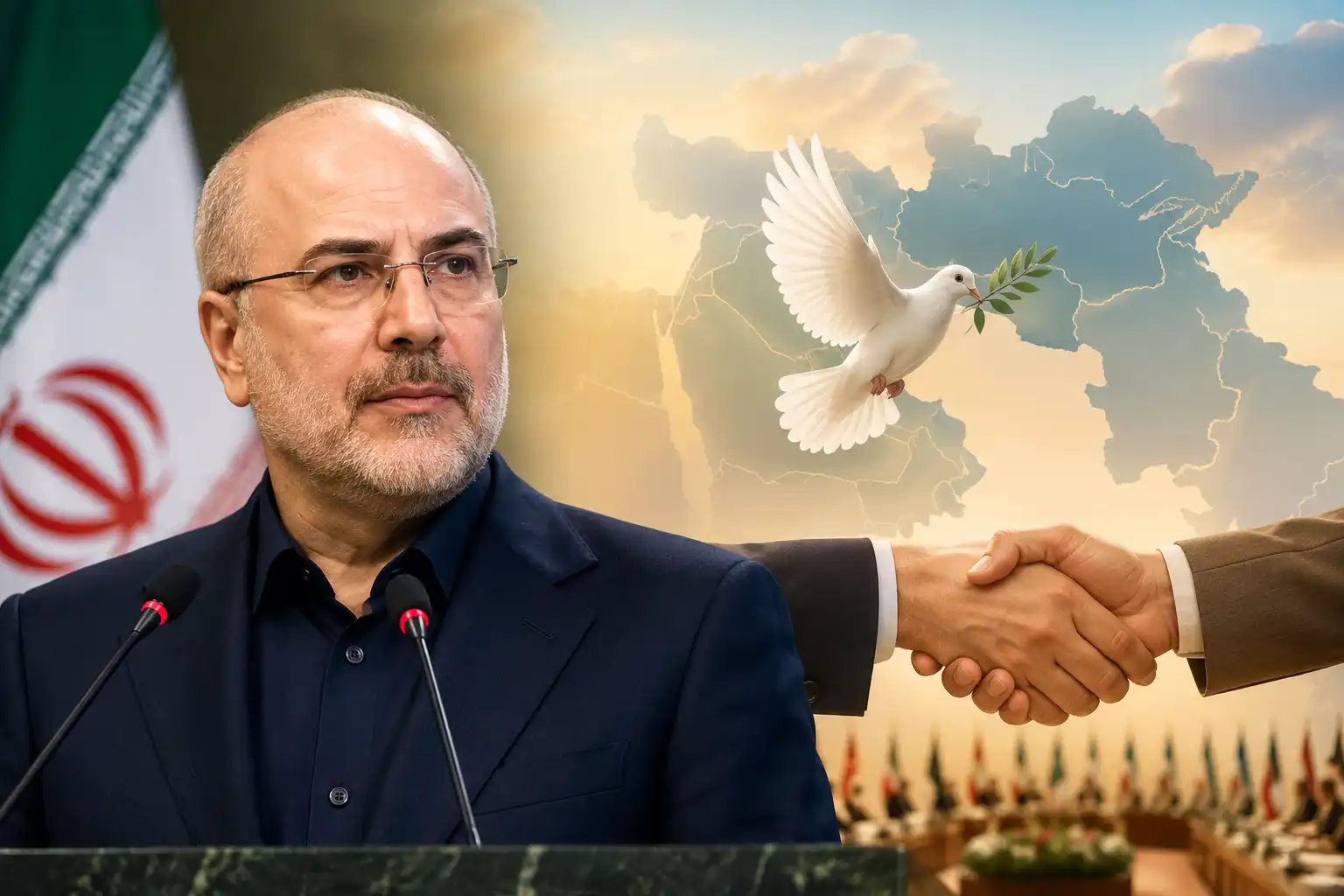
Qalibaf Highlights the Importance of Regional Peace
Speaker of the Iranian Parliament, Mohammad Bagher Qalibaf, has emphasized that ending the conflict in Lebanon is just as important as achieving peace in Iran. His remarks come at a time when tensions and instability continue to affect several parts of the Middle East, creating concerns about regional security, economic development, and humanitarian conditions.
Qalibaf stressed that sustainable peace cannot be achieved by focusing on a single country while conflicts continue elsewhere in the region. According to him, the security and stability of Middle Eastern nations are closely interconnected, making it essential to address all ongoing conflicts simultaneously.
Why the End of War in Iran Matters for the Region
The End of War in Iran has become a significant topic in regional and international discussions. Iran plays a crucial role in Middle Eastern politics, economics, and security. Any conflict involving Iran has the potential to affect neighboring countries, global energy markets, and international trade routes.
Qalibaf noted that peace in Iran would not only benefit the Iranian people but would also contribute to broader regional stability. Reduced tensions could encourage economic cooperation, investment opportunities, and diplomatic engagement among countries that have faced years of uncertainty.
He argued that diplomatic solutions and dialogue should be prioritized over military confrontation. According to his view, negotiations and mutual understanding offer the best path toward long-term peace and stability.
Lebanon’s Ongoing Challenges
Lebanon continues to face significant political, economic, and security challenges. Years of instability have placed enormous pressure on the country’s institutions and population. Economic difficulties, inflation, unemployment, and infrastructure problems have further complicated the situation.
Qalibaf highlighted that the Lebanese people deserve peace and stability after enduring prolonged hardships. He stated that efforts to end conflict in Lebanon should receive the same level of international attention as initiatives aimed at reducing tensions elsewhere in the region.
The Iranian parliamentary speaker emphasized that regional actors and global powers should work together to support peaceful solutions that protect civilians and strengthen state institutions.
End of War in Iran and Lebanon: A Shared Goal
Discussing the End of War in Iran and Lebanon, Qalibaf explained that peace in one country alone cannot guarantee regional stability. The Middle East functions as a connected geopolitical environment where developments in one nation often influence neighboring states.
He suggested that resolving conflicts through diplomacy, dialogue, and political engagement would help reduce the risk of wider regional confrontations. Such an approach could also create opportunities for economic recovery and development.
According to Qalibaf, the international community should avoid policies that increase tensions and instead encourage constructive discussions among all parties involved. He stressed that mutual respect and recognition of national sovereignty are essential elements in any successful peace process.
Regional Security and Humanitarian Concerns
Conflicts across the Middle East have created serious humanitarian challenges, including displacement, economic hardship, and disruptions to essential services. Millions of people have been affected by instability, making peace efforts more urgent than ever.
Qalibaf stated that ending violence would allow governments and international organizations to focus on rebuilding communities, improving infrastructure, and supporting economic growth. He emphasized that civilians often bear the greatest burden during conflicts and should remain at the center of peace initiatives.
Humanitarian assistance, reconstruction projects, and diplomatic engagement were identified as key components of any long-term strategy aimed at restoring stability.
International Reactions to Calls for Peace
Calls for de-escalation and peaceful resolution have been echoed by various international organizations and governments. Many global leaders have expressed concern about the potential consequences of prolonged conflicts in the Middle East.
Qalibaf’s remarks reflect a broader desire among many regional stakeholders to avoid further escalation and promote diplomatic solutions. Observers note that continued dialogue between countries could help reduce misunderstandings and prevent future crises.
Analysts believe that coordinated diplomatic efforts, confidence-building measures, and economic cooperation could play an important role in creating a more stable environment throughout the region.
End of War in Iran as Part of a Wider Peace Strategy
The End of War in Iran should be viewed as part of a broader regional peace strategy rather than an isolated objective, according to Qalibaf. He argued that peace initiatives must address the concerns of all affected countries, including Lebanon, to achieve lasting results.
By promoting dialogue, encouraging cooperation, and supporting diplomatic channels, regional leaders can contribute to reducing tensions and fostering greater stability. Qalibaf maintained that a comprehensive approach is necessary to address the complex political and security challenges facing the Middle East today.
Prospects for Stability in the Middle East
Efforts aimed at ending conflicts in both Iran and Lebanon could open the door to stronger regional cooperation, increased economic activity, and improved living conditions for millions of people. Peace would provide governments with greater opportunities to focus on development, education, healthcare, and infrastructure projects.
As discussions continue regarding regional security and diplomatic solutions, Qalibaf’s message underscores the belief that lasting stability requires equal attention to all major conflicts. His comments highlight the interconnected nature of Middle Eastern affairs and the importance of pursuing comprehensive peace initiatives that benefit the entire region.

