

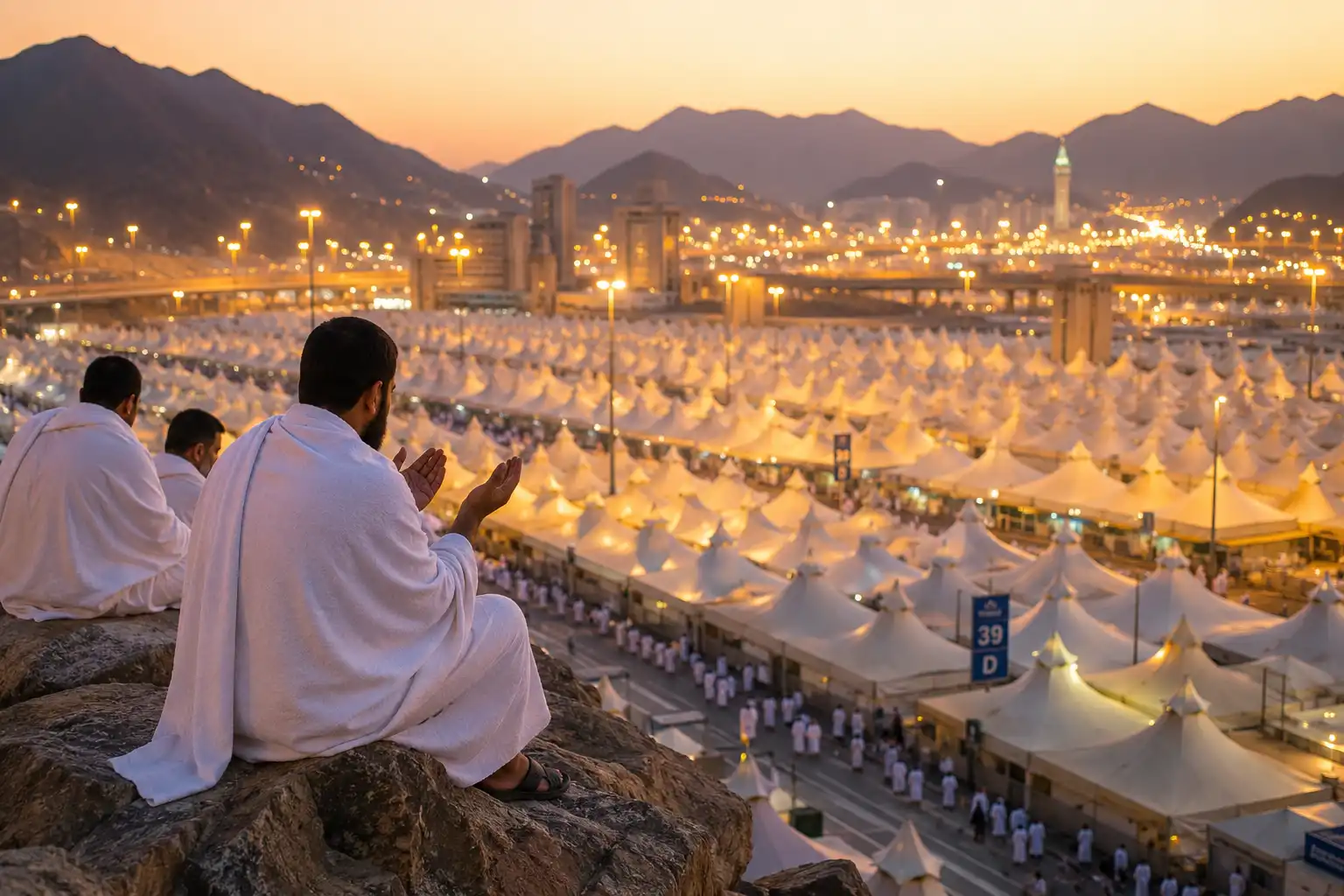
Pilgrimage Rituals Begin as the City of Tents Comes Alive in Mina
Every year, millions of Muslims from around the world gather in the holy land of Makkah to perform Hajj, one of the five pillars of Islam. As the sacred pilgrimage begins, the vast valley of Mina transforms into a remarkable city of white tents, welcoming pilgrims with arrangements designed for worship, rest, and spiritual reflection. The beginning of the Hajj rituals marks a deeply emotional and spiritual journey for believers who have traveled from different countries to fulfill this religious obligation.
Pilgrimage Rituals Begin with Arrival in Mina
The official start of the Hajj rituals begins with pilgrims arriving in Mina on the 8th day of Dhul Hijjah, known as Yawm al-Tarwiyah. Located a few kilometers from the Grand Mosque in Makkah, Mina becomes one of the largest temporary settlements in the world during Hajj season.
Pilgrims spend the day and night in Mina engaged in prayers, recitation of the Holy Quran, remembrance of Allah, and preparation for the major rites of Hajj. The peaceful atmosphere in Mina reflects unity, equality, and devotion, as Muslims from every race and language gather together wearing simple white garments known as Ihram.
Mina Turns into a Massive Tent City
The valley of Mina is famously known as the “City of Tents” because of the hundreds of thousands of air-conditioned white tents installed for pilgrims. Saudi authorities make extensive arrangements every year to ensure comfort, security, and healthcare facilities for visitors.
The tent city is equipped with modern facilities including food centers, medical services, transportation systems, and emergency response teams. Special pathways and crowd management systems are also established to maintain smooth movement during the pilgrimage.
As pilgrims settle into their designated camps, the spiritual energy across Mina becomes visible. Religious scholars guide worshippers about the rituals, while volunteers assist elderly pilgrims and families throughout the holy journey.
Pilgrimage Rituals Begin with Spiritual Preparation
The first day in Mina serves as a spiritual preparation before pilgrims depart for the plains of Arafat on the following day. During their stay, pilgrims perform five daily prayers and dedicate their time to supplication and reflection.
For many Muslims, arriving in Mina is the fulfillment of a lifelong dream. Emotional scenes are often witnessed as worshippers pray with tears in their eyes, seeking forgiveness and blessings from Allah. The experience also strengthens the feeling of brotherhood among Muslims from different nations.
Religious leaders emphasize patience, kindness, and humility during Hajj, reminding pilgrims about the true essence of sacrifice and devotion associated with the sacred journey.
Security and Health Arrangements for Pilgrims
Saudi authorities deploy thousands of security personnel, medical staff, and volunteers to facilitate the Hajj pilgrimage. Hospitals and mobile clinics operate around the clock in Mina to provide healthcare services to pilgrims.
Advanced technology is also used to monitor crowd movement and improve safety during the pilgrimage season. Transportation networks including buses and train services help pilgrims travel between Mina, Arafat, and Muzdalifah efficiently.
Authorities continue to focus on heat management measures due to high temperatures during the summer season. Water distribution points, cooling stations, and shaded walkways have been expanded to protect pilgrims from extreme weather conditions.
Pilgrimage Rituals Begin Before the Day of Arafat
After spending the night in Mina, pilgrims prepare for one of the most significant stages of Hajj — the Day of Arafat. On the 9th of Dhul Hijjah, millions gather in the plains of Arafat for prayers and supplication, considered the most important pillar of Hajj.
The stay in Mina before Arafat allows pilgrims to mentally and spiritually prepare for this sacred moment. Scholars describe the Day of Arafat as a day of mercy and forgiveness, where Muslims seek Allah’s blessings with sincerity and devotion.
The organized environment in Mina helps pilgrims focus entirely on worship while authorities manage logistics and services behind the scenes.
Importance of Mina in the Hajj Journey
Mina holds great historical and religious significance in Islamic tradition. Pilgrims return to Mina after Arafat and Muzdalifah to perform the symbolic stoning of the devil at the Jamarat Bridge, commemorating the faith and obedience of Prophet Ibrahim (AS).
The area remains central to the Hajj experience, connecting Muslims with centuries-old traditions followed since the time of Prophet Muhammad (PBUH). The atmosphere of faith, discipline, and unity witnessed in Mina continues to inspire millions across the Muslim world.
FOLLOW LIVE UPDATES
Final Highlights from Mina During Hajj
As the pilgrimage rituals begin in Mina, the city of tents becomes a powerful symbol of Islamic unity and devotion. Muslims from every corner of the world gather with one purpose — to seek the pleasure of Allah and complete one of the holiest journeys in Islam.
The peaceful gathering in Mina showcases the spirit of sacrifice, patience, equality, and faith that defines the Hajj pilgrimage. With extensive preparations, modern facilities, and strong spiritual emotions, Mina once again stands at the heart of one of the world’s largest religious gatherings.

