

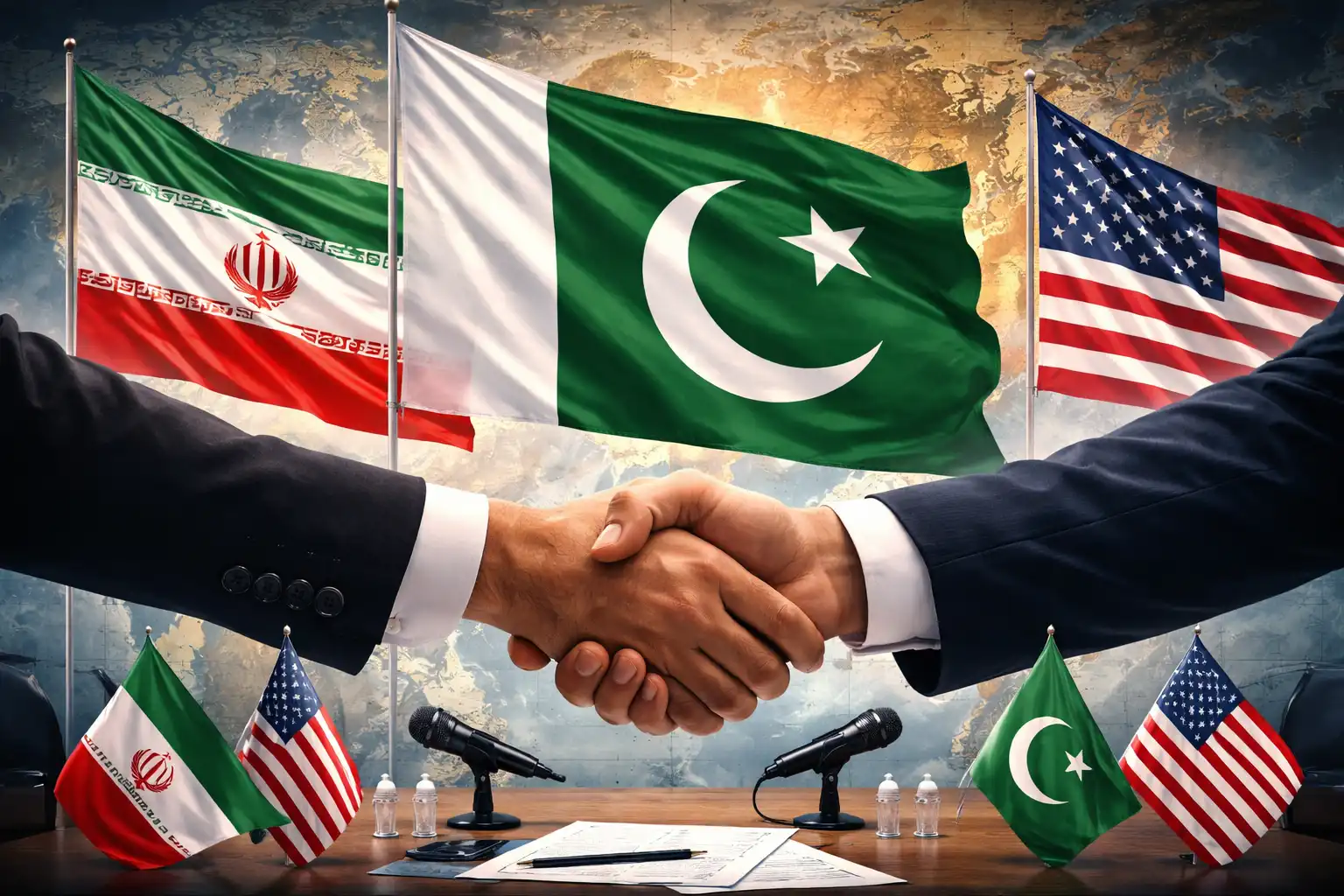
Pakistan Mediation Role Between Iran and the United States
Pakistan has once again stepped forward with an offer to mediate between Iran and the United States at a time when tensions between the two countries remain dangerously high. The growing mistrust, economic sanctions, and military posturing have created an atmosphere where even a small miscalculation could escalate into a broader conflict. In this complex situation, Pakistan’s diplomatic outreach reflects its long-standing policy of promoting regional stability and avoiding confrontation.
Pakistan shares a border with Iran and has historically maintained strategic ties with the United States, placing Islamabad in a unique position to act as a bridge between the two adversaries. Its leadership has emphasized dialogue, negotiation, and peaceful resolution of disputes rather than military escalation.
Pakistan’s Offer to Mediate Between Iran and the United States and Regional Stability
Pakistan’s mediation efforts are closely linked to its broader objective of ensuring regional peace. Any conflict between Iran and the United States would not only destabilize the Middle East but also have serious consequences for South Asia. Economic disruptions, rising oil prices, and refugee crises are just a few of the potential outcomes.
Islamabad understands that instability in neighboring regions directly impacts its own security and economic growth. By offering to mediate, Pakistan aims to reduce tensions and create an environment where diplomatic engagement can replace hostility. This proactive approach demonstrates Pakistan’s desire to play a constructive role in international affairs.
Pakistan’s Offer to Mediate Between Iran and the United States: Diplomatic Challenges
Despite Pakistan’s willingness, the path to successful mediation is filled with challenges. The relationship between Iran and the United States has been marked by decades of distrust, broken agreements, and conflicting interests. Sanctions imposed on Iran and concerns over its nuclear program continue to be major sticking points.
For Pakistan, balancing its relations with both countries is not easy. While it enjoys close cooperation with the United States in areas such as security and trade, it also values its cultural, religious, and economic ties with Iran. Acting as a neutral mediator requires careful diplomacy to avoid alienating either side.
Pakistan’s Offer to Mediate Between Iran and the United States and Its Strategic Importance
Pakistan’s mediation offer is not just about conflict resolution; it also reflects its growing ambition to play a larger role on the global stage. By positioning itself as a peacemaker, Pakistan seeks to enhance its diplomatic credibility and strengthen its international image.
The country has previously played similar roles in facilitating dialogue and reducing tensions in various regional conflicts. These experiences provide a foundation for its current efforts. Moreover, Pakistan’s geographic location and its connections with both Western and regional powers give it a strategic advantage in diplomatic initiatives.
Pakistan’s Offer to Mediate Between Iran and the United States: Possibility of Success
The success of Pakistan’s mediation largely depends on timing, international support, and the willingness of both Iran and the United States to engage in meaningful dialogue. While Pakistan can facilitate communication and provide a neutral platform, it cannot impose solutions.
Global powers and international organizations may also play a role in supporting such efforts. Multilateral cooperation could increase the chances of success by adding legitimacy and resources to the mediation process.
FOLLOW LIVE UPDATES
Future Outlook and Diplomatic Pathways
Looking ahead, Pakistan’s mediation offer highlights the importance of dialogue in resolving international conflicts. Even if immediate breakthroughs are not achieved, continued engagement can help reduce tensions and build confidence over time.
Sustained diplomatic efforts, back-channel negotiations, and confidence-building measures may gradually create conditions for more formal agreements. Pakistan’s role, in this context, is to keep communication channels open and encourage both sides to move away from confrontation.

