

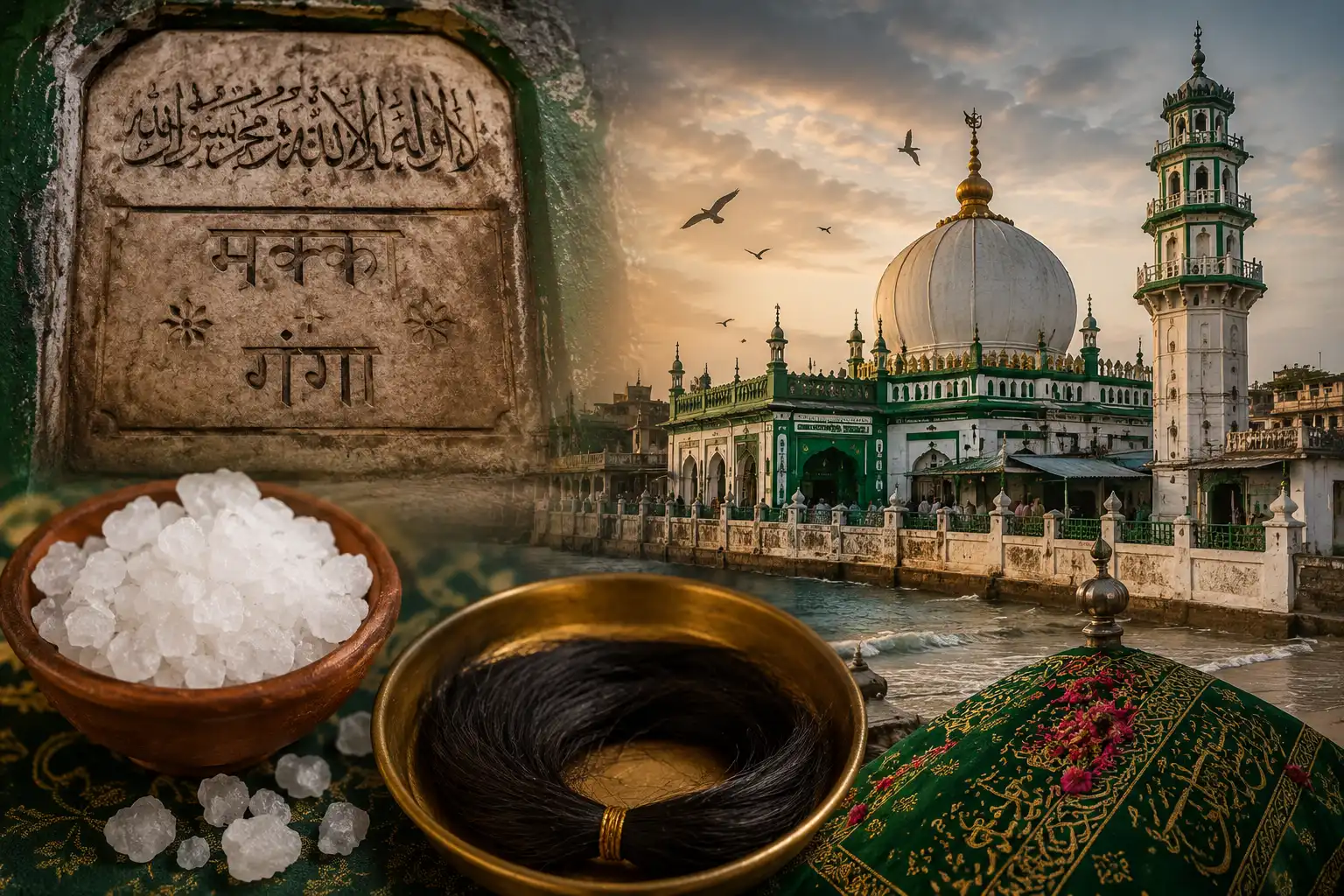
Makkah and Ganga Inscription Salt Prayers and Hair Offerings
The Nagore Dargah, located in the coastal town of Nagore in southern India, has remained a symbol of faith, spirituality, and cultural harmony for more than four centuries. Revered by followers from different religious backgrounds, this sacred shrine attracts thousands of visitors every year who come seeking blessings, healing, and fulfillment of their wishes.
Dedicated to the revered Sufi saint Shahul Hameed Qadir Wali, the shrine has become famous not only for its spiritual significance but also for its unique traditions. Among the most fascinating customs associated with the shrine are the Makkah and Ganga inscription, the practice of offering salt while praying, and the tradition of donating hair after wishes are fulfilled.
Makkah and Ganga Inscription at Nagore Dargah
One of the most remarkable features of the shrine is the Makkah and Ganga inscription, which reflects the spirit of religious coexistence and unity. The inscription symbolizes the sacred association between Makkah, the holiest city in Islam, and the River Ganga, considered sacred in Hindu traditions.
For centuries, devotees have regarded this inscription as a powerful representation of shared spirituality. It illustrates how Nagore Dargah became a place where people from diverse communities gathered without barriers of religion, caste, or social background.
The shrine’s history demonstrates that faith often transcends conventional boundaries. Pilgrims visiting the dargah believe that the blessings of the saint are accessible to everyone, regardless of their beliefs or traditions.
Salt Prayers at Nagore Dargah
The tradition of salt prayers at Nagore Dargah is among the most distinctive rituals observed by devotees. Visitors often sprinkle salt while making heartfelt prayers and requests.
Many believers consider salt a symbol of purification and protection. According to local traditions, sprinkling salt during prayers represents the removal of hardships, negativity, and obstacles from one’s life. Devotees pray for better health, prosperity, family well-being, and success in their personal endeavors.
Although the origins of this custom are difficult to trace with certainty, oral traditions suggest that the practice has been followed for generations. Families who have experienced positive changes after visiting the shrine frequently return to offer thanks and continue this symbolic ritual.
The practice remains deeply rooted in local spiritual culture and has become an integral part of the Nagore pilgrimage experience.
Hair Offerings at Nagore Dargah
Another long-standing tradition associated with the shrine is the custom of presenting hair offerings after the fulfillment of vows. Many devotees promise to donate their hair if their prayers are answered or their wishes come true.
Once their requests are fulfilled, they revisit the shrine to honor their commitment. Hair offerings are viewed as an expression of gratitude, humility, and devotion toward the saint.
This practice is particularly common among families who seek blessings related to health, marriage, childbirth, education, or financial stability. For many worshippers, fulfilling such vows represents an important spiritual responsibility.
The ritual also signifies surrendering one’s pride and acknowledging divine mercy. Similar customs can be found in several religious traditions across South Asia, highlighting the region’s rich spiritual diversity.
The Spiritual Influence of Shahul Hameed Qadir Wali
The enduring popularity of Nagore Dargah is closely linked to the life and teachings of Shahul Hameed Qadir Wali. Historical accounts describe him as a respected Sufi scholar and spiritual guide who emphasized compassion, service, and universal brotherhood.
His message encouraged people to live harmoniously and to support those in need. Over time, his teachings attracted followers from various communities, transforming Nagore into a major center of devotion.
Annual festivals held at the shrine continue to draw large gatherings of pilgrims. During these celebrations, visitors participate in prayers, charitable activities, and communal meals, reinforcing the spirit of unity that has characterized the shrine for centuries.
Cultural Importance of Nagore Dargah
Beyond its religious significance, Nagore Dargah serves as an important cultural landmark. The shrine reflects centuries of interaction between different traditions, customs, and communities.
Architectural elements found within the complex showcase influences from diverse artistic styles, while its rituals preserve practices passed down through generations. The shrine has become a living example of how spiritual spaces can foster mutual respect and understanding.
Visitors often describe their experience at Nagore Dargah as deeply moving because of its welcoming atmosphere and inclusive traditions. Whether drawn by faith, curiosity, or cultural interest, pilgrims continue to find inspiration in its enduring legacy.
FOLLOW LIVE UPDATES
Enduring Traditions That Continue Today
Even after 400 years, the customs surrounding Nagore Dargah remain vibrant and meaningful. The Makkah and Ganga inscription continues to symbolize harmony, salt prayers remain a cherished expression of hope, and hair offerings persist as acts of gratitude and devotion.
These traditions illustrate how historical shrines preserve not only religious practices but also shared cultural values. As generations pass, Nagore Dargah stands as a testament to faith, resilience, and the enduring human desire to seek blessings, fulfill vows, and celebrate spiritual connections that unite communities across different backgrounds.

