

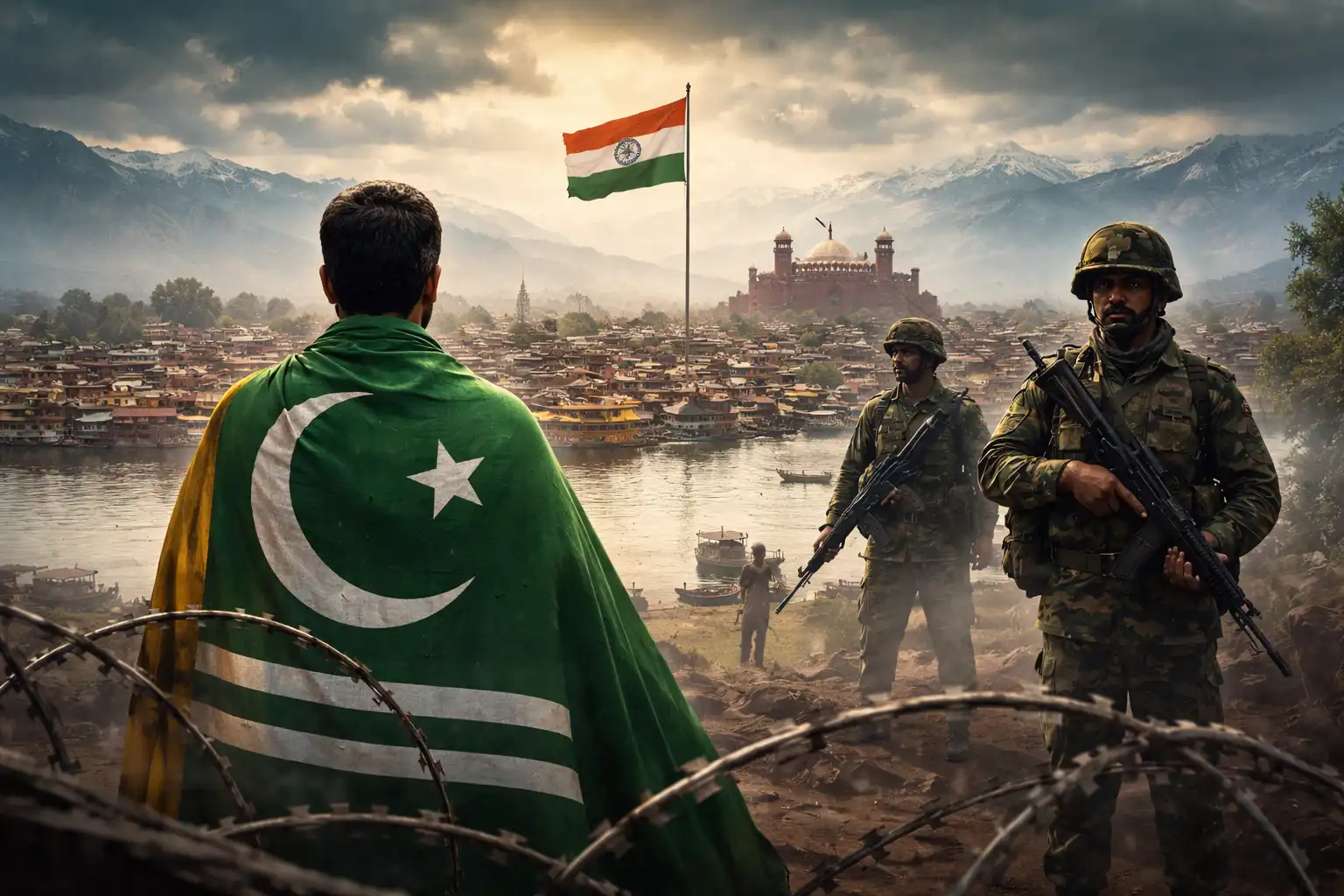
Kashmiris Have Drifted Far from Delhi
The reported death of Iran’s Supreme Leader Ayatollah Ali Khamenei sent shockwaves across different parts of the Muslim world. In Kashmir, the development quickly turned into a week of tension, protests, and political debate. For many observers, the events that followed highlighted a deeper issue: the growing emotional and political distance between Kashmiris and New Delhi. The situation raised important questions about identity, regional politics, and the fragile stability in the disputed region.
‘Kashmiris Have Drifted Far from Delhi’ | Rising Sentiments on the Ground
The phrase “Kashmiris have drifted far from Delhi” became a recurring theme in political commentary during the week of unrest. Demonstrations in parts of the Kashmir Valley reflected strong reactions from sections of society that viewed Khamenei as a symbol of resistance against Western and Israeli influence. While the scale of protests varied, the emotional tone suggested that many people in Kashmir continue to interpret global Muslim political events through their own local political experiences.
For the Indian government, such reactions were seen as concerning. Authorities deployed additional security forces in sensitive areas, and local administrations urged calm. The tension revealed that global events can quickly resonate in Kashmir because of the region’s complex political history and unresolved grievances.
The Week of Tension in Kashmir After Khamenei’s Death
The week following the news of Khamenei’s death saw a mix of demonstrations, heightened security measures, and strong reactions on social media. Local markets in some areas closed temporarily, either due to voluntary shutdowns or precautionary measures taken by authorities. Religious gatherings and speeches also became focal points where people expressed solidarity with Iran and broader Muslim political causes.
Security agencies closely monitored the situation, fearing that protests might escalate into larger unrest. While widespread violence was largely avoided, the tense atmosphere reflected how quickly political emotions can intensify in the region. For many residents, the reaction was not only about Iran but also about expressing dissatisfaction with the current political situation in Kashmir.
‘Kashmiris Have Drifted Far from Delhi’ | A Reflection of Political Distance
The events of the week reinforced a perception among some analysts that Kashmir’s political and emotional distance from New Delhi has grown in recent years. Since the revocation of Jammu and Kashmir’s special constitutional status in 2019, the region has experienced major political changes. The restructuring of governance and increased central control have reshaped the political landscape.
While the government in New Delhi argues that these steps were necessary for development and stability, critics say the measures weakened local political representation. The reactions seen after Khamenei’s death suggested that many Kashmiris continue to feel disconnected from national political narratives. This disconnect can amplify the impact of international events, which sometimes become symbolic outlets for local frustrations.
The Role of Identity and Global Muslim Politics
Another important factor behind the reactions in Kashmir is the strong sense of religious and political identity among segments of the population. Global Muslim leaders and movements often hold symbolic significance in regions where local political struggles intersect with religious identity.
In this context, Khamenei represented more than a foreign political figure. For some individuals, he symbolized resistance and ideological independence. The emotional responses seen in Kashmir therefore reflected a mixture of religious solidarity, political symbolism, and local grievances.
READ MORE : Oil Laden Ships Arrive at Port Qasim Reserves Sufficient for 30 Days
What the Week of Tension Suggests for the Future
The week of tension following Khamenei’s death highlighted how fragile the political environment in Kashmir can be. Even events occurring thousands of miles away can trigger strong reactions when they resonate with local sentiments. This reality underscores the importance of dialogue, inclusive governance, and efforts to rebuild trust between Kashmir’s population and the central government.
For policymakers and analysts, the message from this week is clear: political stability in Kashmir cannot rely solely on security measures. Long-term peace requires addressing the deeper social and political concerns that shape public opinion in the region.
Conclusion
The events in Kashmir after Khamenei’s death revealed more than a reaction to an international political figure. They exposed underlying tensions and the perception that many Kashmiris feel increasingly distant from New Delhi. Whether this distance continues to grow or begins to narrow will depend on how future political engagement, governance, and dialogue unfold in the region.

