

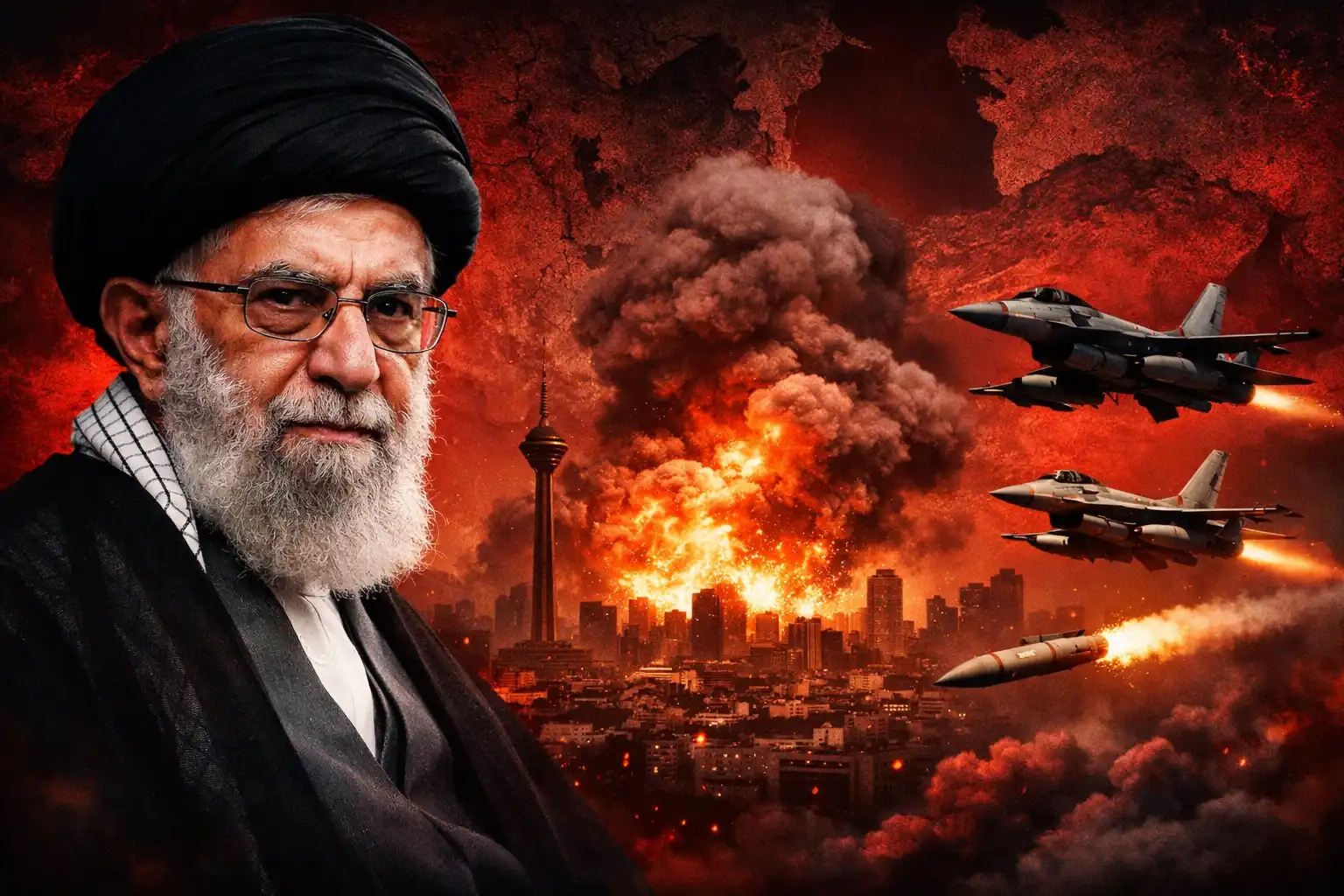
Iran Postpones Khamenei Farewell as Israel Threatens to Kill Successor
The Middle East has entered a profound period of geopolitical upheaval following the reported assassination of Iran’s Supreme Leader Ayatollah Ali Khamenei. In the wake of his death, Iran has postponed Khamenei’s farewell as Israel threatens to kill his successor, marking a dramatic escalation in tensions between Iran and Israel and raising fears of a broader regional conflict.
The Unfolding Crisis and Postponed Farewell
The funeral and state farewell ceremony for the late Supreme Leader Ayatollah Ali Khamenei was initially scheduled to begin on Wednesday in Tehran’s Imam Khomeini Prayer Hall. Tens of millions were expected to attend the public mourning rites, echoing the massive turnout seen for previous leaders like Ayatollah Ruhollah Khomeini in 1989.
However, authorities abruptly postponed these plans. State television announced that the farewell ceremony would be delayed indefinitely, citing logistical challenges and the anticipated “unprecedented turnout” from mourners across Iran’s provinces. Officials stressed the need to improve arrangements to manage massive crowds safely.
The delay comes amid a broader climate of insecurity and ongoing conflict. Iran has been under repeated military pressure from U.S. and Israeli air strikes, which intensified after Khamenei’s death. The volatile environment has contributed to fears that large gatherings could be vulnerable to further attacks. The postponement has therefore become an emblem of how deeply conflict has disrupted one of Iran’s most sacred national rituals.
Why the Situation Matters
At the heart of this upheaval is the increasing hostility between Tehran and Jerusalem — a relationship that has long stood on the brink of confrontation. Israel’s defense leadership has escalated rhetoric dramatically, declaring that any successor who continues Iran’s current ideological and geopolitical stance would be an “unequivocal target for elimination.”
This threat represents a major shift in regional strategy. Historically, international tensions over Iran’s leadership transitions have played out in diplomatic posturing and sanctions. The suggestion that Israel could seek the assassination of a future Iranian leader reflects a willingness to project force beyond deterrence and into regime-change dynamics.
The stakes are compounded by reports that Mojtaba Khamenei — the late Supreme Leader’s son — is seen as a frontrunner to succeed him. Although not yet officially appointed, his candidacy symbolizes continuity of Iran’s hardline policies. This continuity is precisely what Israeli officials suggest they would oppose, making the succession process a potential flashpoint across the region.
Iran’s Internal Response and Leadership Transition
While external actors issue warnings, Iran faces internal recalibration. The Assembly of Experts — the clerical body responsible for selecting the next Supreme Leader — must navigate the succession process under extraordinary circumstances. Normally this transition would occur in a stable political environment, but current conditions of war and uncertainty complicate the assembly’s decisions.
Mojtaba Khamenei is reportedly alive and being considered as a primary candidate due to his influence within Iran’s security and economic structures. His perceived hardline stance aligns with the policies of his late father, making his possible succession both a symbol of continuity and a potential trigger for further external hostility.
Regional Implications and Geopolitical Fallout
The crisis has heightened volatility throughout the Middle East. Missiles have been intercepted near neighboring states, naval tensions threaten global shipping routes, and alliances are shifting as powers such as the United States and NATO respond to unfolding developments.
Economic impacts are also significant. Global markets have reacted to conflict-related instability, particularly fears surrounding the Strait of Hormuz — a vital artery for international energy supplies. Countries dependent on Middle Eastern stability are now forced to reconsider strategic and economic policies amid escalating tensions.
What Comes Next?
As Iran prepares to reschedule the state farewell for Ayatollah Khamenei, the world continues to watch closely. The postponed ceremonies reflect deeper fractures in regional security, complex alliances, and the reality of modern geopolitical conflict.
The situation underscores a sobering reality: leadership transitions in a global flashpoint nation are no longer purely domestic affairs. Events surrounding Iran’s leadership succession now carry implications far beyond its borders, with potential consequences for regional stability and global security.

