

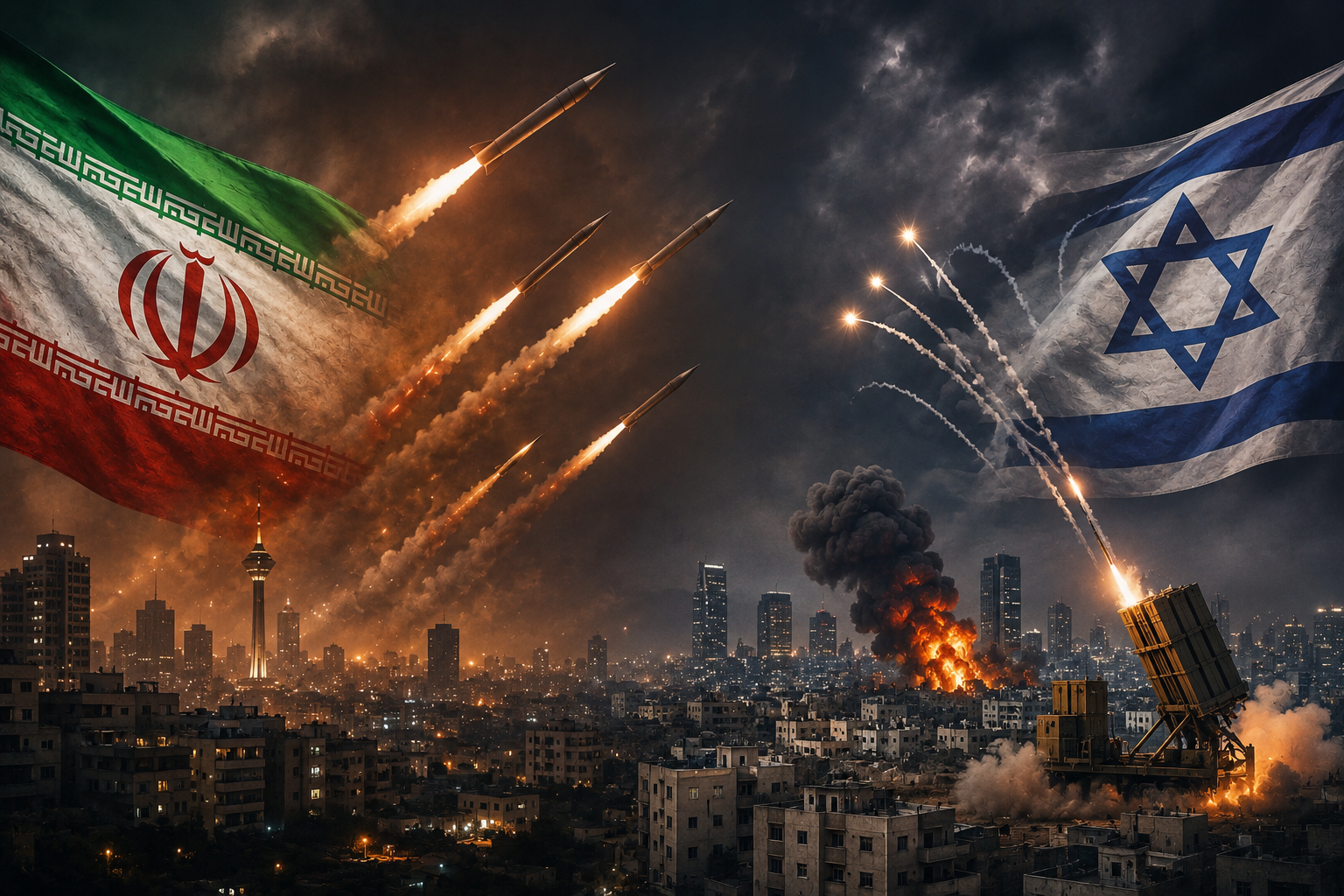
Iran Fires Missiles at Israel After Israeli Airstrike on Beirut
The Middle East experienced another dangerous escalation after Iran launched missiles at Israel in response to an Israeli airstrike on Beirut. The incident has raised fears that the fragile ceasefire established earlier in the year could collapse completely, leading to a broader regional conflict. The exchange of military actions between Iran and Israel has attracted international attention, with global leaders urging restraint and diplomatic engagement to prevent further violence. The latest developments highlight the continuing instability in the region and the challenges facing ongoing peace efforts.
Iran Fires Missiles at Israel Following Beirut Airstrike
The crisis began when Israel carried out an airstrike targeting Hezbollah-linked positions in Beirut. The strike was viewed by Iran as a major escalation because Hezbollah remains one of Tehran’s closest regional allies. Shortly after the attack, Iran launched a series of ballistic missiles toward northern Israel, marking one of the most significant direct confrontations between the two countries since the ceasefire took effect in April.
Reports indicated that approximately ten missiles were fired in multiple waves. Israeli defense systems were activated immediately, and authorities stated that the majority of incoming missiles were intercepted before reaching populated areas. Although no major casualties were reported, the attack significantly increased tensions across the region and renewed fears of a wider military conflict.
Iran Fires Missiles at Israel Israel Immediate Response
Following the missile barrage, Israel launched retaliatory airstrikes against military targets inside Iran. Israeli forces reportedly targeted missile launch facilities and strategic military infrastructure in several locations. Explosions were reported in multiple Iranian cities as Israeli aircraft conducted precision strikes aimed at weakening Iran’s military capabilities.
Israeli officials described the operation as a necessary response to Iran’s missile attack and emphasized their commitment to defending national security. The retaliation demonstrated Israel’s willingness to respond forcefully to any direct military threat while also sending a message that future attacks would face immediate consequences.
Iran Fires Missiles at Israel and Threatens Regional Stability
The latest confrontation has raised concerns about the possibility of a larger regional war involving multiple actors. Hezbollah, the Houthis in Yemen, and other Iran-aligned groups remain active throughout the region. Security analysts warn that continued exchanges between Iran and Israel could encourage additional groups to become involved, making the conflict even more difficult to contain.
The situation has also affected strategic calculations across the Middle East. Neighboring countries are closely monitoring developments because any prolonged conflict could impact trade routes, energy supplies, and regional security arrangements. Governments throughout the region have called for calm and urged all parties to prioritize diplomacy over military action.
Iran Fires Missiles at Israel Trump Call for Restraint
United States President Donald Trump became actively involved in efforts to reduce tensions after the missile exchange. Trump publicly urged both Iran and Israel to stop military operations and support an immediate ceasefire. According to reports, he emphasized that continued fighting could undermine ongoing diplomatic efforts and increase the risk of a broader regional conflict.
Trump also reportedly communicated with Israeli leadership and expressed concern about actions that could derail negotiations aimed at stabilizing the region. His administration has continued to support diplomatic channels while maintaining pressure on Iran regarding regional security issues. The United States remains a central player in efforts to prevent the conflict from expanding further.
Military Capabilities Behind the Iran Missiles at Israel Attack
The latest attack highlighted the advanced military capabilities possessed by both countries. Iran’s ballistic missile program remains one of the largest in the region, allowing it to launch strikes over long distances. Meanwhile, Israel’s sophisticated air defense network demonstrated its effectiveness by intercepting most incoming threats before they could cause significant damage.
Israel’s multilayered defense system includes technologies designed to intercept rockets, drones, and ballistic missiles. Defense analysts noted that the successful interceptions helped prevent casualties and reduced the immediate impact of the Iranian attack. However, they also warned that repeated missile exchanges could place significant pressure on defensive resources over time.
Diplomatic Efforts Amid the Iran Missiles at Israel Conflict
International diplomatic activity increased rapidly following the escalation. Several governments and international organizations called for immediate de-escalation and urged both sides to return to negotiations. Diplomats emphasized that military action alone cannot resolve the underlying issues driving tensions between Iran and Israel.
The fragile ceasefire established earlier in the year remains under severe pressure. While both countries temporarily halted direct attacks after several hours of confrontation, officials on both sides warned that future aggression could trigger stronger responses. This uncertainty has left regional observers concerned about the possibility of renewed fighting in the coming days.
FOLLOW LIVE UPDATES
Key Developments to Watch
Attention is now focused on whether diplomatic efforts can prevent another cycle of military escalation. Analysts are closely monitoring statements from Iranian and Israeli leaders, military movements across the region, and international mediation efforts. The decisions made by both governments in the coming days could determine whether the crisis moves toward de-escalation or evolves into a larger regional confrontation.
Global markets, security experts, and political leaders will continue watching developments closely as the situation remains highly volatile. The balance between military deterrence and diplomatic engagement will likely shape the next phase of one of the most significant geopolitical challenges currently facing the Middle East.

