

Indian Supreme Court Rejects Menstrual Leave Request | Employers May Stop Hiring Women
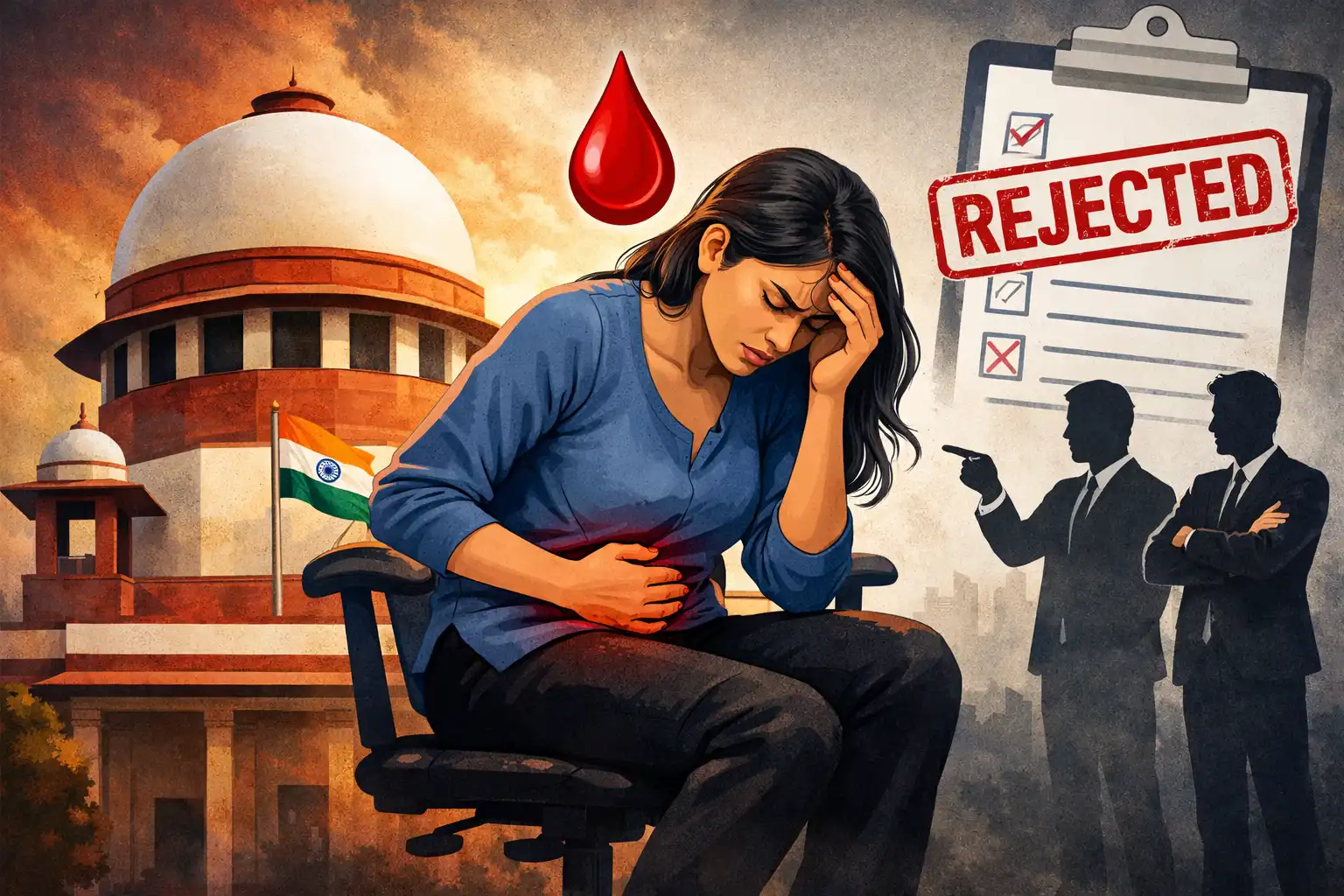
The issue of menstrual leave has sparked debate across many countries, particularly in workplaces where women often struggle to balance health needs and professional expectations. Recently, the Indian Supreme Court rejected a petition seeking mandatory menstrual leave for women employees. The court expressed concern that such a policy could unintentionally create discrimination in hiring practices. The decision has triggered widespread discussion about gender equality, workplace rights, and the practical challenges of implementing menstrual leave policies in India.
What the Petition Requested
The petition asked the government to introduce a nationwide policy granting women paid leave during menstruation. Supporters argued that menstrual leave in India would recognize the physical discomfort and health challenges that many women experience during their menstrual cycles. They claimed that providing a few days of optional leave each month could improve workplace productivity, protect women’s health, and promote a more inclusive work environment.
Advocates also pointed out that menstruation can cause symptoms such as severe cramps, fatigue, headaches, and nausea. In some cases, these symptoms can make it difficult for women to work effectively. According to supporters of menstrual leave in India, acknowledging these realities through workplace policies would demonstrate respect for women’s health and well-being.
However, the court was not convinced that a nationwide mandate would be the best approach.
Why the Indian Supreme Court Rejected Menstrual Leave in India
During the hearing, the Supreme Court expressed concern that making menstrual leave mandatory could have unintended consequences. The judges argued that employers might become reluctant to hire women if they were required to provide additional leave specifically for female employees.
The court noted that policies should avoid creating situations where women could be perceived as less productive or more costly to employ. According to the judges, such a perception could harm women’s employment opportunities rather than support them.
The bench also suggested that the issue of menstrual leave in India falls primarily under the domain of government policy rather than judicial intervention. In other words, the court believes that lawmakers and policymakers are better positioned to decide whether such regulations should be implemented.
Because of these concerns, the petition was dismissed.
Debate Around Menstrual Leave in India
The decision has intensified debate about menstrual leave in India and around the world. Supporters of menstrual leave argue that it is a necessary step toward gender-sensitive workplace policies. They say that recognizing biological differences does not create inequality but rather helps ensure fairness.
Many activists and women’s rights groups believe that menstrual leave would reduce stigma surrounding menstruation. In many parts of society, menstruation is still considered a taboo subject. Introducing official workplace policies could encourage more open discussions about women’s health.
On the other hand, critics argue that menstrual leave policies could reinforce stereotypes that women are less capable workers. Some also believe that flexible work arrangements, sick leave, or work-from-home options might be more effective solutions.
The debate highlights the difficulty of balancing health needs with workplace equality.
Menstrual Leave in India Compared With Other Countries
While India has not adopted a nationwide menstrual leave policy, some countries have introduced similar measures. For example, Japan, South Korea, Indonesia, and Taiwan allow some form of menstrual leave for women workers.
In these countries, the policies vary widely. Some offer unpaid leave, while others allow paid days off depending on the employer or workplace agreement. Even where laws exist, many women do not use menstrual leave because of workplace culture or fear of being judged.
These global examples show that menstrual leave policies are complex and often influenced by cultural, economic, and social factors.
The Future of Menstrual Leave in India
Although the Supreme Court rejected the petition, the discussion around menstrual leave in India is far from over. Several Indian states and private companies have already experimented with menstrual leave policies. Some organizations offer optional leave days each month, while others provide flexible working arrangements for women experiencing menstrual discomfort.
Experts believe that future policies may focus on voluntary or company-level initiatives rather than a strict nationwide law. This approach could allow workplaces to support women’s health without creating unintended barriers to employment.
Ultimately, the debate over menstrual leave in India reflects a broader conversation about gender equality, workplace fairness, and public health. As awareness of women’s health issues continues to grow, policymakers, businesses, and society will likely keep searching for solutions that balance equality with practical workplace realities.

