

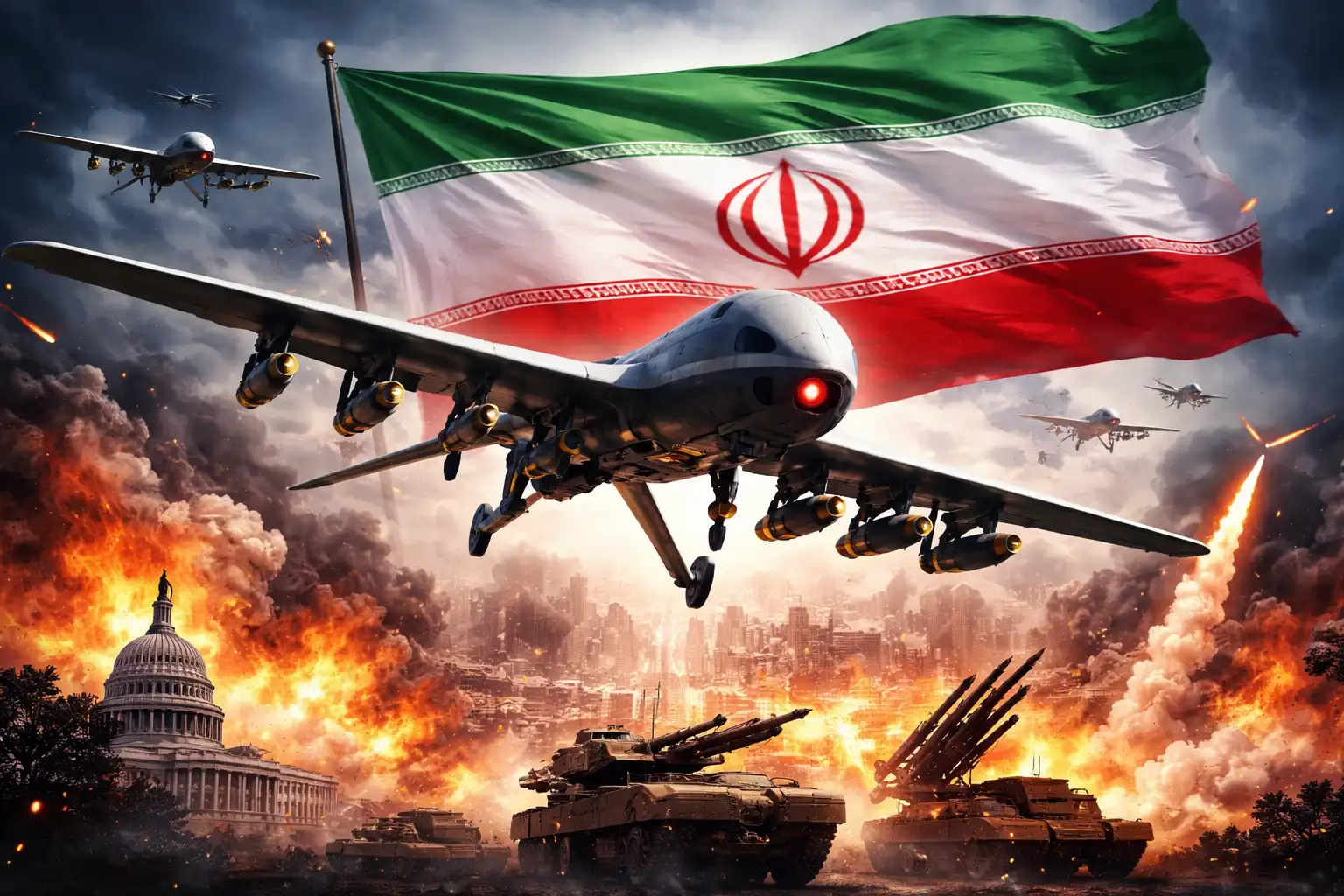
How Iran Drones Changed the Global Concept of Power
In recent years, Iran has emerged as a significant player in unmanned aerial technology, reshaping how power is perceived in modern warfare. Traditionally, military strength was measured by advanced fighter jets, nuclear capabilities, and large-scale armies. However, Iran’s strategic focus on drones has challenged this conventional thinking. By investing in cost-effective, flexible, and highly adaptable drone systems, Iran has demonstrated that technological innovation can rival even the most sophisticated military forces.
Iran’s Drones and the Shift in Military Power Dynamics
Iran drones have played a critical role in redefining military power dynamics. Unlike traditional weapons, drones offer surveillance, precision strikes, and long-range capabilities without risking human pilots. This allows smaller or less technologically advanced nations to compete with global powers. Iran’s ability to deploy drones in various regions has proven that asymmetric warfare can be highly effective against stronger adversaries.
Moreover, drones reduce the cost of warfare significantly. While advanced fighter jets require billions of dollars in development and maintenance, drones can be produced at a fraction of the cost. This affordability enables Iran to build large fleets, increasing its operational reach and influence. As a result, military dominance is no longer solely dependent on financial strength but also on innovation and strategic thinking.
The Role of Iran’s Drones in Regional Influence
Iran’s drones have extended its influence far beyond its borders. These unmanned systems have been used in intelligence gathering, targeted operations, and support for allied groups in various regions. By providing drone technology and expertise, Iran has strengthened its geopolitical presence without direct large-scale military intervention.
This approach has altered how influence is projected globally. Instead of deploying troops, countries can now rely on drones to achieve strategic objectives. Iran’s success in this area has encouraged other nations to invest in similar technologies, leading to a broader shift in global military strategies.
Iran’s Drones and Asymmetric Warfare
One of the most significant impacts of Iran’s drones is their role in asymmetric warfare. In such conflicts, weaker parties use unconventional methods to counter stronger opponents. Drones perfectly fit this model by enabling precise strikes and surveillance without requiring large resources.
Iran’s drones have shown that even powerful defense systems can be challenged. By using swarm tactics or low-cost drones, Iran has demonstrated that traditional defense mechanisms may not always be effective. This has forced major powers to rethink their defense strategies and invest in counter-drone technologies.
Technological Innovation Behind Iran’s Drones
The success of Iran’s drones is not accidental but the result of continuous innovation. Despite facing international sanctions, Iran has developed a range of drones with varying capabilities, including reconnaissance, combat, and long-endurance missions. These advancements highlight the importance of self-reliance and adaptability in modern military development.
Iran’s focus on indigenous production has also reduced its dependence on foreign technology. This independence has allowed it to experiment and evolve its drone systems rapidly. As a result, Iran has positioned itself as a key player in the global drone landscape.
Global Impact of Iran’s Drone Development
The rise of Iran’s drones has had a ripple effect across the world. Countries are now prioritizing drone technology as a core component of their military strategies. The concept of power is shifting from sheer size and strength to agility, precision, and technological capability.
Additionally, the widespread use of drones has raised concerns about security and ethics. The ability to conduct remote operations has blurred the lines between war and peace, making conflicts more complex. Iran’s role in this transformation highlights how emerging technologies can reshape global norms and expectations.
A New Definition of Power
The evolution of Iran drones suggests that the future of power will be defined by innovation rather than traditional metrics. Nations that can develop and deploy advanced technologies efficiently will hold a strategic advantage. Iran’s approach serves as a model for how countries can leverage limited resources to achieve significant influence.
Power Beyond Traditional Boundaries
Iran’s drones have fundamentally changed how power is understood in the modern world. By emphasizing innovation, affordability, and strategic deployment, Iran has shown that influence is no longer confined to conventional military strength. This transformation marks the beginning of a new era where technology, rather than size, defines global power.

