

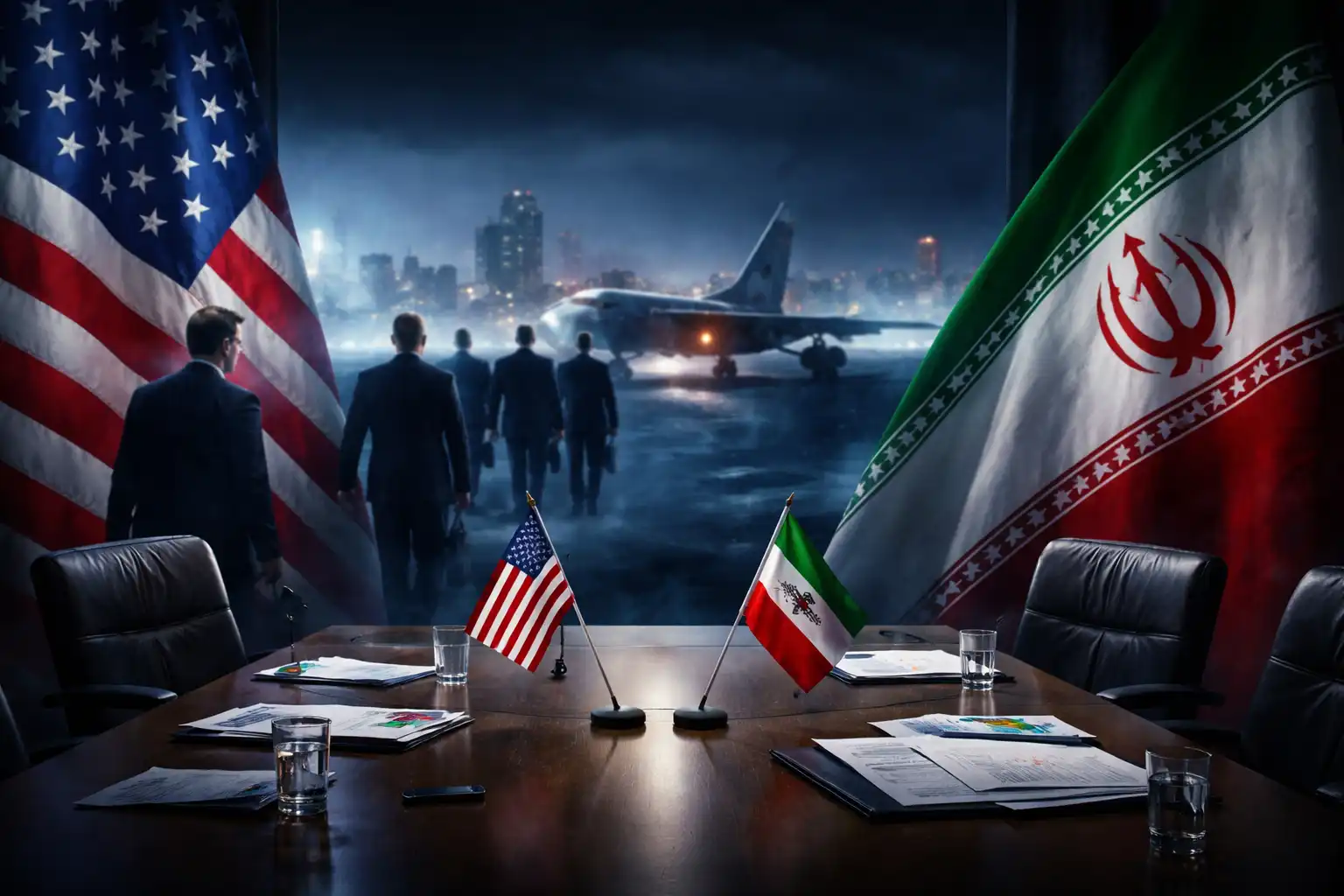
Iran US Talks End Without Result as American Delegation Departs
The latest round of diplomatic engagement between Iran and the United States has concluded without any tangible breakthrough, raising fresh concerns about the future of already fragile relations. The negotiations, which were closely watched by international observers, ended with both sides failing to reach consensus on key issues. Following the discussions, the American delegation departed, signaling a pause in the dialogue that many had hoped would ease long-standing tensions.
Background of the Negotiations
Iran–US Talks End Without Result Amid Longstanding Disputes
The talks were part of ongoing efforts to revive dialogue over critical matters, including nuclear policy, sanctions, and regional stability. Over the years, both nations have engaged in intermittent negotiations, often mediated by third parties, but deep-rooted mistrust has consistently hindered progress.
Iran has maintained that it seeks the removal of economic sanctions that have significantly impacted its economy. On the other hand, the United States has emphasized the need for Iran to comply with international agreements, particularly concerning its nuclear program. These opposing priorities have made it difficult to find common ground.
Key Issues That Led to Deadlock
Iran–US Talks End Without Result Due to Major Differences
Several contentious issues contributed to the failure of the negotiations. One of the primary sticking points was the extent and timing of sanctions relief. Iran demanded immediate and comprehensive lifting of sanctions, while the United States insisted on a phased approach tied to verifiable commitments.
Another critical issue was transparency and monitoring. The U.S. delegation pushed for stricter inspection mechanisms to ensure compliance with nuclear agreements. Iran, however, viewed some of these demands as excessive and a violation of its sovereignty.
Regional security concerns also played a role in complicating the discussions. Both sides accused each other of destabilizing activities in the Middle East, further deepening the divide and reducing the likelihood of compromise.
Reactions from Both Sides
Iran–US Talks End Without Result Sparks Mixed Responses
Following the conclusion of the talks, officials from both countries issued statements reflecting their positions. Iranian representatives expressed disappointment, emphasizing that they had approached the negotiations with seriousness and flexibility. They reiterated that meaningful progress would only be possible if sanctions were lifted in a fair and timely manner.
Meanwhile, the U.S. delegation highlighted the need for accountability and concrete actions from Iran. They stated that while dialogue remains open, any future agreement must ensure long-term security and compliance with international standards.
International observers and analysts have also weighed in on the outcome. Many believe that the lack of progress was predictable given the complexity of the issues and the limited trust between the two nations. Others argue that the continuation of dialogue, even without immediate results, is still a positive sign.
Implications for Regional and Global Politics
Iran–US Talks End Without Result Raises Global Concerns
The failure of the talks has significant implications not only for Iran and the United States but also for the broader international community. Tensions between the two countries have a direct impact on regional stability, particularly in the Middle East.
Energy markets are also sensitive to developments in Iran–U.S. relations. Any escalation in tensions can influence oil prices and global economic conditions. Additionally, the outcome of these negotiations affects diplomatic dynamics involving other major powers that have interests in the region.
The lack of agreement may also slow down efforts to address nuclear proliferation concerns. Without a clear framework or renewed agreement, uncertainty surrounding Iran’s nuclear activities is likely to persist.
What Lies Ahead After the Talks
Iran–US Talks End Without Result Leaves Future Uncertain
Although the negotiations ended without a breakthrough, both sides have indicated that diplomacy is not entirely off the table. There remains a possibility of future engagements, either directly or through intermediaries, aimed at bridging the gap.
Experts suggest that confidence-building measures could be a crucial first step toward resuming meaningful dialogue. Small agreements on less contentious issues might help rebuild trust and create a more favorable environment for broader negotiations.
However, the path forward is expected to be challenging. Political pressures within both countries, along with shifting global dynamics, will continue to influence the direction of any future talks.

