

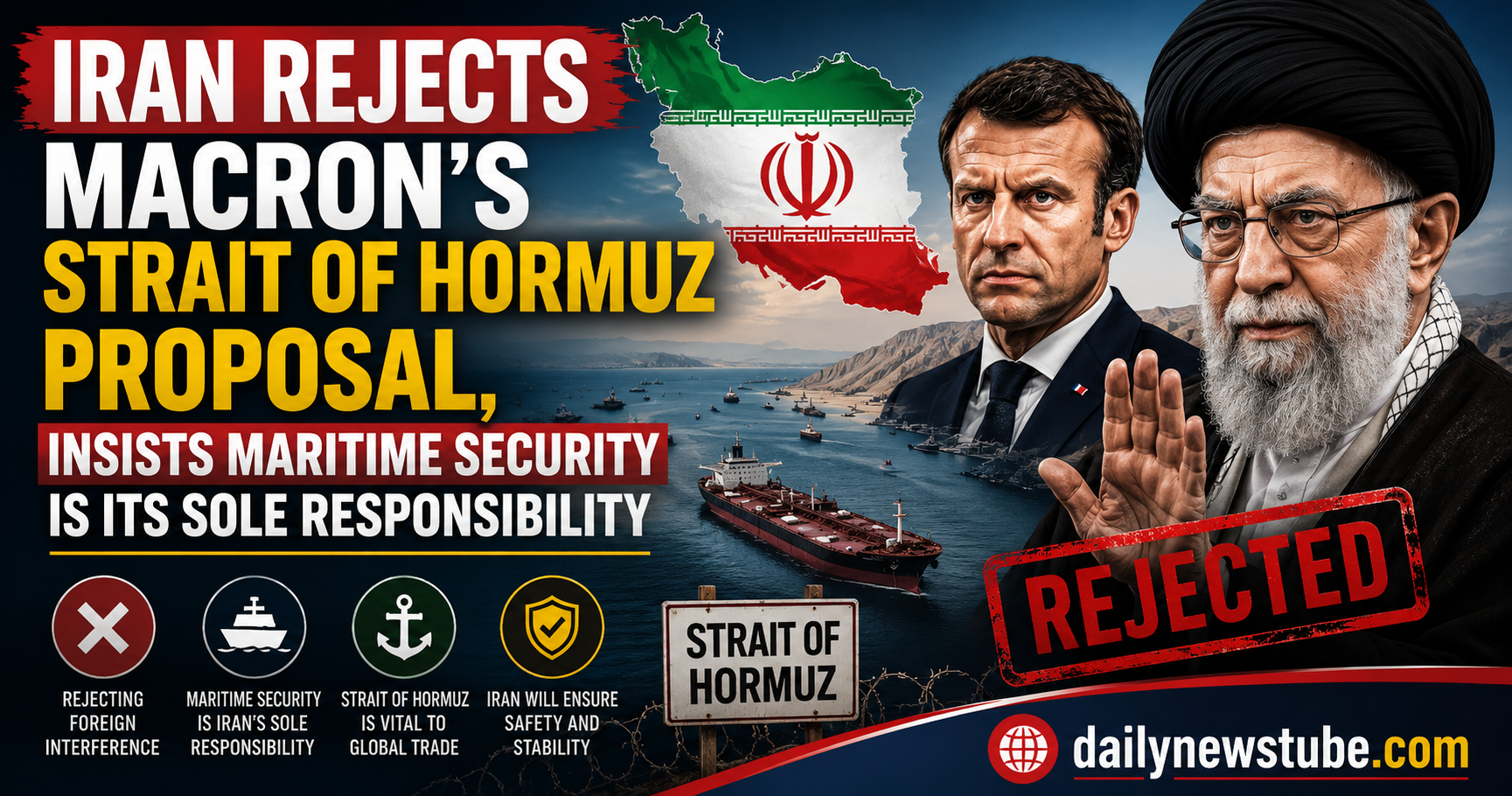
Iran Rejects Macron Strait of Hormuz Proposal Insists Maritime Security Is Its Sole Responsibility
Tehran Rejects French-Backed Plan to Clear Strategic Waterway
Iran has firmly rejected a proposal associated with French President Emmanuel Macron to cooperate on clearing and securing the Strait of Hormuz, arguing that responsibility for managing the strategically vital waterway rests exclusively with Tehran.
The announcement comes amid renewed diplomatic efforts to stabilize the Gulf following recent tensions involving commercial shipping, naval operations, and negotiations between Iran and the United States. Iranian officials stated that any effort to remove sea mines or restore full maritime traffic must remain under Iran’s authority, warning that foreign intervention could complicate an already delicate regional situation.
The decision reflects Tehran’s determination to maintain control over one of the world’s most important maritime chokepoints while continuing broader diplomatic discussions with Washington.
Strait of Hormuz Remains a Global Energy Lifeline
The Strait of Hormuz is one of the busiest energy corridors in the world, carrying a significant share of global crude oil and liquefied natural gas exports each day.
Because of its strategic importance, even temporary disruptions can have immediate consequences for international energy prices, shipping insurance costs, and financial markets. Following months of regional conflict, hundreds of commercial vessels experienced delays, while many shipping companies reduced operations due to security concerns.
Although traffic has gradually resumed under carefully monitored conditions, maritime activity remains well below normal levels as authorities continue assessing potential risks in the area.
Why Iran Opposes Macron’s Proposal
Iranian officials argue that recent diplomatic understandings already define how navigation through the Strait of Hormuz should be managed.
According to Tehran, the responsibility for clearing mines, coordinating maritime safety, and supervising vessel movement belongs to Iranian authorities under existing agreements. Officials warned that allowing foreign military forces to conduct demining operations could undermine Iran’s sovereignty and increase regional tensions rather than reduce them.
Iran also stressed that outside military involvement could create misunderstandings between naval forces operating in the Gulf, increasing the possibility of accidental confrontation.
France Calls for International Cooperation
French President Emmanuel Macron has repeatedly argued that reopening and securing the Strait of Hormuz requires international cooperation rather than unilateral action.
Paris believes that multinational coordination could reassure commercial shipping companies and lower insurance costs while reducing the risk of future maritime incidents. However, Macron has also made clear that he does not support reopening the strait through military force, describing such an approach as unrealistic given the security environment and the potential for escalation.
European officials continue advocating diplomatic solutions that balance freedom of navigation with respect for regional security concerns.
Diplomatic Talks Continue Despite Disagreements
Despite public disagreements over maritime security, diplomatic contacts between Iran and the United States continue.
Negotiators are expected to discuss broader regional issues, including freedom of navigation, sanctions relief, nuclear negotiations, and mechanisms designed to prevent future military incidents in the Gulf.
Both governments have indicated that diplomacy remains preferable to renewed confrontation, even though important disagreements remain unresolved.
Regional mediators, including Qatar and Oman, continue working behind the scenes to encourage dialogue and reduce the risk of further escalation.
Economic Impact Closely Watched Worldwide
The situation in the Strait of Hormuz continues to influence global financial markets.
Energy traders, shipping companies, and insurers are carefully monitoring every diplomatic development because disruptions to the waterway can quickly affect international oil supplies.
Although shipping activity has partially resumed, insurance premiums remain elevated due to ongoing security risks. Many commercial operators continue exercising caution until authorities declare the route fully secure.
Economists say a prolonged dispute over control of the strait could delay the complete recovery of maritime trade and keep transportation costs higher than normal for months.
Regional Stability Depends on Continued Dialogue
Security experts believe that both diplomacy and practical coordination will be essential to maintaining stability in the Gulf.
While Iran insists that maritime security is its sovereign responsibility, many international partners continue advocating broader cooperation to ensure safe navigation through one of the world’s most strategically important waterways.
Finding common ground will not be easy, but ongoing negotiations demonstrate that all parties recognize the enormous economic and geopolitical consequences of another major disruption.
For now, Tehran remains firm in rejecting foreign-led proposals for clearing the Strait of Hormuz, while France and other international partners continue promoting cooperative solutions that prioritize safe commercial navigation.
The coming weeks are expected to determine whether diplomatic negotiations can bridge these differences and help restore long-term confidence in one of the world’s most critical maritime trade routes.

