

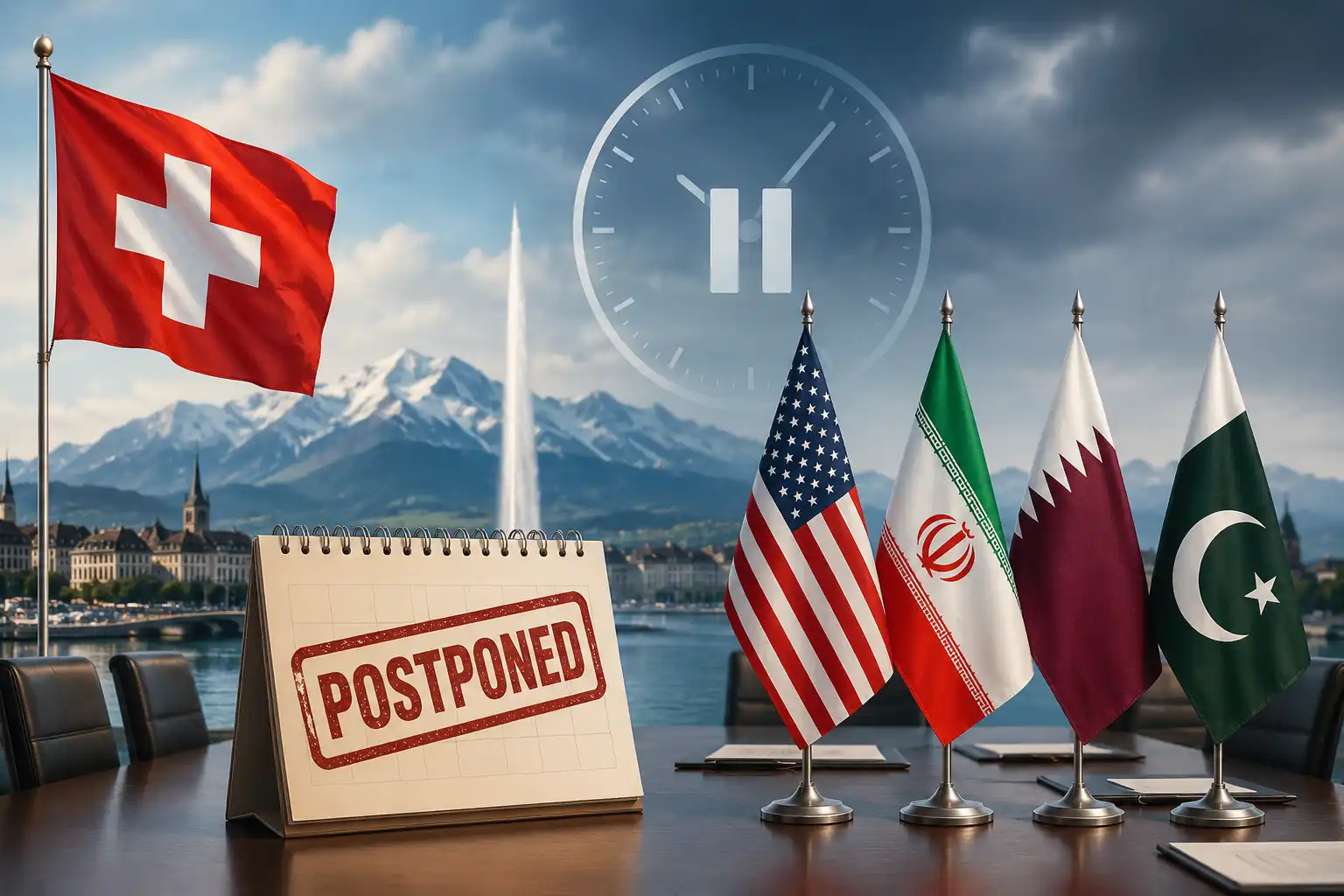
Switzerland Announces Postponement of Scheduled Talks Between the United States Iran Qatar and Pakistan
Switzerland has officially announced the postponement of the much-anticipated diplomatic discussions involving the United States, Iran, Qatar, and Pakistan. The talks, which were expected to address a range of regional and international issues, were scheduled to take place under Swiss facilitation. The announcement has drawn significant attention from political analysts and diplomats, as the meeting was viewed as an important opportunity for dialogue among key stakeholders in regional stability and international cooperation.
Switzerland, known for its long-standing policy of neutrality and its role as a host for diplomatic negotiations, confirmed that the meeting would not proceed according to the original timetable. However, officials have not yet provided a new date for the discussions.
Switzerland Confirms Delay in Scheduled Talks Between the United States, Iran, Qatar, and Pakistan
Swiss authorities stated that the postponement was made after consultations with the participating parties. While no detailed explanation was provided regarding the reasons behind the delay, officials emphasized that the decision was mutual and aimed at ensuring the most productive environment for future discussions.
The planned negotiations were expected to bring together representatives from the four countries to discuss issues related to regional security, diplomatic relations, economic cooperation, and ongoing geopolitical developments. Observers had hoped that the talks would create opportunities for constructive engagement and help reduce tensions in several areas of concern.
Switzerland role as a neutral facilitator has historically made it a preferred venue for sensitive diplomatic meetings. By hosting such negotiations, the country often provides a platform where nations with differing interests can engage in open and meaningful dialogue.
Importance of the Scheduled Talks Between the United States, Iran, Qatar, and Pakistan
The proposed meeting carried considerable significance due to the strategic positions of the participating countries. The United States remains a major global power with extensive involvement in Middle Eastern and South Asian affairs. Iran continues to play a critical role in regional politics, while Qatar has established itself as an active mediator in numerous international disputes. Pakistan, meanwhile, occupies an important geopolitical position connecting South Asia, Central Asia, and the Middle East.
Diplomatic experts viewed the talks as an opportunity to address various challenges affecting the region. These included security concerns, economic partnerships, humanitarian issues, and avenues for improved communication among the participating states.
The discussions were also expected to contribute to broader efforts aimed at promoting stability and reducing misunderstandings between countries with differing political perspectives. For many observers, direct engagement remains one of the most effective tools for managing complex international relationships.
Potential Agenda for the Scheduled Talks Between the United States, Iran, Qatar, and Pakistan
Although officials did not release a complete agenda, several topics were believed to be under consideration. These included regional security developments, diplomatic cooperation, trade opportunities, and mechanisms for conflict resolution.
Analysts suggested that the talks could have provided a forum for discussing recent developments in the Middle East and South Asia. Additionally, participants may have explored ways to strengthen economic ties and encourage collaborative initiatives in areas such as energy, infrastructure, and investment.
Another key area of interest was likely to be diplomatic communication channels. Maintaining open dialogue is widely regarded as essential for preventing tensions from escalating and for fostering greater understanding among nations with diverse interests.
Reactions to the Postponement Announcement
The announcement of the postponement has generated mixed reactions from international observers. Some experts expressed disappointment, noting that diplomatic engagement is particularly important during periods of regional uncertainty. Others argued that delaying the talks could allow participating countries more time to prepare and ensure that discussions are conducted under favorable conditions.
Political analysts have pointed out that postponements are not uncommon in international diplomacy. Scheduling challenges, evolving political circumstances, and logistical considerations can all influence the timing of high-level meetings.
Despite the delay, many observers remain optimistic that the talks will eventually take place. The willingness of all parties to remain engaged in diplomatic processes is generally viewed as a positive sign for future cooperation.
Switzerland’s Role in International Diplomacy
Switzerland has earned a reputation as one of the world’s leading hosts for diplomatic negotiations. Its commitment to neutrality and its extensive experience in facilitating dialogue have made it a trusted venue for international discussions.
Over the years, Swiss cities have hosted numerous peace talks, negotiations, and diplomatic meetings involving countries from different regions. The country’s diplomatic infrastructure and tradition of impartiality continue to make it an important player in global conflict resolution and international cooperation.
By facilitating discussions among the United States Iran, Qatar, and Pakistan, Switzerland sought to provide a constructive environment where participants could exchange views and explore solutions to shared challenges. Although the talks have been postponed, Switzerland remains committed to supporting diplomatic efforts and encouraging dialogue among nations.
What Happens Next After the Postponement?
Following the announcement, attention is now focused on when a new date for the talks will be established. Diplomatic sources indicate that communication among the participating countries is expected to continue despite the delay.
Experts believe that the postponement should not be interpreted as a cancellation of the dialogue process. Instead, it may represent a temporary adjustment aimed at ensuring more effective discussions in the future. As international interest remains high, stakeholders will be closely monitoring developments and awaiting further updates from Swiss authorities and the participating governments.
The future scheduling of these talks is likely to remain an important topic in diplomatic circles, particularly given the significant regional and international issues that were expected to be addressed during the meeting.

