

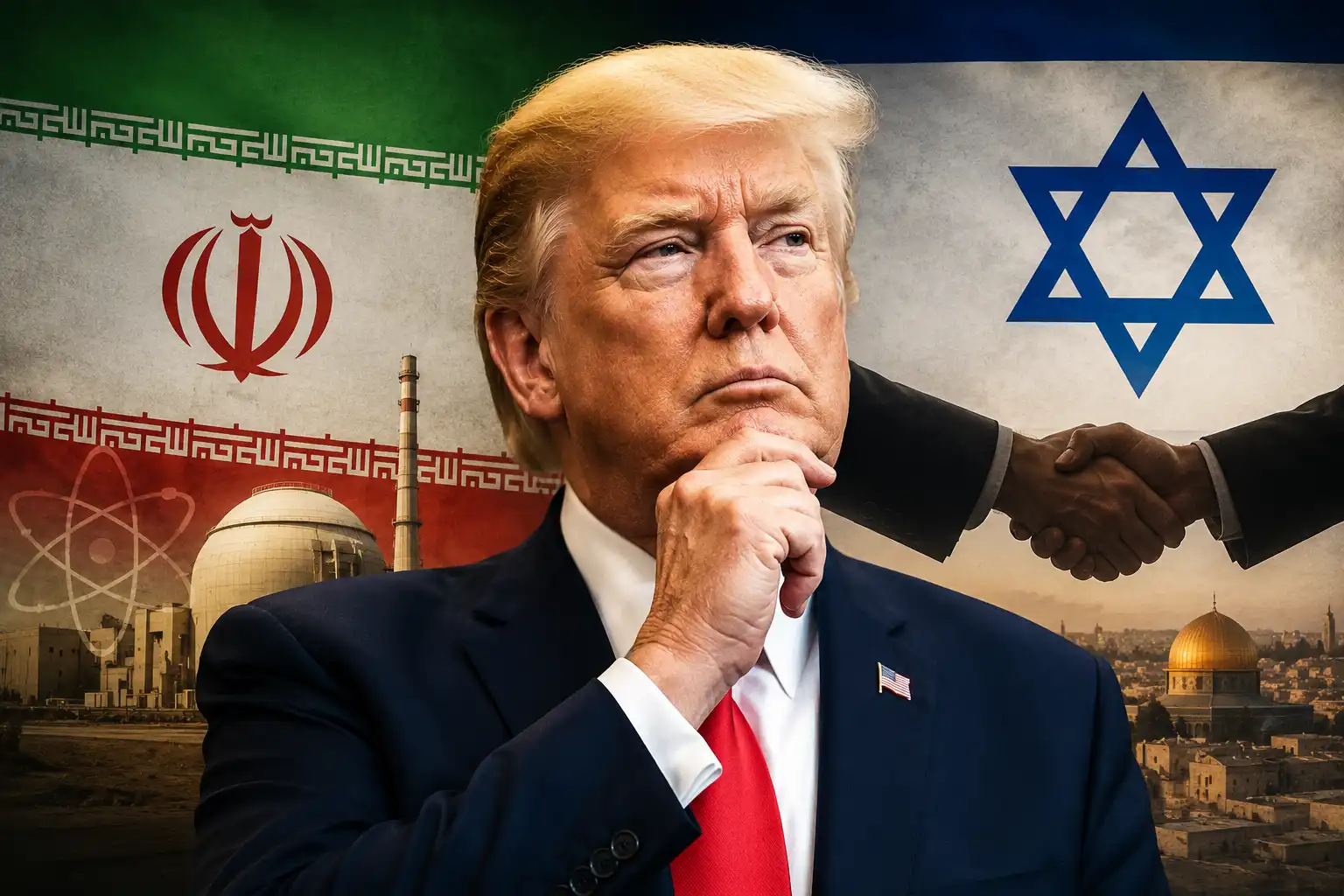
Why Trump Linked the Iran Deal to Israel Recognition
The return of discussions around a possible Iran agreement has once again placed former US President Donald Trump at the center of Middle Eastern diplomacy. Reports and political debates suggest that Trump’s approach toward Iran was not only about nuclear concerns but also tied closely to the broader goal of strengthening Israel’s regional acceptance. This strategy raised serious questions for major Muslim countries such as Saudi Arabia and Pakistan regarding whether they could resist pressure to recognize Israel in exchange for political, economic, or security benefits.
Trump Linked the Iran Deal to Israel Recognition for Strategic Reasons
One of the main reasons Trump connected the Iran issue with Israel’s recognition was his administration’s focus on reshaping Middle Eastern alliances. During his presidency, Trump strongly supported Israel and promoted the Abraham Accords, which normalized relations between Israel and several Arab nations including the United Arab Emirates and Bahrain.
Trump viewed Iran as the biggest regional threat to both American interests and Israeli security. By encouraging Muslim-majority countries to formally recognize Israel, his administration aimed to build a united regional bloc against Iran’s growing influence in the Middle East.
Trump Linked the Iran Deal to Israel Recognition Through Regional Pressure
Trump’s strategy relied heavily on diplomatic and economic pressure. Countries seeking stronger military partnerships, trade opportunities, or American political support were often encouraged to improve ties with Israel. This created a situation where the Iran issue became connected to broader regional normalization efforts.
For Trump, recognition of Israel was not simply symbolic. It was part of a larger geopolitical structure designed to isolate Iran diplomatically and strategically. By expanding Israel’s acceptance in the Muslim world, the US hoped to weaken Tehran’s influence across the region.
Why Saudi Arabia Faces Pressure Over Israel Recognition
Saudi Arabia remains one of the most influential Muslim countries in the world due to its religious status, oil power, and political leadership in the Gulf region. Because of this importance, any Saudi move toward recognizing Israel would have a massive impact across the Muslim world.
The United States has long viewed Saudi-Israeli normalization as a major diplomatic prize. In return, Saudi Arabia could potentially receive advanced security guarantees, military technology, and stronger economic cooperation with Washington.
Trump Linked the Iran Deal to Israel Recognition to Build an Anti-Iran Alliance
Saudi Arabia and Iran have been regional rivals for decades. Their competition has influenced conflicts in countries such as Yemen, Syria, and Lebanon. Trump believed that shared concerns about Iran could push Saudi Arabia closer to Israel despite historical tensions over the Palestinian issue.
However, Saudi Arabia also faces domestic and international sensitivities. Many Saudi citizens and Muslim communities worldwide continue to support Palestinian statehood. Open recognition of Israel without significant progress for Palestinians could create political criticism inside and outside the kingdom.
Can Pakistan Refuse Recognition of Israel?
Pakistan has historically maintained a strong position in support of Palestinian rights. Pakistani governments have repeatedly stated that recognition of Israel would depend on the establishment of an independent Palestinian state.
Unlike some Gulf countries, Pakistan’s political environment makes the issue particularly sensitive. Religious parties, public opinion, and historical policy positions all play major roles in shaping Islamabad’s stance on Israel.
Trump Linked the Iran Deal to Israel Recognition but Pakistan Has Different Priorities
Pakistan’s relationship with Iran is more complex than that of many Arab states. Although there have been tensions at times, Pakistan shares a border with Iran and maintains important security and economic ties with Tehran.
Pakistan also balances relationships with major regional powers including China, Saudi Arabia, and the United States. Because of these multiple interests, Islamabad may avoid taking any step that could create strong domestic backlash or regional instability.
At the same time, Pakistan faces economic challenges and often depends on financial assistance from international institutions and friendly countries. This creates speculation about whether future governments could face pressure regarding diplomatic normalization with Israel.
The Palestinian Issue Remains the Biggest Obstacle
Despite changing regional alliances, the Palestinian issue continues to be the central obstacle preventing many Muslim countries from recognizing Israel openly. Public opinion across much of the Muslim world still strongly supports Palestinian rights and opposes policies seen as harmful to Palestinian statehood aspirations.
Even countries that improved relations with Israel often presented the move as beneficial for regional peace or economic development rather than abandoning the Palestinian cause entirely.
Trump Linked the Iran Deal to Israel Recognition While Reshaping Middle East Politics
Trump’s foreign policy attempted to transform traditional Middle Eastern politics by creating new partnerships centered around security cooperation and economic interests instead of older ideological divisions. His administration believed that fears regarding Iran could unite countries that previously avoided direct relations with Israel.
Whether this strategy fully succeeds remains uncertain. Saudi Arabia continues to move cautiously, while Pakistan still publicly maintains its traditional policy regarding Palestine. However, shifting global politics, economic realities, and regional security concerns ensure that the debate over Israel recognition will remain an important issue in international diplomacy for years to come.
Future Outlook for Saudi Arabia and Pakistan
Both Saudi Arabia and Pakistan face unique pressures and opportunities in the evolving Middle East landscape. Saudi Arabia may continue gradual engagement with Israel behind the scenes while carefully managing domestic and regional reactions. Pakistan, meanwhile, is likely to maintain its official position unless major developments occur regarding Palestinian statehood.
As global power balances shift and regional tensions continue, the connection between Iran diplomacy and Israel recognition will likely remain a key part of international political discussions involving the United States, Gulf countries, and South Asia.

