

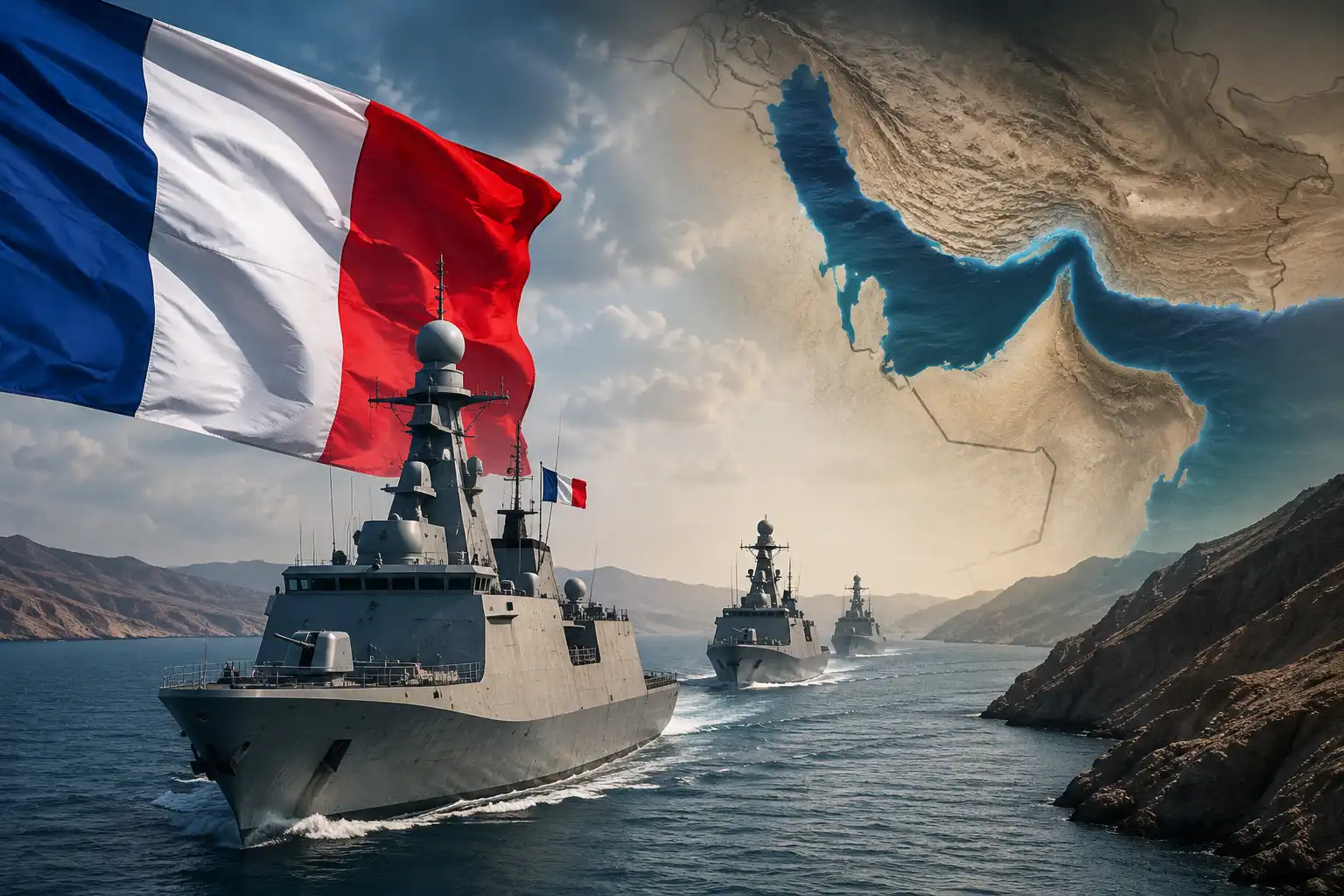
France Never Envisaged Sending Warships into Strait of Hormuz
French President Emmanuel Macron has stated that France never considered deploying warships into the strategically vital Strait of Hormuz despite rising tensions in the region. His remarks came amid growing international concerns over maritime security, regional conflicts, and the safety of global energy supplies moving through one of the world’s busiest shipping routes.
The statement from Macron arrives at a time when several Western nations are reassessing their military presence in the Middle East due to escalating geopolitical uncertainty. The French president emphasized that France’s priority remains diplomacy, de-escalation, and maintaining regional stability rather than increasing military activity in sensitive waterways.
Why the Strait of Hormuz Is Important
The Strait of Hormuz is one of the most critical maritime chokepoints in the world. Located between Iran and Oman, the narrow passage connects the Persian Gulf to the Arabian Sea and serves as a major route for global oil and gas shipments.
A significant portion of the world’s crude oil exports passes through the strait every day. Any disruption in the area can impact global fuel prices, shipping industries, and international markets. Because of this importance, military activity in the region often attracts worldwide attention.
Macron comments sought to calm fears that France might join additional naval operations in the area. According to the French leader, the country has consistently focused on protecting international law and encouraging diplomatic dialogue instead of escalating military tensions.
Macron Emphasizes Diplomacy Over Military Action
During his remarks, Emmanuel Macron highlighted the importance of political solutions to regional disputes. He noted that France believes long-term stability in the Middle East can only be achieved through negotiations and cooperation among regional powers.
France has historically maintained a balanced approach in Middle Eastern affairs. While it remains involved in international security partnerships, Paris has often promoted diplomatic engagement alongside security measures.
Macron stressed that deploying warships into the Strait of Hormuz was never part of France’s intended strategy. Instead, the French government continues to support efforts aimed at reducing tensions and preventing further instability in the Gulf region.
Rising Regional Tensions Spark Global Concerns
Recent developments across the Middle East have raised concerns among international observers about the possibility of wider conflict. Shipping companies, energy markets, and global governments are closely monitoring the security situation around the Strait of Hormuz.
Several countries have increased surveillance and defensive operations in nearby waters due to fears of attacks on commercial vessels or disruptions to energy transport routes. However, Macron’s statement indicates that France does not wish to contribute to military escalation in the area.
Analysts believe France is attempting to position itself as a diplomatic mediator rather than a direct military actor. This strategy aligns with the country’s broader foreign policy objectives of maintaining international cooperation and avoiding actions that could intensify regional disputes.
France’s Role in Middle East Security
France remains an influential player in Middle Eastern diplomacy and security discussions. The country has longstanding relationships with Gulf nations and participates in international efforts focused on counterterrorism, maritime security, and humanitarian cooperation.
Despite its military capabilities, France often combines defense policies with diplomatic outreach. Macron’s latest comments reinforce this approach by underlining restraint and dialogue instead of aggressive deployment strategies.
French officials have repeatedly expressed concerns about protecting freedom of navigation and ensuring stability in global trade routes. However, they also argue that military escalation can increase risks for both regional countries and the international community.
International Reactions to Macron’s Statement
Macron’s remarks have drawn attention from political leaders and analysts worldwide. Some observers view the statement as an effort to reassure allies and financial markets that France is committed to stability rather than confrontation.
Others believe the comments reflect broader European concerns about becoming directly involved in escalating Middle Eastern conflicts. European nations have generally advocated for diplomatic engagement, particularly in matters involving regional security and energy supplies.
The focus on diplomacy comes as global economies remain sensitive to fluctuations in oil prices and shipping disruptions. Any instability near the Strait of Hormuz can have immediate economic consequences across international markets.
What Macron’s Position Means for Global Stability
The statement by Emmanuel Macron signals France’s intention to avoid actions that could heighten tensions in an already volatile region. By rejecting the idea of sending warships into the Strait of Hormuz, France appears focused on diplomatic engagement and coordinated international dialogue.
As geopolitical developments continue to unfold, the security of the Strait of Hormuz will remain a major concern for governments, shipping industries, and global energy markets. France’s cautious approach highlights the delicate balance between maintaining regional security and preventing further escalation in the Middle East.

