

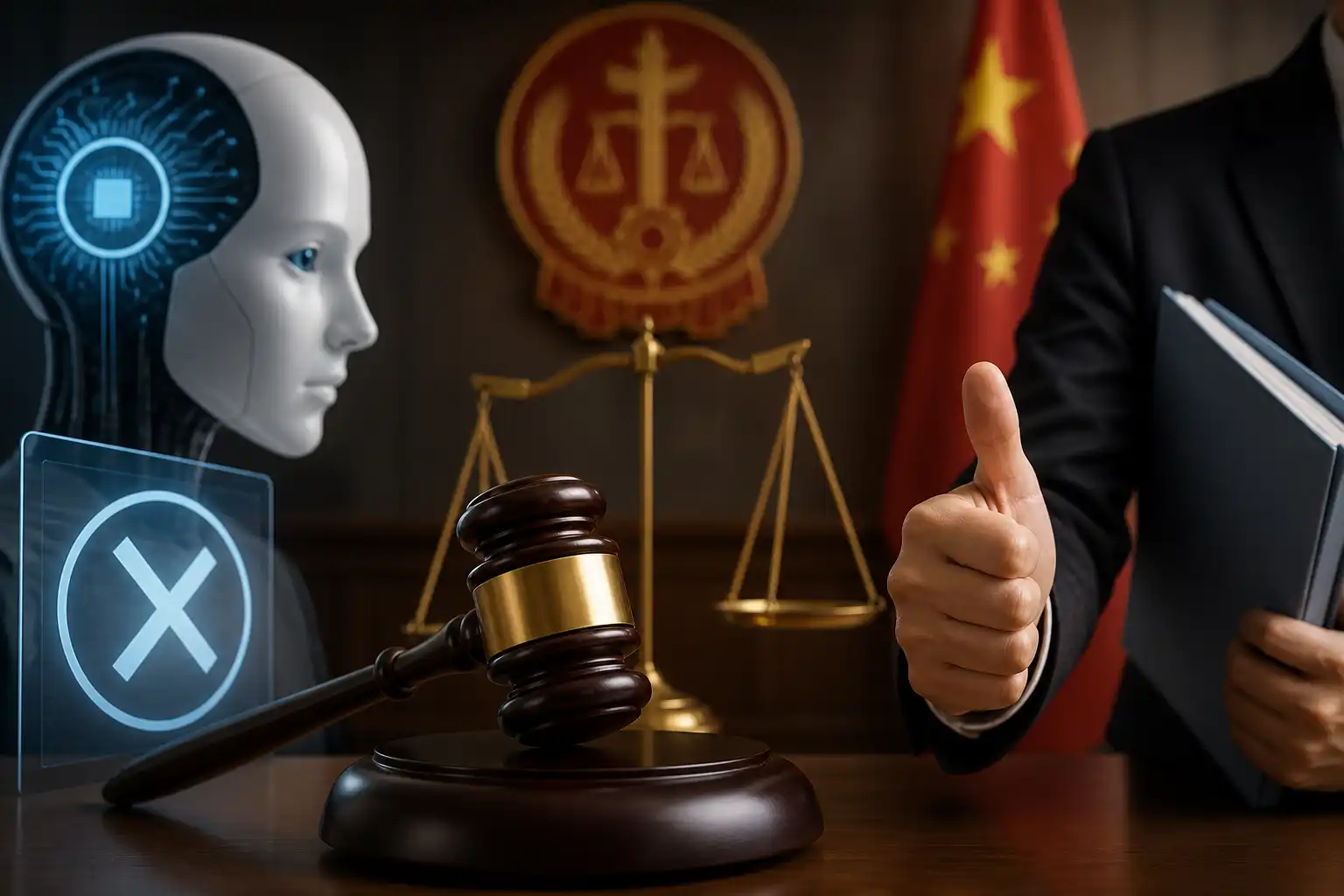
AI Cannot Justify Dismissal | Chinese Court Rules in Favor of Employee
A recent ruling by a Chinese court has sparked global discussion about the role of artificial intelligence in workplace decisions. The case centered on an employee who was dismissed after an AI-driven system flagged performance concerns. The employer relied heavily on automated evaluations to justify the termination, claiming that the technology provided objective and data-driven insights into employee productivity. However, the court firmly rejected this reasoning, emphasizing that AI cannot justify dismissal without proper human oversight.
The employee challenged the termination, arguing that the evaluation system lacked transparency and failed to consider contextual factors such as workload distribution, communication barriers, and team dynamics. The court agreed, noting that while AI tools can assist in performance monitoring, they cannot replace fair and balanced human judgment.
Legal Perspective
The court highlighted several legal principles that were violated in this case. First, employment decisions must adhere to fairness and due process. Automated systems, by design, often rely on predefined algorithms that may not account for individual circumstances. This creates a risk of biased or incomplete assessments.
Secondly, the court stressed accountability. Employers cannot shift responsibility to machines. Even if an AI system recommends termination, the final decision must be made by a human authority who carefully reviews all relevant evidence. In this case, the company failed to conduct an independent review, relying solely on the AI-generated report.
The judgment reinforces a critical legal standard: AI cannot justify dismissal because it lacks the ability to interpret human behavior, intent, and situational nuances.
Workplace Implications
This decision has far-reaching implications for companies adopting AI in human resource management. Many organizations are increasingly using AI tools to track productivity, evaluate performance, and even predict employee behavior. While these technologies offer efficiency, the ruling serves as a warning against over-reliance.
Employers must ensure that AI systems are used as supportive tools rather than decision-makers. Human managers need to verify AI findings, provide employees with an opportunity to respond, and consider factors beyond numerical data. The absence of such safeguards can lead to unjust outcomes and legal consequences.
The case also underscores the importance of transparency. Employees have the right to understand how they are being evaluated. If AI systems operate as “black boxes,” it becomes difficult to challenge inaccurate or misleading conclusions.
Ethical Considerations
Beyond legal concerns, the case raises ethical questions about the role of technology in the workplace. AI systems are built on data, and if that data is flawed or biased, the outcomes will reflect those issues. This can disproportionately affect certain groups of employees, leading to discrimination.
Moreover, reducing employee performance to algorithmic scores can dehumanize the workplace. Human work involves creativity, collaboration, and emotional intelligence—qualities that are difficult for AI to measure accurately. By ruling that AI cannot justify dismissal, the court has reaffirmed the value of human judgment and dignity in employment decisions.
Global Relevance of the Ruling
Although the case took place in China, its implications extend worldwide. As businesses across the globe adopt AI technologies, similar disputes are likely to arise. This ruling sets a precedent that courts may prioritize human oversight and fairness over automated decision-making.
Countries with evolving labor laws may look to this case as a reference point when drafting regulations حول AI in the workplace. It highlights the need for clear guidelines on how AI can be used responsibly, ensuring that employee rights are protected.
What Employers Should Learn Instead of Conclusion
Organizations should treat AI as a tool for assistance rather than authority. Establishing clear policies on AI usage, ensuring transparency, and maintaining human involvement in decision-making processes are essential steps. Regular audits of AI systems can help identify biases and improve accuracy.
Employees, on the other hand, should stay informed about how technology is used in their workplaces and assert their rights when necessary. Open communication between employers and employees can prevent misunderstandings and build trust.
The ruling ultimately sends a strong message: technological advancement must not come at the expense of fairness, accountability, and human dignity.

