

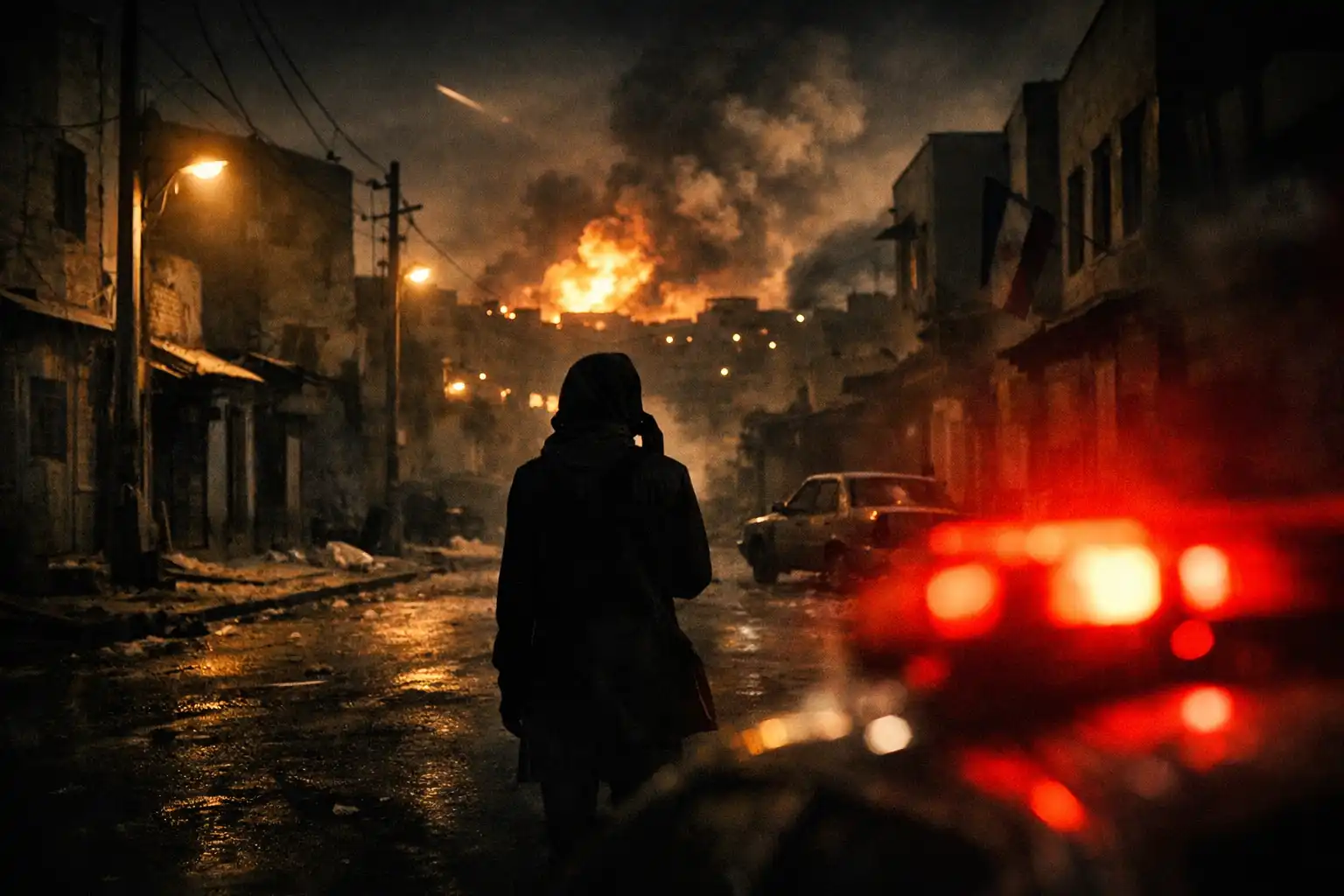
Life in Iran During War | The Sound That Never Leaves
Life in Iran during war is defined by sound—first loud, then hauntingly absent. The day often begins with the distant hum of fighter jets slicing through the sky. For many families, this noise has become an alarm clock, a warning, and a reminder that peace is fragile. Children pause their games, adults freeze mid-conversation, and everyone listens closely, trying to guess how far the aircraft are and what might follow.
In cities and towns, the streets empty quickly when the sound intensifies. Shops close their shutters halfway, leaving narrow gaps for hurried transactions. People move with urgency but without panic, as if this routine has been practiced too many times. The sky, once a symbol of openness, now carries uncertainty. Looking up no longer feels safe.
Life in Iran During War | The Silence After Impact
If the roar of jets brings fear, the silence that follows is even more unsettling. Life in Iran during war includes moments where everything suddenly stops. After explosions or distant strikes, there is a pause—a heavy, suffocating quiet. It is in this silence that anxiety grows strongest.
Families sit together, often without speaking. Phones are checked repeatedly for updates, messages, or news about loved ones. In these moments, the absence of sound feels louder than any explosion. People wait, holding their breath, hoping that the worst has already passed.
This silence changes how people think and feel. It creates a space where imagination fills in the gaps, often with the darkest possibilities. Over time, individuals begin to associate quiet with danger, rather than peace.
How Daily Routines Have Changed
Life in Iran during war has reshaped everyday routines in profound ways. Simple tasks such as going to school, shopping for groceries, or visiting friends now require planning and caution. Many families have identified safer routes, emergency shelters, and backup plans in case of sudden attacks.
Schools sometimes operate irregularly, with shortened hours or unexpected closures. Children carry not only books but also a quiet awareness of risk. Teachers try to maintain a sense of normalcy, but the tension in the air is impossible to ignore.
Emotional and Psychological Impact
The emotional toll of life in Iran during war is deep and complex. Fear is a constant presence, but it evolves over time. Initially, it is sharp and overwhelming. Later, it becomes quieter, settling into daily life like a shadow that never leaves.
Many people describe a sense of numbness. Continuous exposure to stress can make even alarming events feel routine. At the same time, there is an underlying tension that never fully disappears. Sleep patterns are disrupted, and sudden noises can trigger intense reactions.
Resilience in the Face of Uncertainty
Life in Iran during war is not only about fear—it is also about resilience. People adapt in ways that allow them to continue living, even under constant threat. Small acts of normalcy become powerful: sharing a meal, laughing at a joke, or simply sitting together as a family.
Neighbors check on each other more frequently. Strangers exchange brief but meaningful conversations. These connections provide comfort and remind people that they are not alone. Even in the darkest moments, there is a determination to endure.
A Quiet Strength Beneath the Noise
Beneath the roar of jets and the weight of silence, there is a quiet strength that defines life in Iran during war. It exists in the routines people maintain, the relationships they protect, and the hope they carry forward. While the sounds of conflict may dominate the environment, they do not fully define the human spirit that persists within it.

