

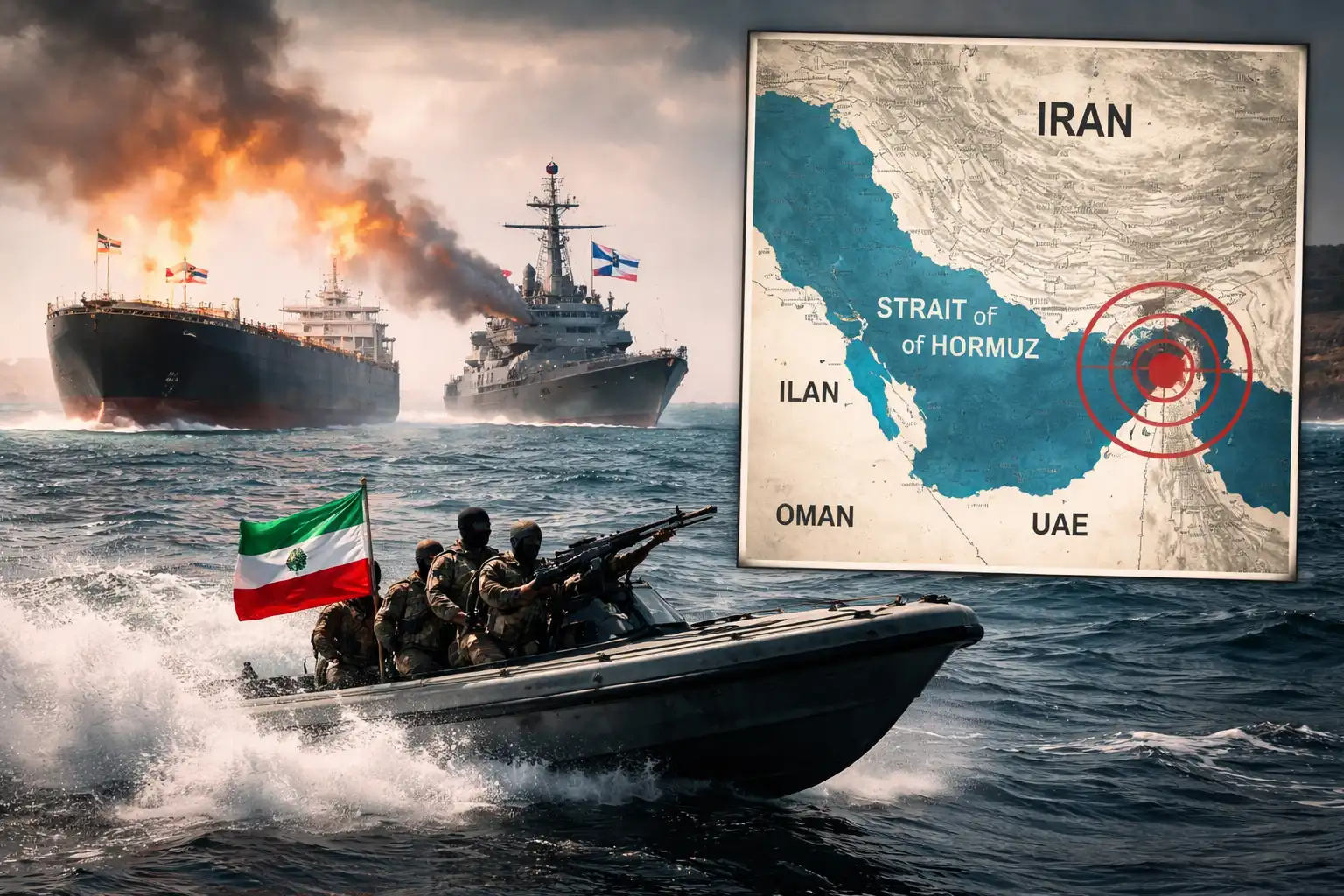
Iran Says Strait of Hormuz Will Remain Open but It Will Target US Israeli Ships
Tensions in the Middle East have intensified after Iran announced that the Strait of Hormuz will remain open for global maritime traffic but vessels linked to the United States and Israel may be targeted. The statement came from Iran’s Islamic Revolutionary Guard Corps (IRGC) during the ongoing conflict involving Iran, the United States, and Israel. The warning has raised global concerns because the Strait of Hormuz is one of the most important shipping routes for oil and international trade.
Iran Says Strait of Hormuz Will Remain Open but It Will Target US Israeli Ships
Iranian officials emphasized that they have no intention of completely closing the Strait of Hormuz, despite escalating military tensions in the region. However, the IRGC warned that ships associated with the United States, Israel, and their allies could face attacks if they attempt to pass through the strategic waterway.
According to Iranian statements broadcast on state media, Tehran believes it has the right to control access to the strait during wartime. Military authorities said that any vessel identified as supporting the United States or Israel “will certainly be hit” if it is detected in the area.
Strategic Importance of the Strait of Hormuz
The Strait of Hormuz connects the Persian Gulf with the Gulf of Oman and the Arabian Sea, making it a critical route for global energy supplies. A significant portion of the world’s oil exports passes through this narrow channel each day.
Because of its strategic importance, any disruption in this waterway can have immediate global economic consequences. In recent days, tanker traffic in the area has already slowed significantly due to rising security concerns and the risk of military confrontation.
Rising Military Tensions in the Region
The warning from Iran comes amid escalating military actions between Iran and a coalition involving the United States and Israel. Recent strikes and counterstrikes have expanded the conflict across multiple areas in the Middle East, raising fears of a wider regional war.
Iran claims that it maintains full control over the Strait of Hormuz and has the capability to monitor and target ships passing through the area. At the same time, the United States has suggested that it may deploy naval forces to escort oil tankers if the situation worsens.
Impact on Global Shipping and Oil Markets
Shipping companies and insurers are closely monitoring the situation because the Strait of Hormuz is a vital artery for global trade. When security risks increase in the region, shipping insurance costs often rise dramatically.
In the current situation, some shipping firms have delayed voyages or rerouted vessels to avoid potential attacks. This has reduced maritime traffic in the region and created uncertainty for oil exporters in the Gulf.
International Reactions and Diplomatic Concerns
The international community is urging restraint as tensions grow. Several governments have called for diplomatic solutions to prevent further escalation in the region.
Energy-importing countries are particularly concerned about the stability of the Strait of Hormuz because any long-term disruption could impact the global economy. Diplomats warn that maintaining safe navigation through the strait is essential for global trade and energy security.
Conclusion
Iran’s statement that the Strait of Hormuz will remain open but U.S. and Israeli ships could be targeted highlights the growing geopolitical tension in the Middle East. While Tehran has avoided declaring a full blockade of the waterway, its warning has already shaken global shipping and energy markets.
As the conflict evolves, the future of one of the world’s most critical maritime routes remains uncertain. The coming weeks will likely determine whether diplomacy can ease tensions or whether the region will face further escalation that could disrupt global trade and energy supplies.

