

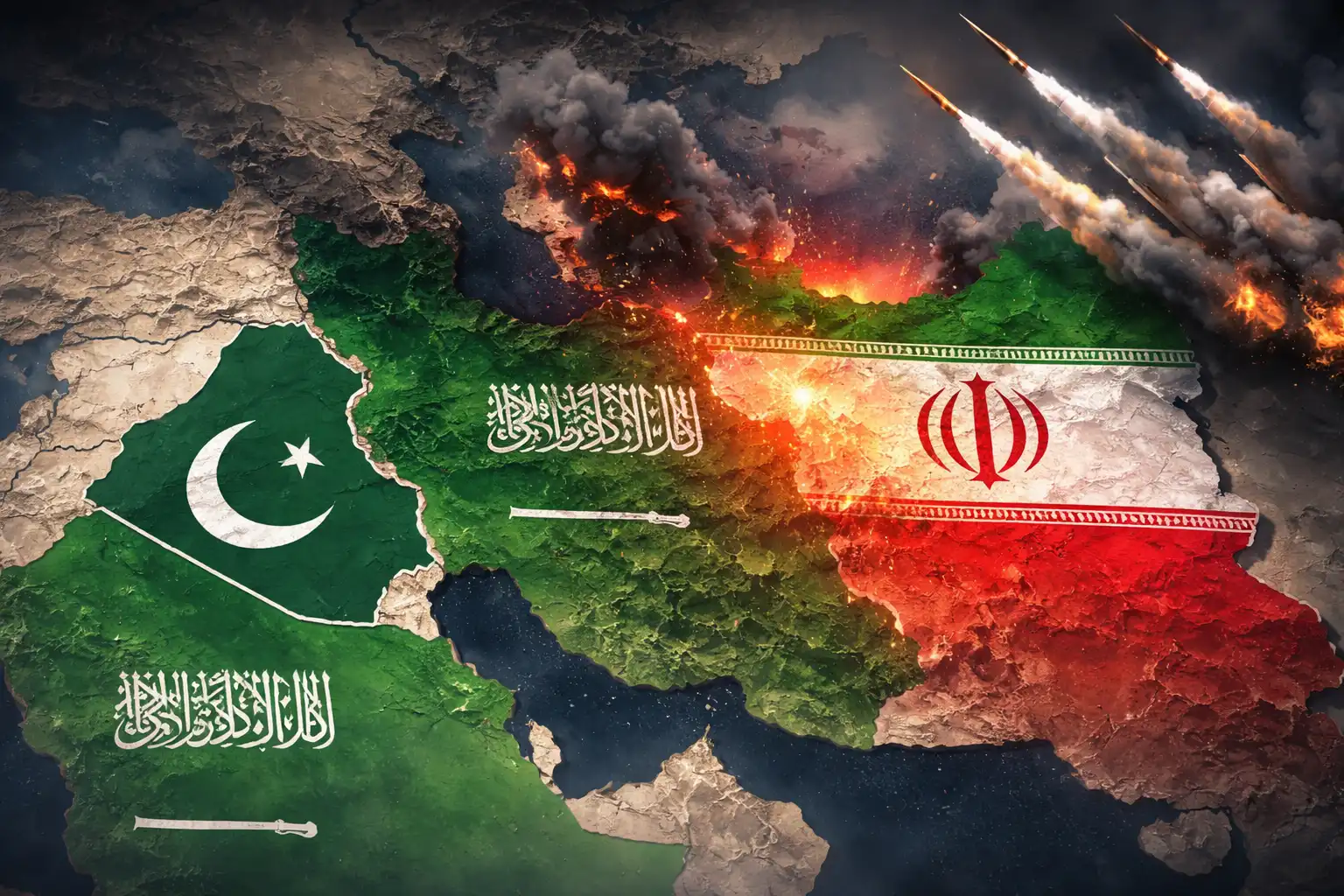
Pakistan Saudi Discuss Security Measures as Iran Strikes Region
Pakistan and Saudi Arabia have held high-level security discussions as tensions increase across the Middle East following Iranian missile and drone strikes in the region. The talks highlight growing concerns among regional allies about security risks and the possibility of further escalation.
Pakistan’s Chief of Army Staff, Field Marshal Asim Munir, met Saudi Arabia’s Defence Minister Prince Khalid bin Salman in Riyadh to discuss the evolving security situation. The meeting focused on strengthening defense cooperation and exploring measures to protect Saudi territory and regional infrastructure from future attacks.
Both sides stressed the importance of maintaining stability in the Gulf region, which plays a crucial role in global energy supply and international trade.
Background of Iran Strikes Region
The security talks came after Iran launched several drone and missile strikes targeting strategic locations in the region. These attacks were seen as part of a broader escalation of tensions that has raised fears of a wider Middle East conflict. Iranian drones reportedly targeted energy infrastructure and military facilities. Although several drones were intercepted by air defense systems, the attacks demonstrated how vulnerable critical infrastructure could be during regional conflicts.
Such incidents have increased concerns among Gulf countries about the need for stronger security coordination.
Rising Regional Tensions After Iran Strikes Region
The Iranian strikes have significantly increased tensions across the Middle East. Countries in the region are worried that continued attacks could trigger further retaliation and expand the conflict beyond its current scope. Regional governments are now reviewing their defense strategies and strengthening cooperation with allies. Military leaders believe that coordinated security planning is essential to prevent further escalation.
At the same time, diplomatic efforts are being encouraged to avoid a broader regional crisis.
Pakistan Saudi Defence Cooperation in Iran Strikes Region
Pakistan and Saudi Arabia share a long-standing defense relationship that includes military cooperation, training, and strategic support. The current security situation has made this partnership even more important. During the meeting in Riyadh, officials discussed improving coordination between their armed forces and enhancing joint security planning. Intelligence sharing and surveillance cooperation were also key topics during the discussions.
Both countries emphasized that strong defense cooperation can help deter future attacks and maintain stability in the Gulf region.
Strengthening Air Defense in Iran Strikes Region
Another important issue discussed during the talks was the need to strengthen air defense systems. Modern conflicts increasingly involve drones and missile attacks, which require advanced detection and interception technologies. Pakistan and Saudi Arabia explored ways to improve surveillance systems and defensive capabilities to better respond to such threats.
Enhanced coordination in air defense could play a significant role in protecting vital infrastructure such as oil facilities, ports, and military bases.
Protection of Energy Infrastructure in Iran Strikes Region
Energy infrastructure remains one of the main concerns in the current crisis. Saudi Arabia is one of the world’s largest oil producers, and its energy facilities are critical to global oil markets. Attacks on oil refineries, pipelines, or export terminals could disrupt global energy supplies and cause major economic consequences.
As a result, protecting energy infrastructure has become a top priority in regional security discussions.
Global Economic Impact of Iran Strikes Region
The Iranian strikes have also raised concerns about global economic stability. The Gulf region handles a significant portion of the world’s oil exports, and any disruption can affect international markets.
Following recent attacks, energy markets have experienced volatility, with investors worried about possible supply disruptions. Shipping routes in the Gulf are also under increased scrutiny as maritime security becomes more important during periods of regional conflict.
Pakistan’s Diplomatic Role in Iran Strikes Region
Pakistan faces a delicate diplomatic situation as tensions rise. Islamabad maintains strong strategic ties with Saudi Arabia while also sharing a border and diplomatic relations with Iran. Because of these relationships, Pakistan often seeks a balanced approach that supports regional stability while encouraging diplomatic dialogue.
Analysts believe Pakistan will continue advocating for peaceful solutions while cooperating with allies on security matters.
Future Security Outlook for Iran Strikes Region
The recent talks between Pakistan and Saudi Arabia reflect growing concerns about regional security and the need for stronger alliances. Countries across the Middle East are closely monitoring the situation and preparing for possible developments. While military cooperation remains important, diplomatic engagement will also play a critical role in reducing tensions.
In the coming weeks, regional governments are expected to continue discussions on security coordination while working to prevent the crisis from expanding into a wider conflict.

