

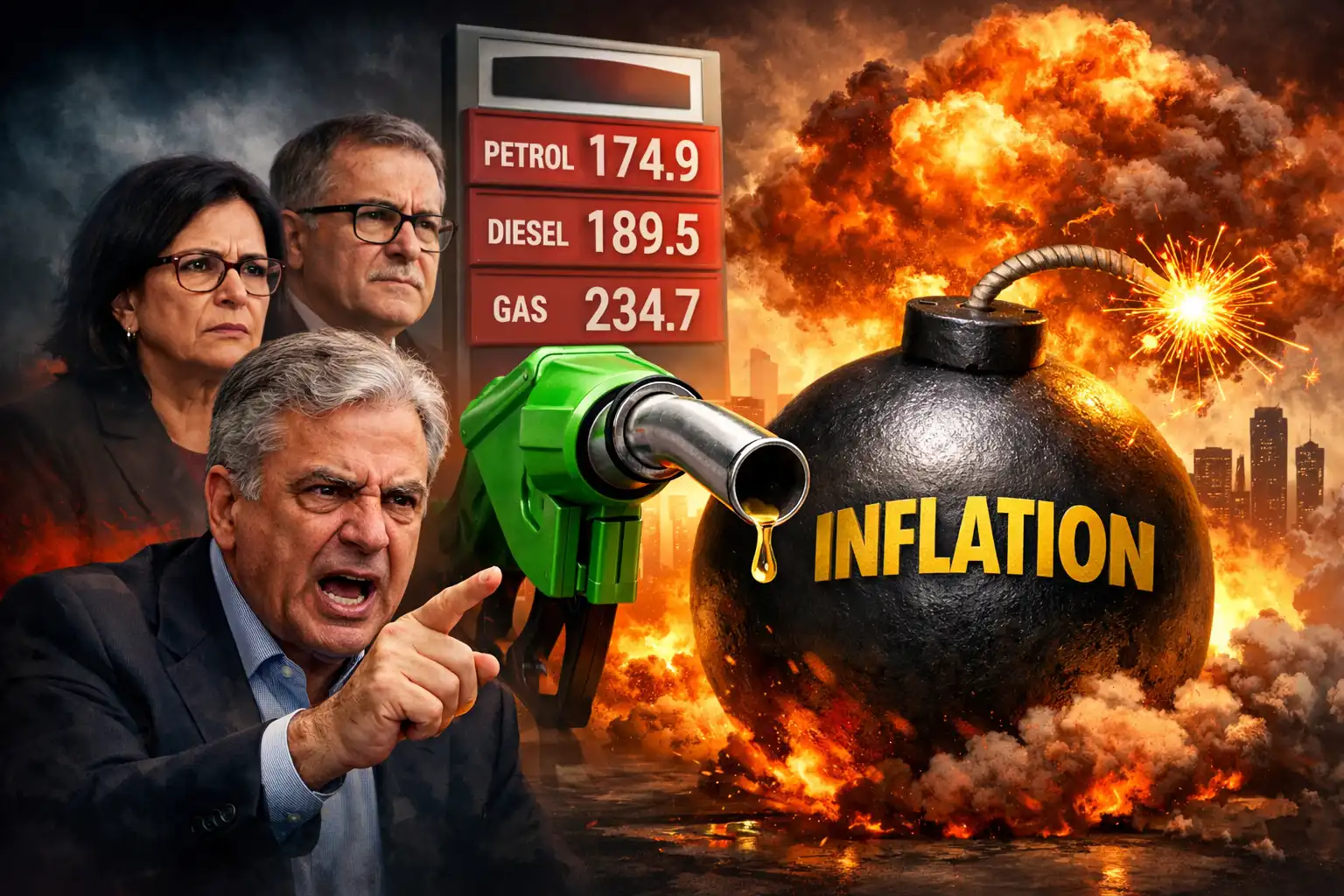
Opposition Slams Govt Inflation Bomb After Fuel Price Hike
Opposition parties have strongly criticized the government following the latest increase in fuel prices, calling the move an “inflation bomb” that will further burden citizens already struggling with rising living costs. Political leaders from several opposition groups demanded an immediate reversal of the fuel price hike, arguing that the decision will trigger a chain reaction of price increases across essential goods and services.
According to opposition leaders, the sudden hike in petrol and diesel prices will directly affect transportation costs, electricity generation, and industrial production. These changes, they argue, will ultimately be passed on to consumers, worsening inflation and putting pressure on low- and middle-income households.
Political Reaction to the ‘Inflation Bomb’ Decision
Opposition lawmakers have accused the government of ignoring public hardship and implementing policies that disproportionately affect ordinary citizens. During press conferences and parliamentary discussions, opposition leaders described the fuel hike as poorly timed, particularly when inflation is already at a high level.
They argued that instead of raising fuel prices, the government should focus on reducing unnecessary expenditures, improving tax collection, and providing relief to vulnerable segments of society. Several opposition representatives also warned that the increase would deepen economic inequality, as wealthier individuals can absorb rising costs more easily than poorer families.
Economic Impact of the ‘Inflation Bomb’ on Daily Life
Economists and analysts note that fuel price increases typically have a ripple effect across the entire economy. When transportation costs rise, the price of food, construction materials, and other consumer goods often follows. This phenomenon can accelerate inflation and reduce the purchasing power of households.
For many families, fuel price hikes also increase commuting costs and indirectly affect utility bills. Businesses, especially those involved in logistics and manufacturing, may be forced to raise prices to cover higher operational expenses. Small business owners often feel the impact most strongly, as they have limited financial flexibility to absorb additional costs.
Calls to Reverse the ‘Inflation Bomb’ Policy
In response to the fuel price increase, opposition parties have demanded that the government reverse the decision and introduce policies aimed at controlling inflation. Some leaders have proposed temporary tax reductions on petroleum products, while others have suggested targeted subsidies for transportation and essential industries.
They also urged the government to develop a long-term strategy for energy stability that reduces dependence on imported fuels. Investment in alternative energy sources, improved public transportation systems, and better energy management were among the solutions proposed by critics.
Government Defends Decision Despite ‘Inflation Bomb’ Criticism
Despite strong criticism, government officials maintain that the fuel price adjustment was unavoidable. They argue that global oil market trends and currency fluctuations have significantly increased the cost of petroleum imports. According to government representatives, failing to adjust domestic prices would widen the fiscal deficit and create further economic challenges.
Officials also insist that the government is working on broader economic reforms aimed at stabilizing the economy and controlling inflation in the long run. These include fiscal discipline, energy sector reforms, and initiatives designed to improve revenue generation.
Ongoing Debate Over the ‘Inflation Bomb’
The controversy surrounding the fuel price hike highlights the broader debate over economic policy and public welfare. While the government emphasizes fiscal responsibility and market realities, opposition parties continue to stress the need for immediate relief for citizens.
As discussions continue in political and economic circles, the issue remains a key concern for many households. Whether the government will reconsider the decision or introduce new relief measures remains uncertain, but the debate over the so-called “inflation bomb” is likely to remain at the center of political discourse in the coming weeks.

