

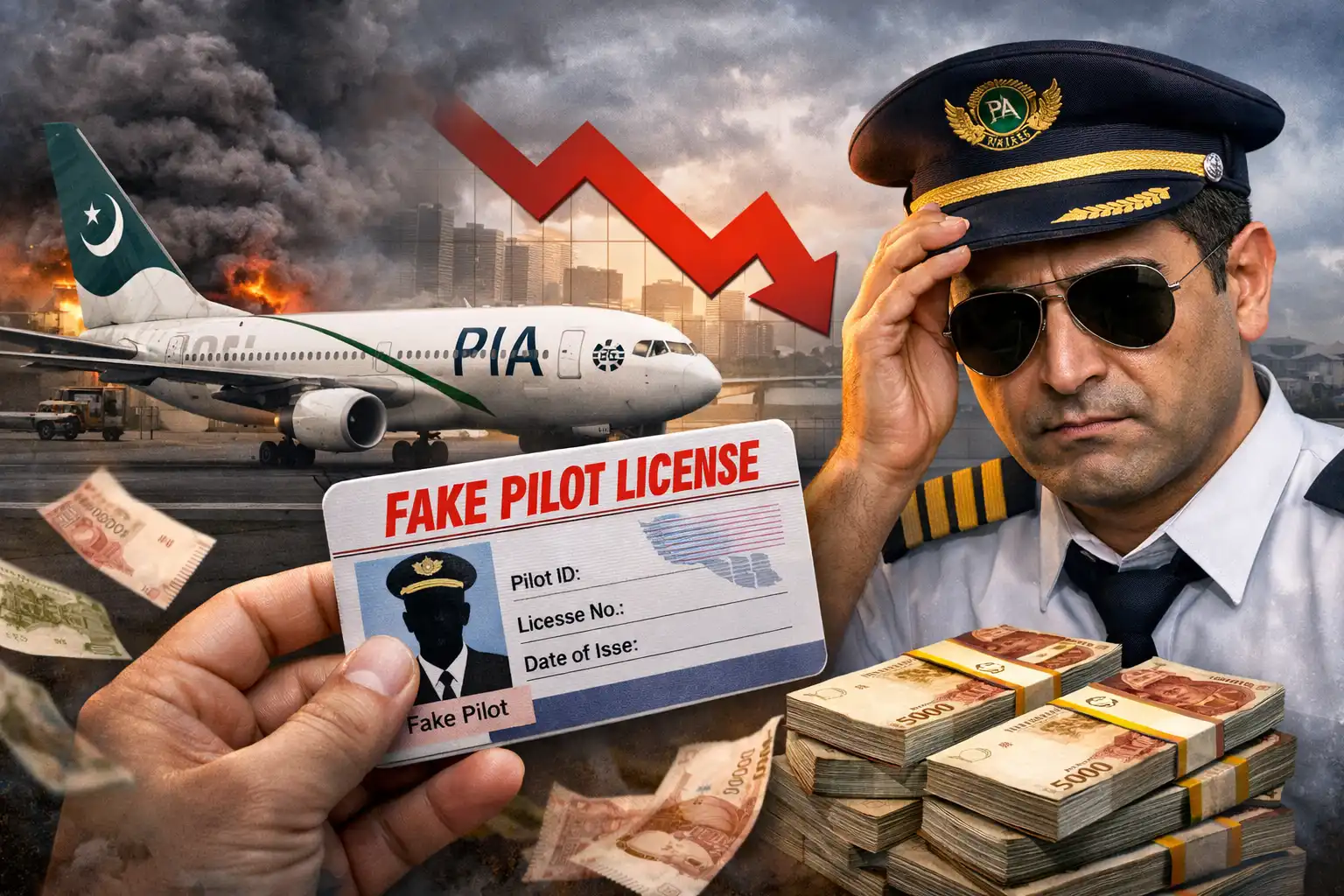
PIA Suffers 200 Billion Rupees Loss in Five Years Due to Fake Pilot License Scandal
The fake pilot license scandal became one of the most damaging crises in the history of Pakistan’s aviation industry. The controversy not only shook public confidence in air travel but also caused severe financial and reputational losses to Pakistan International Airlines (PIA). According to official estimates and industry analysts, PIA suffered losses amounting to nearly 200 billion rupees over five years due to flight bans, operational disruptions, legal challenges, and declining passenger trust. The issue exposed regulatory weaknesses and highlighted the urgent need for structural reforms in aviation oversight.
How the Fake Pilot License Scandal Emerged
The controversy surfaced in 2020 after investigations revealed that a significant number of pilots in Pakistan held questionable or improperly validated licenses. The revelation came at a time when the country was already grappling with the tragic crash of a PIA aircraft in Karachi. The findings suggested that several pilots had either not taken required examinations themselves or had irregularities in their certification process.
The disclosure triggered immediate global concern. Aviation authorities around the world began reviewing the credentials of Pakistani pilots working for international airlines. This development placed Pakistan’s Civil Aviation Authority under intense scrutiny and led to severe consequences for PIA’s international operations.
Financial Impact of the Fake Pilot License Scandal on PIA
The Fake Pilot License Scandal proved financially devastating for PIA. Within weeks of the announcement, the European Union Aviation Safety Agency suspended PIA’s authorization to operate flights to European destinations. Similarly, the United Kingdom imposed restrictions on Pakistani carriers. Europe and the UK had been among PIA’s most profitable routes, generating substantial foreign exchange revenue.
The suspension forced PIA to halt dozens of weekly flights to major cities such as London, Manchester, Birmingham, and Paris. The loss of these high-demand routes significantly reduced ticket sales and cargo revenues. Industry experts estimate that the airline lost billions of rupees annually due to these suspensions alone.
Over five years, the cumulative financial damage reached approximately 200 billion rupees. The losses included not only direct revenue decline but also increased operational costs, legal expenses, aircraft leasing penalties, and compensation to affected passengers. The airline’s already fragile financial condition worsened, pushing it further into debt.
Reputational Damage Caused by the Fake Pilot License Scandal
Beyond financial setbacks, the Fake Pilot License Scandal deeply harmed PIA’s global image. Passenger confidence declined sharply, with many travelers choosing alternative carriers for safety reasons. The perception that pilots were inadequately qualified undermined trust in Pakistan’s aviation standards.
International aviation bodies also raised concerns regarding regulatory oversight. The suspension of operations served as a public warning about compliance failures. Restoring credibility became a long and challenging process, requiring audits, reforms, and reassessments of pilot credentials.
The scandal not only affected PIA but also damaged the broader reputation of Pakistan’s aviation sector. Pakistani pilots employed by foreign airlines faced increased scrutiny, and new employment opportunities became limited.
Operational Disruptions and Broader Economic Consequences
The Fake Pilot License Scandal also disrupted operational planning. Aircraft that were designated for European routes had to be reassigned or grounded, leading to inefficiencies in fleet management. Reduced international connectivity limited travel options for overseas Pakistanis and affected tourism and business travel.
Cargo services, which play a vital role in exports, were also impacted. The suspension of European flights meant reduced access to key trade markets. This indirectly affected exporters relying on timely air freight services.
Additionally, the government had to allocate resources for investigations, legal proceedings, and restructuring efforts. These financial burdens further strained public finances and highlighted governance challenges within state-owned enterprises.
Efforts to Recover from the Fake Pilot License Scandal
In response to the crisis, authorities initiated verification processes to review pilot credentials. Several pilots were grounded pending investigation, and steps were taken to improve transparency in licensing examinations. Reforms were introduced to strengthen regulatory oversight and restore international confidence.
Negotiations with European regulators aimed at lifting flight bans required extensive compliance measures. Gradual improvements were reported as Pakistan sought to align its aviation standards with global requirements. However, rebuilding trust takes time, and the financial scars remain significant.
FOLLOW LIVE UPDATES
Conclusion
The fake pilot license controversy stands as one of the most costly episodes in Pakistan’s aviation history. Over five years, PIA reportedly suffered losses of nearly 200 billion rupees due to suspended international operations, declining passenger trust, operational inefficiencies, and reputational damage. The crisis exposed weaknesses in regulatory systems and emphasized the importance of transparency, accountability, and strict compliance in aviation safety.
While recovery efforts are ongoing, the long-term lesson remains clear: maintaining global safety standards is essential not only for protecting lives but also for safeguarding national economic interests. The Fake Pilot License Scandal serves as a reminder that credibility, once compromised, requires immense effort and resources to restore.

