

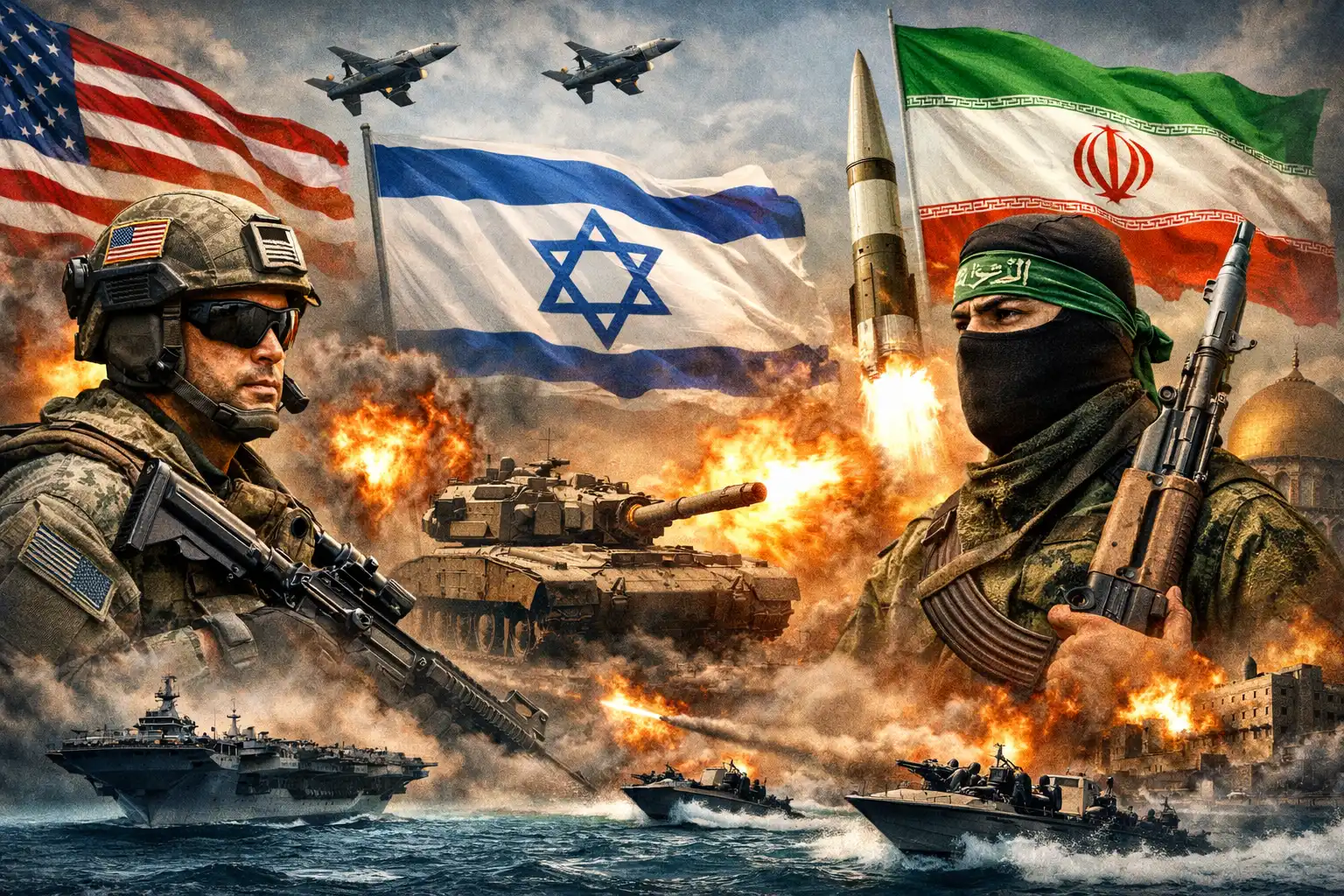
Day 3 of the US Israeli War with Iran | Conflict Spreads and Tensions Soar
On the third day of the US-Israeli war with Iran, the Middle East conflict has expanded far beyond initial expectations, drawing in regional actors, triggering global economic concerns, and raising international calls for restraint. The war, initiated by coordinated strikes from the United States and Israel, has evolved into a multi-front confrontation involving Iranian retaliation, proxy militia engagement, and broader geopolitical fallout.
Joint Military Operations and Iranian Retaliation
US-Israeli Offensive Actions
The war began with a major coordinated air campaign by US and Israeli forces targeting Iranian military infrastructure and leadership positions. The joint operation aimed to degrade Iran’s strategic capabilities, including missile systems, nuclear facilities, and command centers. These strikes reportedly resulted in widespread damage across several Iranian cities, including the capital, Tehran. Military analysts describe the offensive as one of the most significant direct confrontations between the Western allies and Iran in decades.
Iran’s Counter-Attacks
In response to Western strikes, Iran launched a series of missiles and drone attacks targeting Israeli territory and US military bases across the Gulf region. Air defense systems in Israel were activated repeatedly as sirens sounded across major cities. Reports also indicated attempted strikes near US diplomatic compounds in parts of the Gulf.
Iran’s leadership rejected immediate negotiations and framed its military actions as defensive, emphasizing that the country did not initiate the conflict and would resist foreign pressure. Officials vowed continued retaliation if attacks persist.
Regional Escalation | Day 3 of the US-Israeli War with Iran
Hezbollah and Lebanon Involvement
A significant development on Day 3 of the US-Israeli war with Iran was the deepening engagement of Hezbollah, the Iran-aligned militia based in Lebanon. Following major developments inside Iran, Hezbollah launched missiles into northern Israel. In retaliation, Israeli forces carried out intensified airstrikes on Hezbollah positions throughout southern Lebanon, leading to civilian casualties and widespread displacement.
Lebanon’s government expressed concern over the rapid escalation and called for restraint, but the violence has continued to pull the country further into the broader confrontation. Border communities on both sides have faced evacuation orders amid ongoing rocket exchanges.
Broader Middle East Fronts
Beyond Lebanon and Israel, tensions expanded across several Gulf states. Iranian-backed groups reportedly targeted strategic sites and attempted attacks on regional infrastructure. Military bases hosting US personnel were placed on high alert, and additional defensive assets were deployed to protect critical facilities.
The expansion of hostilities highlights how Day 3 of the US-Israeli war with Iran has spilled beyond the original battle lines, increasing fears of a prolonged regional war.
Humanitarian Impact and Casualties
Civilian and Military Toll
The human cost of the conflict has risen sharply. Casualty figures remain difficult to verify independently, but reports suggest hundreds of injuries and significant fatalities across multiple countries. Urban neighborhoods have suffered damage from missile strikes and aerial bombardment, with emergency responders struggling to operate under constant threat.
Hospitals in affected areas have reported shortages of medical supplies as the volume of casualties continues to increase. Military personnel on all sides have also sustained losses, intensifying the seriousness of the confrontation.
Displacement and Public Safety Concerns
The intensification of hostilities has forced thousands of civilians to flee their homes. In Lebanon and parts of northern Israel, families have sought shelter in safer areas or underground facilities. Governments have implemented emergency protocols, including mobilizing reservists, closing schools, and restricting public gatherings.
Humanitarian organizations have warned that prolonged fighting could lead to a larger refugee crisis if safe corridors are not established quickly.
Global Economic and Strategic Repercussions
Strait of Hormuz and Oil Markets
As fighting continues, Day 3 of the US-Israeli war with Iran has significantly impacted global energy markets. Concerns over potential disruption in the Strait of Hormuz — one of the world’s most critical oil transit routes — have driven oil prices upward. Even limited threats to tanker routes have heightened uncertainty among global investors and energy-dependent economies.
Financial markets have responded with volatility, reflecting fears that extended conflict could destabilize international trade flows.
Airspace Disruptions and Regional Travel
Airlines across the Middle East have suspended or rerouted flights to avoid conflict zones. Several international carriers temporarily halted services to major regional cities, citing safety concerns. These disruptions have affected thousands of travelers and added to the broader economic strain already caused by rising energy costs.
International Reactions and Calls for Peace
World leaders have urged restraint and immediate de-escalation. Diplomatic channels remain active behind the scenes, though public statements reflect deep divisions among major powers regarding responsibility and response. The United Nations has called for an urgent ceasefire to prevent further civilian suffering and regional destabilization.
As Day 3 of the US-Israeli war with Iran concludes, uncertainty remains high. The trajectory of the conflict will likely depend on whether diplomatic efforts can gain traction or whether further military actions deepen an already volatile crisis.

