

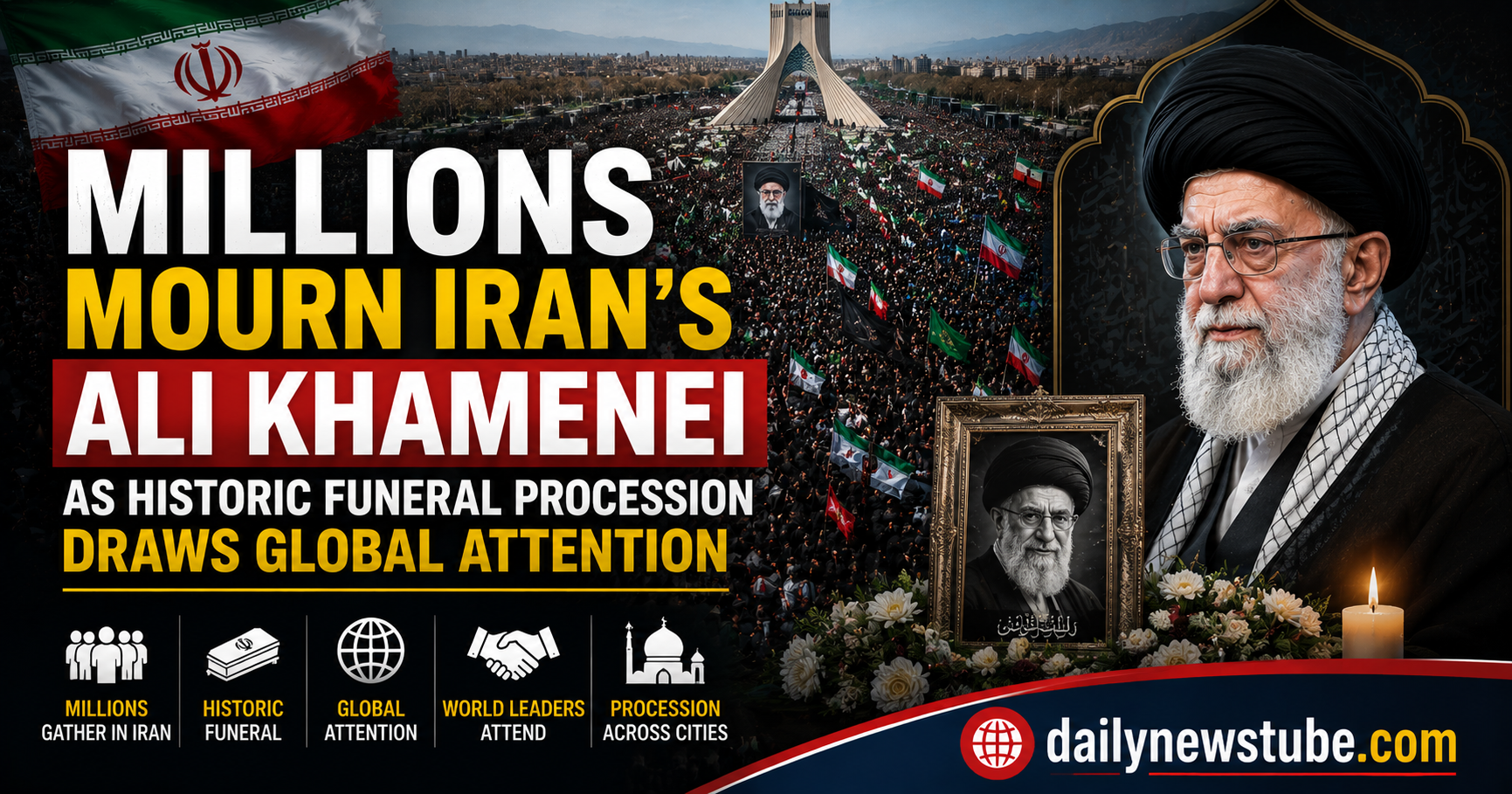
Millions Mourn Iran Ali Khamenei as Historic Funeral Procession Draws Global Attention
Massive Crowds Fill Tehran for One of Iran Largest State Funeral Ceremonies
Millions of mourners gathered across Iran as the country began a historic state funeral for former Supreme Leader Ayatollah Ali Khamenei, marking one of the largest public gatherings in the Islamic Republic’s modern history.
The funeral ceremonies began in Tehran, where huge crowds filled streets, mosques, and public squares to pay their final respects. The multi-day farewell is expected to continue through several major cities before concluding with Khamenei’s burial in his hometown of Mashhad.
According to Iranian officials, delegations from more than 100 countries are expected to participate in various stages of the funeral, highlighting Khamenei’s influence on regional politics and the international attention surrounding his death.
Nationwide Mourning Reflects Khamenei’s Long Political Legacy
The funeral marks the end of an era for Iran after Ali Khamenei spent more than three decades as the country’s Supreme Leader.
During his leadership, Iran experienced significant political, military, and economic changes while maintaining an influential role in Middle Eastern affairs. Supporters credit him with strengthening Iran’s regional position and preserving the country’s political system despite decades of sanctions and international pressure.
Following his death earlier this year during the conflict involving the United States and Israel, Iranian authorities declared an extended national mourning period before organizing what has become one of the largest funeral processions in the nation’s history.
Tehran Witnesses Unprecedented Public Gathering
From the early hours of the morning, mourners dressed in black gathered around Tehran’s Grand Mosalla prayer complex and nearby avenues carrying Iranian flags, portraits of Khamenei, and religious banners.
Religious leaders delivered prayers while thousands recited verses from the Quran and participated in mourning rituals. Security forces maintained a heavy presence throughout the capital as organizers coordinated one of the country’s most complex public events in recent years.
Officials estimate that millions of people are expected to attend various ceremonies over the coming days, making it one of the largest state funerals ever organized in Iran.
Funeral Procession Will Continue Across Multiple Cities
Unlike a traditional single-day funeral, Iran has planned a week-long series of ceremonies.
Following the Tehran events, the funeral procession is scheduled to continue through several important religious and historical locations before concluding in Mashhad, where Khamenei will be laid to rest.
Authorities say the extended schedule is intended to allow millions of Iranians from different regions to participate in farewell ceremonies while accommodating large international delegations arriving throughout the week.
The carefully organized route reflects both the religious importance of the ceremonies and Khamenei’s political significance within the Islamic Republic.
World Leaders and Foreign Delegations Pay Their Respects
The funeral has attracted senior political figures, diplomats, religious scholars, and official delegations from numerous countries.
Representatives from allied governments have traveled to Tehran to express condolences and participate in official memorial events alongside Iran’s political and military leadership.
The presence of foreign delegations demonstrates the broader geopolitical significance of the funeral, particularly at a time when Iran continues indirect diplomatic engagement with the United States while navigating ongoing regional tensions.
International observers view the event as both a national mourning ceremony and an important moment for diplomatic outreach.
Security Tightened Throughout the Country
Iranian authorities have implemented extensive security measures across major cities hosting funeral ceremonies.
Road closures, increased police patrols, and restrictions around key government and religious sites have been introduced to manage the enormous crowds expected during the week-long mourning period.
Officials have urged participants to cooperate with security personnel and follow designated routes to ensure the safety of millions attending the ceremonies.
Transportation services have also been expanded to accommodate the unprecedented number of mourners traveling from across Iran.
Funeral Carries Political and Symbolic Importance
Beyond its religious significance, the funeral also carries considerable political symbolism.
Iranian leaders have described the ceremonies as a demonstration of national unity and resilience following months of conflict and political uncertainty.
Large public participation is expected to reinforce the government’s message that the country’s political institutions remain stable despite the loss of one of its most influential leaders.
Political analysts note that state funerals in Iran often serve not only as religious events but also as opportunities to project national solidarity during periods of transition.
Region Watches Iran’s Next Chapter
While millions continue paying tribute to Ali Khamenei, attention is also turning toward Iran’s political future.
The country enters a new chapter as its leadership seeks to maintain domestic stability while continuing diplomatic efforts with regional and international partners.
Recent indirect negotiations involving the United States, mediated by Qatar, have provided cautious optimism for reducing tensions in the Gulf, even as broader geopolitical challenges remain unresolved.
For now, however, the focus across Iran remains on honoring the country’s former Supreme Leader through one of the largest funeral processions in its modern history.
As the ceremonies continue over the coming days, millions of mourners are expected to gather across multiple cities, reflecting both the religious significance of the occasion and Khamenei’s enduring place in Iran’s political history.

