

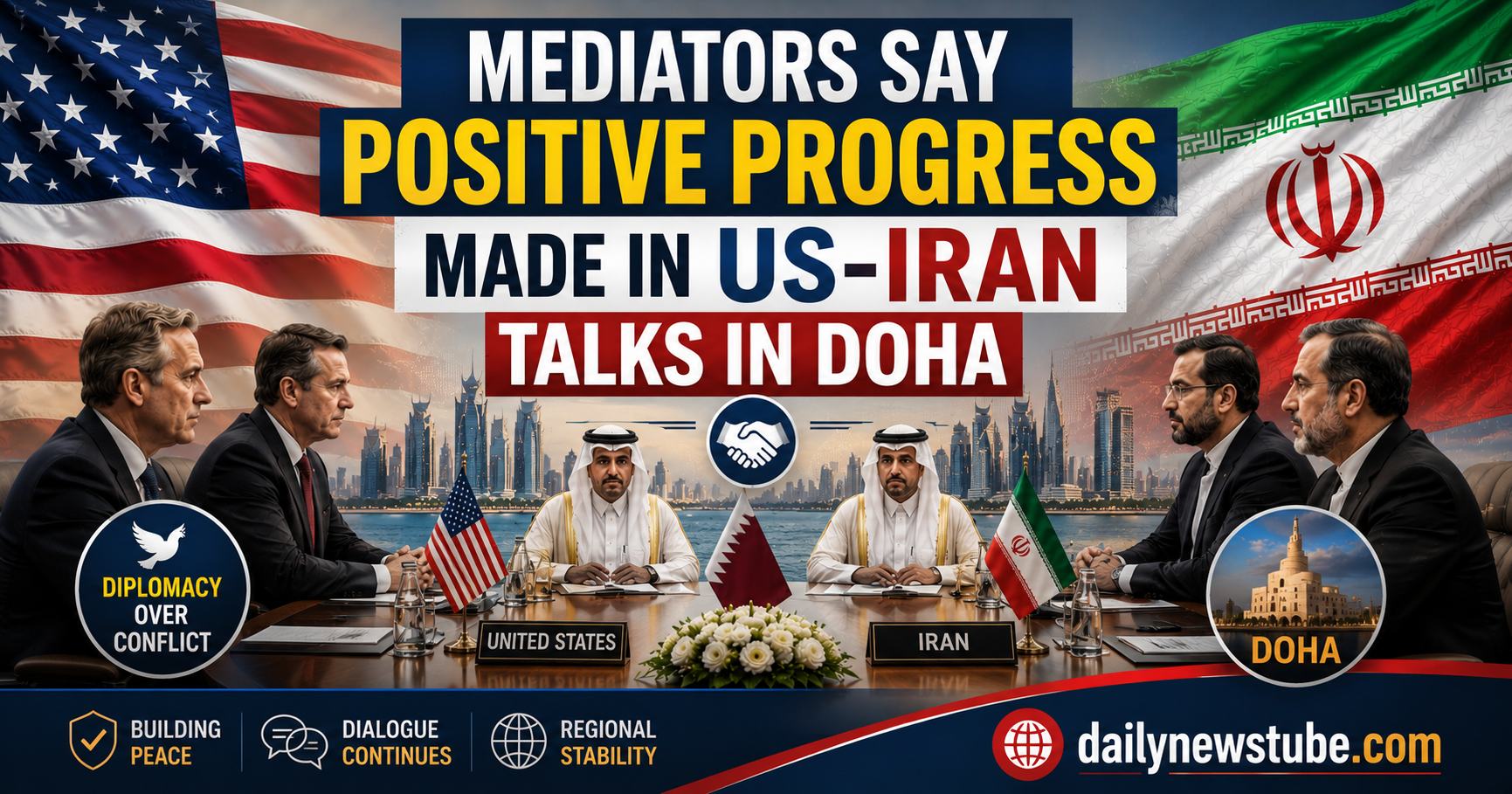
Mediators Say Positive Progress Made in US-Iran Talks in Doha
Qatar and Pakistan Push Diplomacy Forward After Fragile Ceasefire
Mediators from Qatar and Pakistan say “positive progress” has been made in indirect talks between the United States and Iran in Doha, raising cautious hopes that the fragile peace process between the two rivals can continue despite major unresolved disputes.
The discussions focused on issues linked to the Islamabad Memorandum of Understanding and the outcomes of the Lake Lucerne Summit. According to Qatar’s Foreign Ministry spokesperson Majed Al Ansari, separate meetings were held with American and Iranian negotiators, with both sides agreeing to continue discussions in the coming period.
The latest round of talks comes at a sensitive time for the Gulf region, where recent conflict, maritime disruption, and political uncertainty have kept global markets on edge.
Talks Held Indirectly Through Mediators
The Doha meetings were not direct face-to-face negotiations between Washington and Tehran. Instead, Qatari and Pakistani mediators held separate discussions with both sides, carrying messages and proposals between the delegations.
This indirect format reflects the deep political mistrust that still exists between the United States and Iran. Tehran has been cautious about appearing to negotiate directly with Washington, while US officials continue pressing for stronger guarantees on regional security and future nuclear commitments.
Despite that distance, the fact that both sides remained engaged through mediators is being viewed as a positive diplomatic signal.
Strait of Hormuz Remains a Key Issue
One of the most important subjects in the talks was the Strait of Hormuz, the strategic waterway through which a major share of global oil and gas shipments passes.
The earlier memorandum reportedly included the reopening of the blockaded strait, a 60-day ceasefire, and a pathway toward a final deal to end the conflict permanently.
For Iran, control over maritime security remains a matter of sovereignty. For the United States and its partners, safe and unrestricted commercial navigation remains a priority.
This difference is likely to remain one of the biggest challenges in future negotiations.
Oil Markets React to Easing Tensions
Reports of progress in Doha also affected global energy markets. Oil prices fell after the talks concluded, as traders became less worried about immediate supply disruption in the Gulf. Reuters reported that Brent crude and US West Texas Intermediate prices declined as fears over the Strait of Hormuz eased.
Still, analysts warn that markets remain sensitive to any new military incident or diplomatic setback. Even a small disruption near the Strait of Hormuz could quickly increase shipping costs and fuel prices worldwide.
More Talks Expected After Iran Funeral Events
According to reports, the next round of discussions is expected to be scheduled after funeral processions for Iran’s former Supreme Leader. Mediators said both sides agreed to continue engagement at the earliest possible time.
This delay gives both governments time to review proposals and prepare for more detailed negotiations.
While no final breakthrough has been announced, the positive tone from mediators suggests that the diplomatic channel remains active.
Major Differences Still Remain
Despite encouraging statements, the talks have not resolved the most difficult disputes.
The United States wants stronger commitments from Iran on nuclear activity, maritime security, and regional stability. Iran, meanwhile, is seeking sanctions relief, access to frozen assets, and recognition of its role in Gulf security.
These issues cannot be settled quickly. Both governments face domestic political pressure, and neither side wants to appear weak.
That is why mediators are focusing first on technical and confidence-building steps rather than a complete final agreement.
Diplomacy Offers a Narrow Path Forward
The Doha talks show that both Washington and Tehran still see value in diplomacy, even if they remain far apart on major issues.
For Qatar and Pakistan, the latest progress strengthens their role as regional mediators. Their involvement has helped keep communication open at a time when direct dialogue remains politically difficult.
If future meetings continue without new military escalation, the process could gradually move toward a broader agreement covering maritime security, sanctions, and nuclear concerns.
For now, the outcome in Doha offers cautious optimism. The peace process remains fragile, but the fact that both sides are still talking through mediators may help prevent another dangerous confrontation in the Gulf.

