

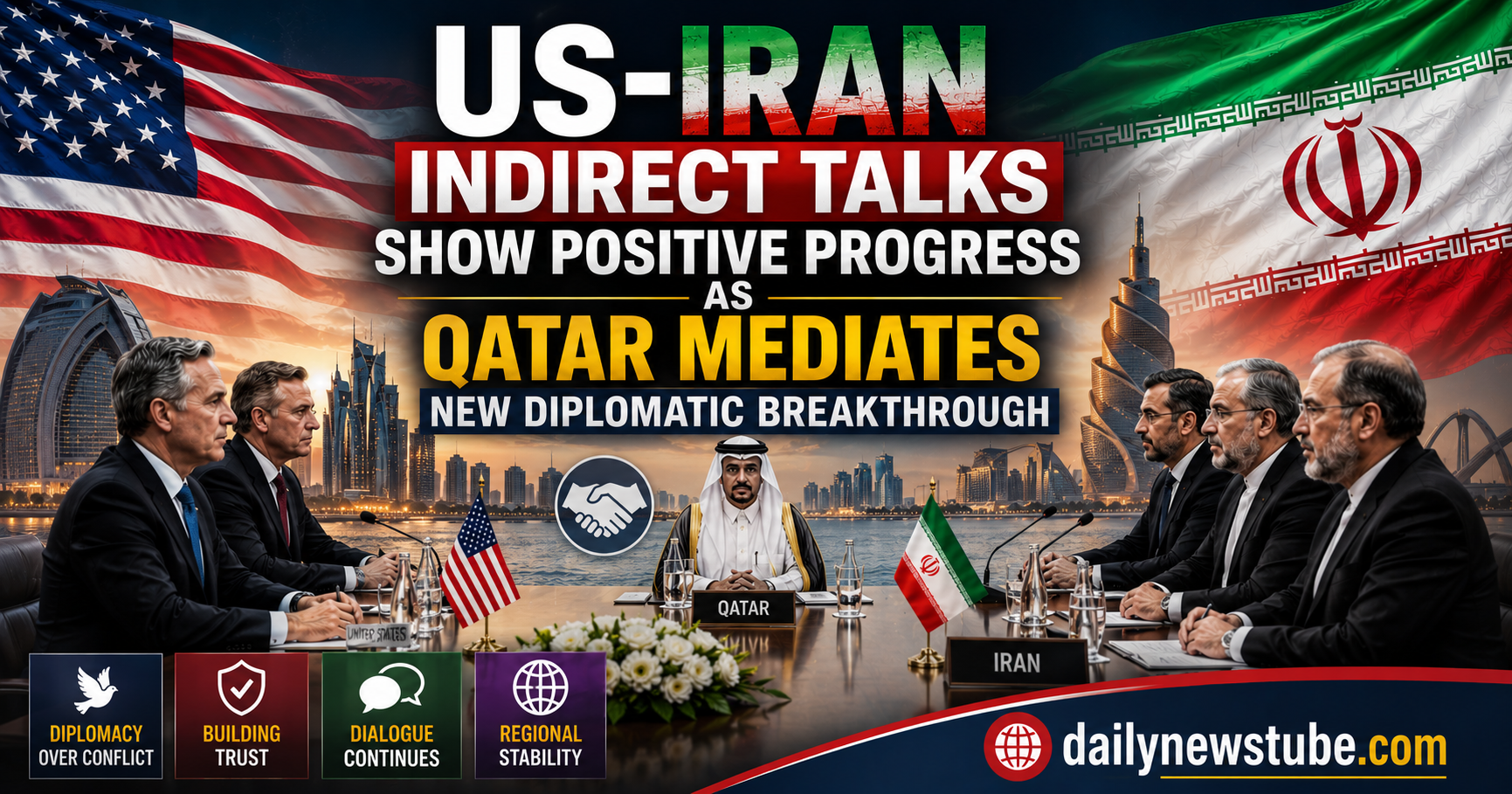
US-Iran Indirect Talks Show Positive Progress as Qatar Mediates New Diplomatic Breakthrough
Doha Negotiations End on an Optimistic Note Despite Key Differences
Indirect negotiations between the United States and Iran have concluded in Doha with both sides describing the discussions as constructive, offering fresh hope that diplomacy may continue despite ongoing disagreements over regional security and maritime issues.
Qatari officials, who hosted and mediated the talks, said the latest round achieved “positive progress” and helped narrow differences on several technical matters linked to the interim memorandum of understanding signed earlier this year. Although negotiators stopped short of announcing a breakthrough, the atmosphere was described as more productive than previous meetings.
The talks were conducted indirectly, with Qatari mediators carrying messages between the American and Iranian delegations rather than arranging direct face-to-face negotiations.
Technical Discussions Focus on Building Confidence
Unlike earlier diplomatic rounds that concentrated on broader political disputes, the latest meeting focused primarily on technical implementation of previously agreed commitments.
Officials discussed maritime security in the Strait of Hormuz, communication mechanisms to prevent future military incidents, and procedures for resolving disputes under the existing memorandum of understanding.
According to Qatari officials, both delegations showed willingness to continue technical engagement, even though several important political disagreements remain unresolved. The positive tone suggests both governments remain interested in preserving the fragile peace process rather than allowing tensions to escalate again.
Strait of Hormuz Remains the Biggest Challenge
The Strait of Hormuz continues to dominate negotiations because of its strategic importance to global energy supplies.
Iran maintains that it has sovereign responsibility for managing maritime security in the area, while the United States and several international partners continue advocating unrestricted commercial navigation without additional restrictions or fees.
This disagreement remains one of the most difficult issues facing negotiators. Although shipping activity has gradually resumed following recent military tensions, uncertainty surrounding future access to the waterway continues affecting global energy markets and insurance costs.
Diplomats hope future technical discussions can reduce misunderstandings and prevent incidents involving commercial vessels or naval forces operating in the Gulf.
Frozen Iranian Assets Also Part of the Agenda
Another important subject discussed during the Doha meetings involved Iranian financial assets frozen overseas.
Officials familiar with the negotiations indicated that both sides continued exploring mechanisms that could allow limited access to some of these funds while maintaining broader sanctions frameworks.
Iran has consistently argued that releasing frozen assets represents an important confidence-building measure that could strengthen the peace process. Washington, however, continues linking broader economic relief to future progress on more comprehensive diplomatic issues.
Although no final agreement was announced, negotiators reportedly made progress in identifying practical options that may be discussed further during future meetings.
Qatar Strengthens Its Role as Regional Mediator
Qatar once again demonstrated its growing importance as one of the Middle East’s leading diplomatic mediators.
Throughout the negotiations, Qatari officials facilitated communication between both delegations while encouraging continued dialogue despite political disagreements.
Regional observers credit Qatar’s neutral position with helping maintain communication channels during periods when direct engagement becomes politically sensitive.
Officials also suggested that additional rounds of indirect negotiations could be scheduled after upcoming national events in Iran, allowing both governments additional time to prepare for more substantive discussions.
Political Challenges Still Limit Progress
Despite the encouraging tone surrounding the latest talks, significant obstacles remain.
The United States continues seeking stronger commitments regarding Iran’s nuclear activities, regional security, and maritime operations. Iran, meanwhile, remains focused on sanctions relief, protection of its sovereignty, and recognition of its security interests.
Political pressures inside both countries further complicate negotiations.
American officials must balance diplomatic engagement with domestic concerns about national security, while Iranian leaders face internal expectations not to appear as though they are making excessive concessions during negotiations.
These political realities mean that even successful technical discussions may require considerable time before producing a comprehensive diplomatic agreement.
Markets Respond Cautiously to Diplomatic Signals
Financial markets reacted cautiously to reports of positive progress in Doha.
Energy traders welcomed signs that negotiations remain active, helping reduce immediate concerns over another military escalation in the Gulf. However, analysts noted that investors continue waiting for more concrete agreements before significantly adjusting expectations.
Oil prices showed limited movement as traders assessed whether continued diplomacy could eventually reduce risks surrounding the Strait of Hormuz, one of the world’s most important shipping routes for crude oil exports.
Outlook Remains Carefully Optimistic
While no major diplomatic breakthrough emerged from the latest negotiations, the conclusion of the Doha talks with reports of positive progress represents an encouraging development after months of heightened regional tensions.
The willingness of both governments to continue indirect dialogue suggests that diplomacy remains the preferred option despite persistent disagreements.
Much work remains before a comprehensive agreement can be achieved. Nevertheless, the establishment of regular technical discussions and continued mediation by Qatar provide an important foundation for future negotiations.
If both sides continue building confidence through practical cooperation and avoid new military confrontations, the current diplomatic process could gradually evolve into broader discussions covering sanctions, nuclear issues, regional security, and long-term stability.
For now, the outcome of the Doha talks offers cautious optimism that communication between Washington and Tehran remains open, providing hope that diplomacy can continue reducing tensions in one of the world’s most strategically significant regions.

