

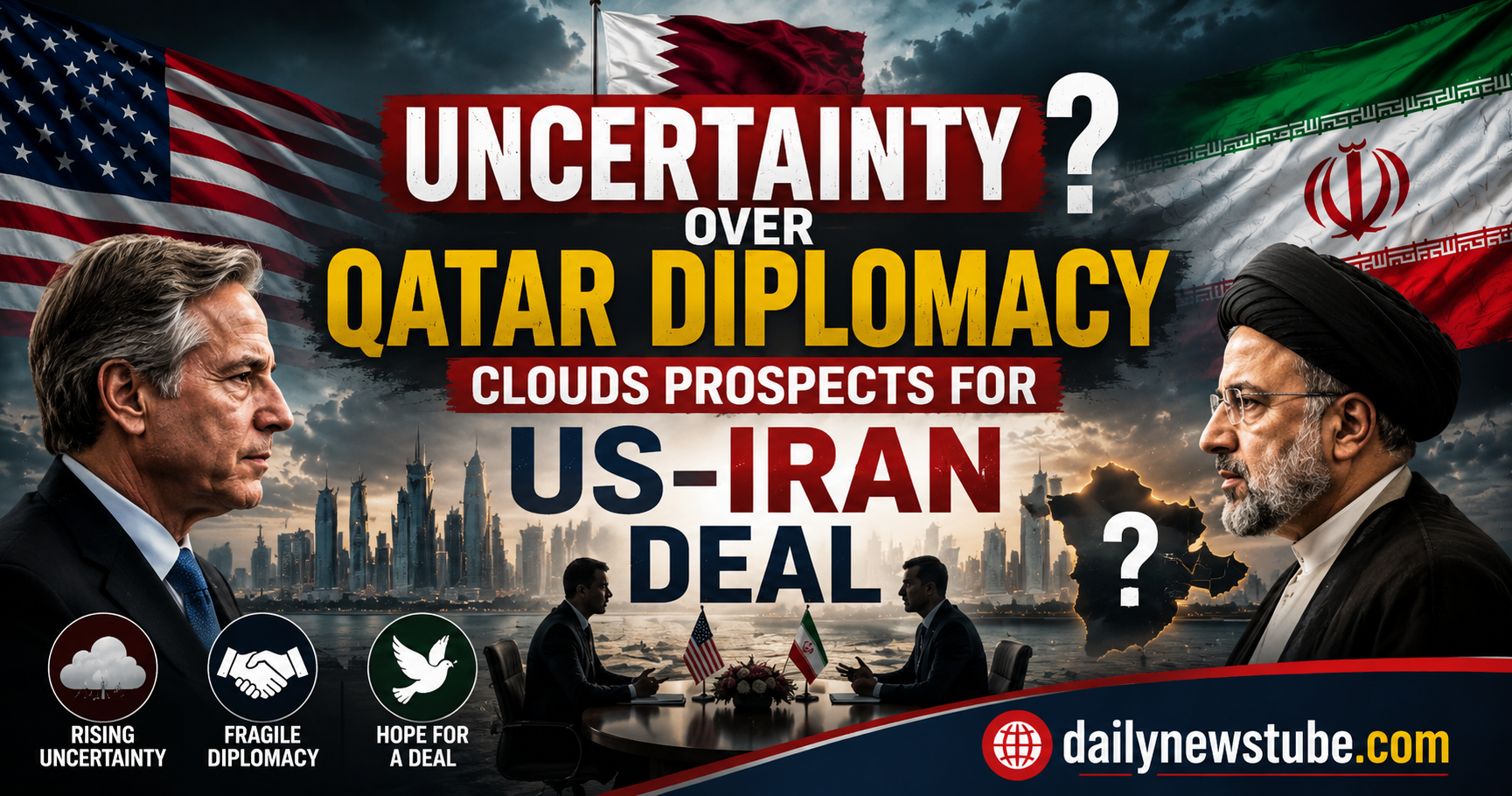
Uncertainty Over Qatar Diplomacy Clouds Prospects for US-Iran Deal
Doha Talks Face Confusion as Peace Efforts Enter Critical Stage
Uncertainty over possible diplomacy in Qatar has cast fresh doubt on prospects for a lasting agreement between the United States and Iran, even as both sides remain under international pressure to prevent renewed conflict in the Gulf.
Top US envoys were expected in Doha for discussions linked to the fragile US-Iran peace process, but Qatari officials clarified that no high-level meeting with Iranian representatives had been scheduled. Instead, officials suggested that lower-level technical discussions on regional security could still take place, leaving the diplomatic picture unclear.
The confusion comes at a sensitive moment. Washington and Tehran are trying to preserve an interim understanding reached earlier this month, while recent military incidents and tensions around the Strait of Hormuz continue to threaten wider regional stability.
US Envoys Arrive as Iran Denies Direct Talks
US representatives Steve Witkoff and Jared Kushner were due in Qatar as part of Washington’s diplomatic push to move the peace process forward. Their presence raised expectations that indirect or direct discussions with Iranian officials might be possible.
However, Iran has publicly rejected the idea that formal negotiations with the United States are currently planned. Tehran said its diplomatic activity in Qatar should not be interpreted as confirmation of talks with Washington.
This difference in messaging has created uncertainty over whether the latest Doha diplomacy can produce meaningful progress or whether it is mainly an effort to keep communication channels open during a dangerous pause.
Interim Agreement Still Faces Major Obstacles
The current diplomatic effort is built around an interim US-Iran agreement that created a limited window for broader negotiations. That framework reportedly gave both sides around 60 days to work toward a more complete deal covering security, sanctions, nuclear issues, and maritime access.
But the agreement remains fragile. Both governments continue to accuse each other of bad faith, while regional incidents have repeatedly tested the ceasefire.
For Washington, the priority is ensuring Iran does not use the pause to strengthen its position in the Gulf or continue activities that threaten commercial shipping. For Tehran, the central concern is securing sanctions relief, protecting its sovereignty, and preventing foreign military pressure near its borders.
Strait of Hormuz Remains the Core Flashpoint
The Strait of Hormuz remains one of the most important issues in the talks. The narrow waterway is a critical route for global oil and liquefied natural gas shipments, making it central to both regional security and the world economy.
Recent tensions have disrupted shipping confidence, increased insurance costs, and raised concerns among energy traders. Any renewed conflict near the strait could quickly affect oil prices and international supply chains.
Diplomats are therefore focused on restoring predictable maritime movement while avoiding arrangements that either side views as a concession. Iran wants to maintain authority over nearby waters, while the United States and its allies want guarantees that commercial vessels can pass safely.
Qatar’s Role Remains Important but Limited
Qatar has played a key role as a mediator between Washington and Tehran. Its position as a trusted regional channel gives it influence, especially when direct US-Iran communication becomes politically difficult.
However, the latest confusion shows the limits of mediation. Qatar can host meetings, pass messages, and encourage restraint, but it cannot force either side into a final agreement.
Qatari officials have expressed cautious optimism, but they have also avoided overstating the situation. Their careful language suggests that diplomacy is still alive, though far from secure.
Political Pressure Complicates Washington’s Position
The US administration is also dealing with domestic political pressure. Any agreement with Iran is likely to face strong criticism from opponents who believe Tehran cannot be trusted.
At the same time, failure to reach a deal could expose Washington to renewed military risk, higher energy prices, and deeper instability across the Middle East.
This creates a difficult balancing act for US officials. They must show strength while also keeping the door open for compromise. If the negotiations appear too weak, critics may attack the administration. If Washington takes too hard a line, the peace process could collapse.
Tehran Seeks Relief Without Appearing Weak
Iran faces its own internal challenges. Its leadership wants economic relief from sanctions and a reduction in military pressure, but it must avoid appearing to surrender to American demands.
That is one reason Iranian officials have been careful about confirming talks. Publicly denying direct negotiations allows Tehran to preserve political space while still benefiting from indirect diplomacy through regional mediators.
This approach gives Iran flexibility, but it also increases uncertainty. Without clear confirmation of talks, markets and foreign governments are left guessing whether real progress is possible.
Regional Markets Watch Closely
Financial markets across the Gulf have reacted cautiously to the uncertainty surrounding the Doha process. Investors are closely watching whether the US-Iran ceasefire can hold and whether shipping through the Strait of Hormuz can fully normalize.
Even small signals from Doha can influence energy prices, Gulf stock markets, and investor confidence. A successful diplomatic track could lower risk premiums across the region, while failure could quickly revive fears of wider conflict.
Outlook Remains Unclear
The latest developments suggest that diplomacy between the United States and Iran is still active, but far from stable. The arrival of US envoys in Qatar shows that Washington wants to keep negotiations moving, while Iran’s denial of formal talks highlights the political sensitivity surrounding the process.
For now, the future of the US-Iran deal depends on whether technical discussions can quietly produce enough progress to justify higher-level engagement later.
The coming days will be critical. If mediators can turn confusion into structured dialogue, the Doha process may still help preserve the fragile ceasefire. But if public disagreements continue, hopes for a broader US-Iran agreement could fade quickly, leaving the Gulf once again exposed to confrontation, shipping disruption, and renewed regional instability.

