

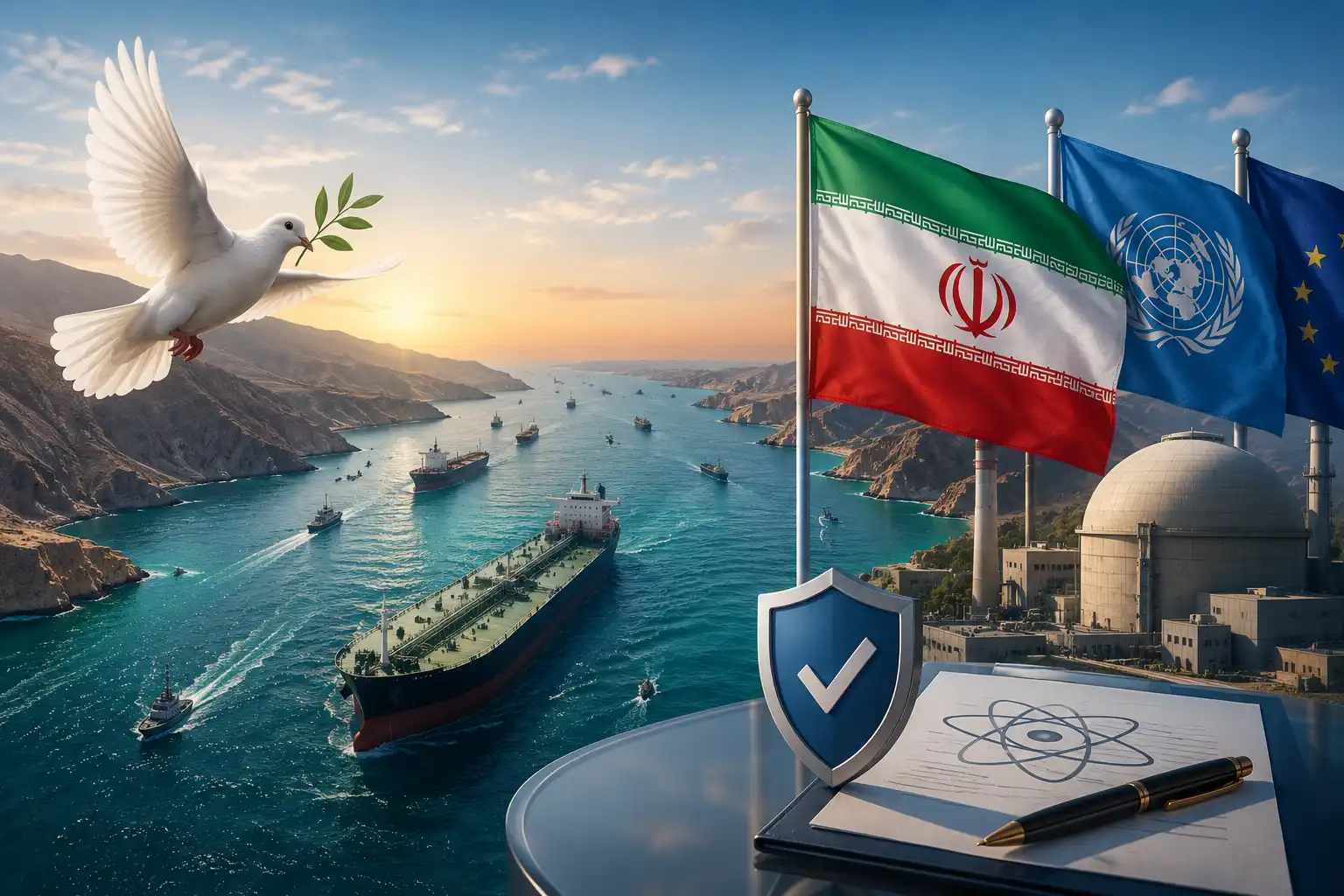
Strait of Hormuz Restoration End of Blockade and Nuclear Commitments
The recently implemented US-Iran Memorandum of Understanding has emerged as a significant diplomatic development in the Middle East. The agreement aims to reduce regional tensions, restore stability in global energy markets, and establish a framework for future cooperation between the two long-time adversaries. Among its most important provisions are the restoration of navigation through the Strait of Hormuz, the end of maritime blockades, and Iran’s commitment not to pursue nuclear weapons.
US-Iran Memorandum of Understanding: Background and Purpose
The US Iran Memorandum of Understanding was designed to address growing concerns over regional security, energy supply disruptions, and nuclear proliferation. Following months of indirect negotiations and international mediation efforts, both countries reached a consensus on several critical issues affecting the Gulf region and global trade.
The agreement is not a formal peace treaty but serves as a practical framework for confidence-building measures. It focuses on de-escalation, economic stability, and reducing the risk of military confrontation.
Strait of Hormuz Restoration Under the US-Iran Memorandum of Understanding
One of the most important aspects of the US-Iran Memorandum of Understanding is the restoration of normal maritime traffic through the Strait of Hormuz.
The Strait of Hormuz is one of the world’s most strategically important waterways, serving as a major route for global oil and gas shipments. Any disruption in this narrow passage can have significant consequences for international energy markets.
Under the agreement, all restrictions affecting commercial shipping are to be lifted, ensuring the safe and uninterrupted movement of vessels. Both sides have reportedly agreed to avoid actions that could threaten maritime security or interfere with international trade routes.
The reopening of the Strait is expected to reduce shipping costs, stabilize oil prices, and improve confidence among international investors and trading partners.
End of Blockade Measures in the Gulf Region
Another key component of the agreement is the termination of blockade-related measures that have affected regional commerce and transportation.
The end of these restrictions is intended to facilitate smoother trade flows and reduce economic pressures on affected countries. Ports, shipping companies, and energy exporters are expected to benefit from the improved security environment.
By removing barriers to navigation and trade, the memorandum seeks to create conditions for broader economic cooperation and regional development. Businesses operating in the Gulf region may experience fewer disruptions, while international markets could benefit from greater supply chain stability.
Nuclear Commitments in the US-Iran Memorandum of Understanding
Perhaps the most closely watched provision of the US-Iran Memorandum of Understanding concerns nuclear activities.
According to the terms of the understanding, Iran has agreed not to pursue the development of nuclear weapons. This commitment is intended to address long-standing international concerns regarding the country’s nuclear program.
The agreement emphasizes that Iran’s nuclear activities should remain focused on peaceful and civilian purposes. In return, diplomatic engagement and certain economic incentives may support compliance and encourage continued cooperation.
The nuclear commitment is considered a central pillar of the memorandum because it directly relates to regional security and global non-proliferation objectives.
Security Guarantees and Regional Stability
The US-Iran Memorandum of Understanding also contains provisions aimed at reducing military tensions across the Middle East.
Both parties have reportedly committed to avoiding actions that could escalate conflicts or provoke direct confrontation. Enhanced communication channels and diplomatic mechanisms are expected to help prevent misunderstandings and manage future disputes.
Regional governments and international observers view these measures as important steps toward preventing crises that could threaten stability in the Gulf and neighboring regions.
Improved security conditions may also encourage foreign investment and support long-term economic growth throughout the Middle East.
Economic Impact of the US-Iran Memorandum of Understanding
The economic implications of the agreement could be substantial.
The restoration of shipping routes and the reduction of geopolitical tensions are expected to improve market confidence. Energy exporters may benefit from more predictable trading conditions, while importing countries could gain from stable supply chains and reduced price volatility.
Financial markets often react positively to developments that lower the risk of conflict in key energy-producing regions. As a result, the memorandum may contribute to greater stability in oil and gas markets over the coming months.
In addition, increased diplomatic engagement could create opportunities for future economic cooperation and investment initiatives.
What Comes Next After the Agreement?
The success of the US-Iran Memorandum of Understanding will largely depend on implementation and continued adherence to its commitments. International monitoring, diplomatic dialogue, and confidence-building measures are expected to play crucial roles in maintaining progress.
Governments, energy markets, and global institutions will closely observe developments to determine whether the agreement leads to lasting stability. If successfully implemented, the memorandum could mark an important step toward reducing tensions, securing critical trade routes, and strengthening regional security in the Middle East.

