

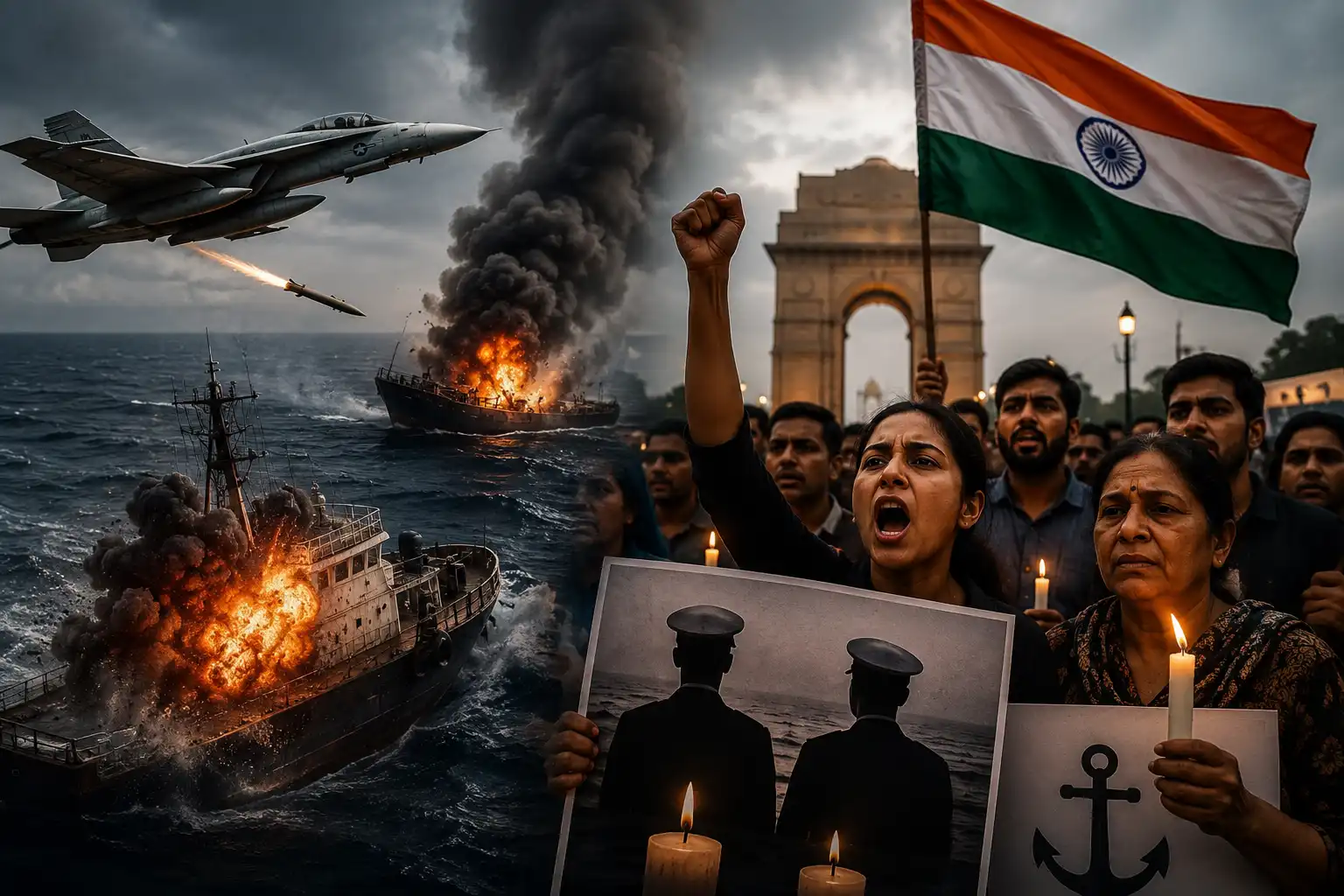
US Strikes on Two Vessels and Death of Indian Sailors Spark Delhi Protest
The death of Indian sailors following attacks on commercial vessels near the Gulf region has triggered strong reactions from New Delhi. The incident, which involved an oil tanker near Oman and subsequent military actions linked to the United States, has once again highlighted the growing security risks facing international shipping routes in the Middle East.
The attacks occurred in one of the world’s most strategically important maritime corridors, where millions of barrels of oil and commercial goods pass every day. As tensions continue to rise, questions remain about why the oil tanker was targeted, who was responsible, and how the incident could affect regional stability and global trade.
Why Was the Oil Tanker Near Oman Targeted?
The oil tanker attack near Oman took place in waters that have become increasingly vulnerable due to regional conflicts and geopolitical rivalries. Maritime security experts believe that commercial vessels are often targeted to send political messages, disrupt trade, or apply pressure on rival nations.
The waters near Oman connect directly to the Strait of Hormuz, a critical passage through which a significant portion of the world’s oil exports travel. Any attack on ships operating in this area immediately attracts international attention because of its potential impact on energy markets and shipping costs.
Investigators and security analysts have examined whether the tanker was specifically selected because of its ownership, cargo, destination, or connections to countries involved in regional disputes. While official findings may take time, attacks on oil tankers in the Gulf region are frequently linked to broader political and military tensions.
US Strikes on Two Vessels and Death of Indian Sailors
Reports indicate that military operations involving the United States were conducted following escalating threats to maritime security. The strikes reportedly targeted vessels believed to be connected to hostile activities in the region.
However, the incident became more controversial after the deaths of Indian sailors. India expressed concern over the loss of life and demanded a thorough investigation into the circumstances surrounding the attacks. The deaths drew public attention because Indian nationals make up a significant portion of the global maritime workforce.
New Delhi emphasized the importance of protecting civilian sailors who work aboard commercial ships operating in conflict-prone waters. Indian officials also called for accountability and greater efforts to ensure that innocent crew members are not caught in military confrontations.
US Strikes on Two Vessels and Death of Indian Sailors: India’s Response
India’s reaction reflected both humanitarian concerns and broader diplomatic considerations. The government sought detailed information regarding the events that led to the fatalities and engaged with relevant international partners to obtain clarity.
Officials stressed that merchant sailors play a vital role in maintaining global supply chains and should not become unintended victims of military operations. The incident also renewed discussions about the safety of Indian citizens working aboard ships in high-risk maritime zones.
Diplomatic channels were activated to communicate India’s concerns, while authorities continued to monitor developments closely. The government also maintained contact with the families of those affected by the tragedy.
Growing Threats to Maritime Security in the Gulf Region
The Gulf region has witnessed multiple attacks on commercial vessels over the past several years. These incidents have included drone strikes, missile attacks, sabotage operations, and seizures of ships.
Shipping companies operating in the area face increasing challenges as they attempt to balance commercial demands with security risks. Insurance premiums for vessels traveling through high-risk waters often rise after major incidents, adding costs to global trade.
International naval forces have increased patrols in strategic waterways, but experts warn that the threat remains significant. The complexity of regional rivalries means that commercial ships can become targets even when they are not directly involved in political disputes.
Why Was the Oil Tanker Near Oman Targeted? Strategic Importance of the Area
The location of the attack is central to understanding its significance. Oman sits close to the Strait of Hormuz, one of the most important maritime chokepoints in the world. Any disruption in this region can affect oil prices, shipping schedules, and international trade flows.
Because of its strategic value, the area is constantly monitored by regional governments and international military forces. Attacks on vessels operating near Oman often trigger immediate diplomatic and security responses from multiple countries.
Analysts note that targeting an oil tanker in such a sensitive location sends a powerful signal. Whether the objective is economic disruption, political pressure, or military messaging, the impact extends far beyond the vessel itself.
Impact on Global Shipping and Energy Markets
Incidents involving oil tankers typically raise concerns among traders, shipping companies, and governments. Even a single attack can influence market sentiment, leading to fluctuations in oil prices and transportation costs.
Shipping firms may alter routes, increase security measures, or delay voyages when threats intensify. These adjustments can create supply chain disruptions that affect businesses and consumers worldwide.
Energy-importing nations closely monitor developments in the Gulf because any prolonged instability could influence fuel supplies and economic planning. As a result, attacks on commercial vessels are viewed not only as security incidents but also as events with significant economic implications.
FOLLOW LIVE UPDATES
What Happens Next?
Investigations into the tanker attack and the deaths of Indian sailors are expected to continue. Governments, maritime organizations, and security agencies will likely examine available evidence to determine responsibility and assess the broader implications.
At the same time, international efforts to strengthen maritime security are expected to remain a priority. The incident serves as another reminder of the vulnerabilities facing commercial shipping in strategically important waters and the challenges involved in protecting civilian crews operating in conflict-sensitive regions.

