

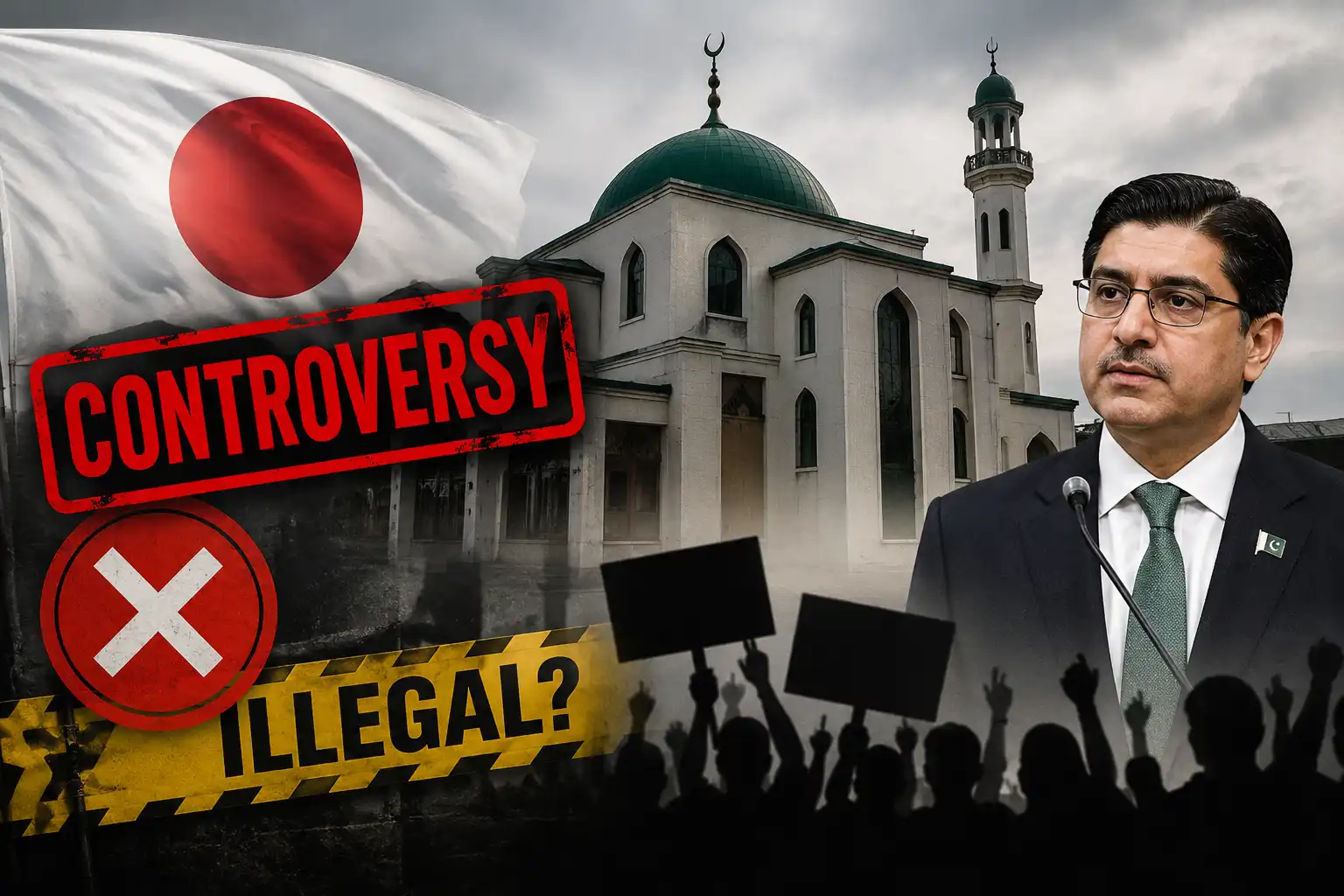
Controversy Erupts in Japan Over Allegedly Illegal at Opening Ceremony
A growing controversy has emerged in Japan following the construction of a mosque that critics claim was developed without fully complying with local regulations. The dispute intensified after Pakistan’s ambassador to Japan attended the mosque’s opening ceremony, prompting criticism from some local residents and public figures.
The issue has sparked a wider debate about religious freedom, community relations, urban planning regulations, and the role of foreign diplomats in local affairs. While supporters argue that the mosque serves the religious needs of the Muslim community, opponents have raised concerns about the legality of the project and its impact on the surrounding neighborhood.
Illegal Mosque Controversy in Japan Draws Public Attention
The controversy began when local residents questioned whether the mosque had received all the necessary approvals required under Japanese construction and zoning laws. Critics alleged that certain aspects of the project did not fully comply with local regulations, leading to calls for government authorities to investigate the matter.
Several community groups expressed frustration over what they described as a lack of transparency during the planning and construction process. Some residents argued that they were not adequately informed about the project before work began.
Why Residents Are Opposing the Illegal Mosque Project
Opponents of the project have cited a range of concerns beyond legal compliance. Some residents fear increased traffic congestion, parking problems, and changes to the character of their neighborhood.
Others have argued that local authorities should enforce building regulations equally for all projects, regardless of their religious or cultural significance. According to critics, the primary issue is not the existence of a mosque itself but whether the development followed the proper procedures required by law.
Pakistani Ambassador’s Presence at the Opening Ceremony
The controversy deepened after Pakistan’s ambassador to Japan attended the mosque’s inauguration ceremony. Supporters viewed the ambassador’s participation as a gesture of solidarity with the Pakistani and Muslim communities living in Japan.
However, critics questioned whether a diplomatic representative should participate in an event associated with a project that remains the subject of legal and regulatory concerns. Some opponents argued that the ambassador’s attendance could be interpreted as support for a project whose status is still being debated.
Illegal Mosque Debate Expands Beyond Local Community
What initially appeared to be a local planning disagreement has evolved into a broader discussion about immigration, multiculturalism, and religious diversity in Japan.
Japan has traditionally maintained relatively low immigration levels compared with many Western countries. However, the country has experienced a gradual increase in its foreign population over recent years, including growing Muslim communities from Pakistan, Indonesia, Bangladesh, and other nations.
Muslim Community Defends the Mosque
Members of the local Muslim community have defended the project, emphasizing that the mosque provides an important religious and social center for worshippers. They argue that mosques serve not only as places of prayer but also as educational and community facilities.
Supporters have expressed disappointment over what they view as misunderstandings surrounding the project. They maintain that the Muslim community has sought to engage constructively with local residents and authorities.
Illegal Mosque Controversy Highlights Broader Social Challenges
Experts note that disputes involving religious buildings are not unique to Japan. Similar debates have occurred in various countries where growing immigrant communities seek to establish places of worship while local residents raise concerns about planning regulations and neighborhood impacts.
The current controversy highlights the challenges that can arise as societies become increasingly diverse. Balancing religious freedom, community interests, legal compliance, and cultural integration remains a complex issue for policymakers and local authorities.
FOLLOW LIVE UPDATES
What Happens Next in the Illegal Mosque Case?
Local authorities are expected to continue reviewing the concerns raised by residents and determine whether any regulatory violations occurred during the mosque’s development. Depending on the findings, officials could require corrective measures or take further administrative action if necessary.
Meanwhile, the debate is likely to continue as both supporters and opponents seek to make their voices heard. The outcome of the dispute may influence future discussions about religious infrastructure, community engagement, and urban development in Japan.

