

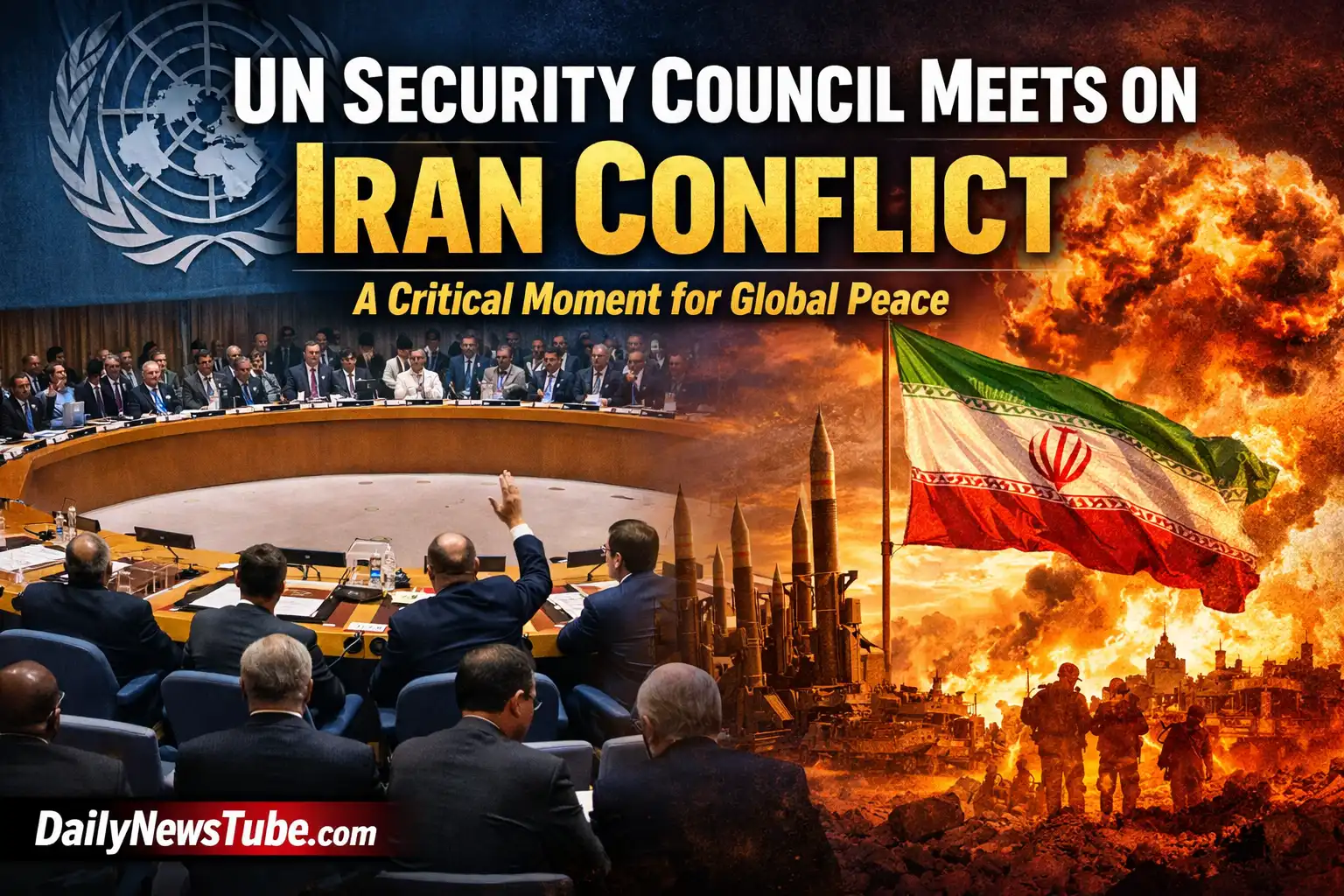
UN Security Council Meets on Iran Conflict | A Critical Moment for Global Peace
On March 1, 2026, the United Nations Security Council (UNSC) convened an urgent session to address the rapidly escalating conflict involving Iran, the United States, and Israel. The high-level meeting was scheduled following a series of military strikes and retaliatory actions that have significantly heightened tensions in the Middle East. The emergency gathering underscores growing international alarm over what could develop into a wider regional war with global consequences.
Escalation of Violence
Tensions surged after the United States and Israel reportedly carried out coordinated military strikes against Iranian targets. The strikes were described by Washington and Tel Aviv as strategic operations aimed at curbing Iran’s military capabilities and addressing long-standing concerns about Tehran’s nuclear ambitions and regional influence.
In response, Iran launched missile and drone attacks targeting Israeli territory and U.S. military installations across parts of the Middle East. Iranian officials characterized the retaliation as a legitimate act of self-defense against what they termed external aggression.
The exchange of fire has resulted in casualties and infrastructure damage, raising fears of further escalation. While some projectiles were intercepted, others reportedly struck designated targets, intensifying concerns that the conflict could spiral beyond control if diplomatic efforts fail.
Why the UN Security Council Convened
The emergency meeting was requested by several member states amid rising global anxiety. The 15-member Security Council gathered in New York to discuss the outbreak of hostilities and explore possible diplomatic pathways to de-escalation.
The session was expected to begin with remarks from UN Secretary-General António Guterres, who has repeatedly emphasized the need for restraint and dialogue. The Council’s agenda included calls for an immediate cessation of hostilities, discussions on the humanitarian impact of the conflict, and renewed diplomatic engagement regarding Iran’s nuclear program.
Security Council meetings of this nature are often marked by sharp divisions among permanent members, and this case appears no different. Differing geopolitical interests may influence how the Council responds and whether it can agree on a unified resolution.
Diverging Global Positions
The crisis has prompted varied reactions from world powers and regional actors, reflecting deep geopolitical divides.
U.S. and Israeli Position
The United States and Israel have defended their actions as necessary security measures. Both governments argue that Iran’s expanding regional footprint and nuclear activities pose a direct threat to regional and global stability. They maintain that their strikes were preventative in nature and aimed at protecting national and allied interests.
Russia and China’s Response
Russia and China have strongly criticized the military strikes, calling for respect for international law and urging immediate de-escalation. Both nations have emphasized the importance of resolving disputes through political dialogue rather than armed confrontation. Moscow, in particular, has warned that continued escalation could destabilize the broader Middle East.
European Diplomatic Efforts
European leaders have urged restraint from all sides. While acknowledging security concerns, they have emphasized the need to prevent civilian casualties and to return to negotiations. European governments continue to advocate for diplomatic solutions, particularly regarding Iran’s nuclear program, which has long been a source of international tension.
Regional Reactions
Several Middle Eastern countries have expressed concern over the widening conflict. Some Gulf states have condemned missile strikes affecting regional stability, while others have called for calm and mediation. The region’s complex alliances and rivalries add another layer of difficulty to resolving the crisis.
Humanitarian and Economic Concerns
Beyond military implications, the conflict carries serious humanitarian and economic risks. Escalation could disrupt vital shipping routes, energy supplies, and international markets. Oil prices have historically reacted sharply to instability in the region, and renewed hostilities raise concerns about global economic ripple effects.
Additionally, civilian populations face heightened risk if fighting continues. Humanitarian organizations have warned that prolonged conflict could strain already fragile infrastructures in affected areas, worsening displacement and humanitarian needs.
Challenges Facing the Security Council
The UN Security Council’s ability to influence the situation remains uncertain. Any binding resolution requires consensus among its five permanent members — the United States, the United Kingdom, France, Russia, and China. Given the diverging stances of major powers, achieving a unified response may prove difficult.
Nevertheless, the Council provides a crucial platform for diplomatic engagement. Possible outcomes of the meeting could include calls for a ceasefire, the appointment of special envoys, or renewed efforts to revive stalled negotiations surrounding Iran’s nuclear program.
Diplomats emphasize that preventing further escalation is critical, as a broader war could draw in additional actors and destabilize neighboring countries.
TAP FOR MORE NEWS HERE
A Defining Moment for International Diplomacy
The Security Council meeting represents more than a routine diplomatic session; it is a defining moment for international peace efforts. With tensions at one of their highest points in recent years, global leaders face mounting pressure to act decisively yet cautiously.
Whether the meeting leads to meaningful de-escalation or simply highlights existing divisions remains to be seen. What is clear, however, is that the stakes extend far beyond the immediate parties involved.
As the world watches developments closely, the outcome of diplomatic efforts in New York could play a pivotal role in determining whether the region moves toward renewed negotiations or deeper conflict.